Chainsaw Chain Size Chart by Bar Length, Pitch and Saw Model
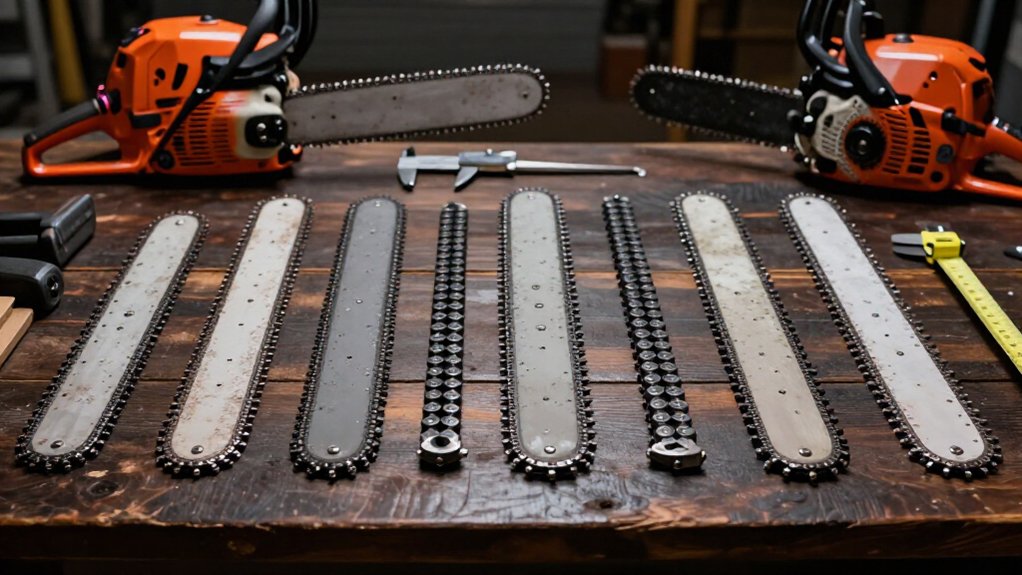
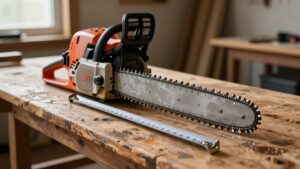
To choose a chainsaw chain, match its drive-link count, pitch, and gauge to your saw and guide bar; bar length alone isn’t enough.
Count the underside drive links, then verify the bar markings or operator’s manual and confirm the saw’s exact model and bar part number. Match pitch to both sprockets and gauge to the bar groove. Check mounting and oil-feed alignment, too.
Follow the maker’s tensioning procedure, and the guide below explains the fitment checks.
Drive-Link Counts by Model
Drive-link count depends on the specific saw-and-bar combination, not bar length alone. For a model-specific count, check your chainsaw’s manual or the markings on its guide bar; don’t select a chain from a bar-length chart alone. Two setups with the same bar length can require different drive-link counts because the saw and bar model differ.
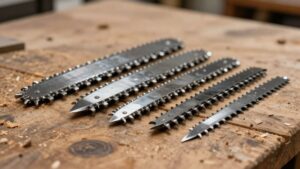
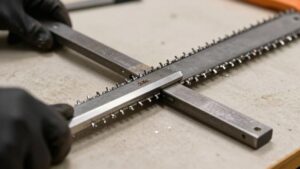
If you’re checking a loose chain, count every drive link—the small teeth on the chain’s underside. Mark one link with tape, then follow the chain around and count each link until you return to the mark. This prevents missed or duplicate links. Before installation, verify that the replacement chain’s count matches the saw-and-bar combination. Disconnect power or remove the spark-plug lead before handling the chain, and follow the manufacturer’s service instructions.
Pitch-and-Gauge Compatibility
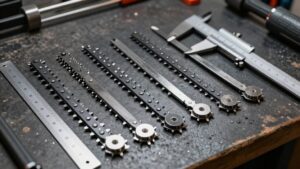
A chain’s pitch must match both the drive sprocket and the guide bar’s nose sprocket, while its gauge—the thickness of its drive links—must match the bar groove. Check both specifications together; matching only one can leave the chain incompatible and unsafe to run. Consult the bar marking or saw manual before buying or installing a replacement.
| Specification | Common sizes | Match against |
|---|---|---|
| Pitch | 1/4, .325, 3/8, .404 in. | Drive and nose sprockets |
| Gauge | .043, .050, .058, .063 in. | Guide-bar groove |
| Most common pitch | 3/8 in. | Verify both sprockets |
Don’t assume a popular pitch fits your setup: confirm the required gauge too. If markings are unclear, use the manufacturer’s specifications, not a visual guess. Stop work if the chain doesn’t seat correctly before starting the saw.
Chain Cutter Types
Once pitch and gauge match your saw and bar, choose a cutter profile suited to the work and your sharpening skills.
Low-profile cutters have rounded leading edges and side plates, so they’re lightweight and easy to sharpen. They suit saws up to 42 cc. Low-kickback versions use bumper tie straps or bumper drive links to limit cutter bite near the bar tip. You’ll trade cutting aggression and slow boring for kickback reduction; keep safe handling practices.
Chisel cutters have flat tops and sharp edges; they cut faster than semi-chisel cutters but dull sooner in abrasive conditions. Square-chisel cutters cut aggressively and hold an edge, yet sharpening may require a grinder or specialist. You can find chipper, chamfer-chisel, and micro-chisel profiles.
Common Bar-Length Pairings
You’ll commonly find 10 to 13-inch bars on compact precision saws and 14 to 30-inch bars on standard saws; bars over 24 inches often use skip-tooth chains on powerful saws. Match the chain’s pitch, gauge, and drive-link count to your bar and saw; bar length alone won’t confirm fit. Check your manufacturer’s specifications and cutting requirements before selecting a setup.
Bar Length and Saw Size
Although guide bars commonly range from 10 to 30 inches, bar length alone doesn’t identify the right replacement chain.
Use your saw’s manual or markings to confirm its approved bar length; don’t infer saw size from bar length or rely on a generic chart. Measure useful bar length from the saw body to the bar tip, not end to end across the removed bar. Once you confirm the correct bar, identify the chain’s pitch, gauge, and drive-link count.
Longer bars generally need more drive links, so a chain that matches the bar length may still be incompatible. Don’t install a chain that binds, hangs loose, or exceeds your saw’s specifications. If markings are unreadable, consult the manufacturer before buying or cutting.
Common Length Pairings
Common bar-length pairings can narrow your search, but they don’t determine chain size. Bars shorter than 14 inches commonly serve compact or precision saws. Standard bars typically span 14–30 inches, with longer options suited to larger cutting tasks.
As bar length increases, the chain generally needs more drive links; common chains may have 66–72 drive links, though the required count varies by bar length, pitch, and saw model. On powerful saws intended for large wood, bars over 24 inches are commonly paired with skip-tooth chains. Treat these pairings as general patterns, not specifications.
Before buying or fitting a chain, check the bar etching or your operator’s manual for the exact requirements for your saw model. Using the specified chain helps prevent poor cutting performance and unsafe operation.
Match Chain to Bar
Match a chainsaw chain to the bar by checking three specifications: pitch, gauge, and drive-link count. Bar length alone won’t identify the correct chain: bars of the same length can use different sizes. First, measure useful bar length from the saw body to the tip, not the bar’s total length.
Then match chain pitch to both the drive sprocket and bar-tip sprocket, and match gauge to the bar groove. Common gauges are .043, .050, .058, and .063 inches. Finally, count the chain’s drive links for your saw-and-bar combination. Longer bars generally need more links, but there’s no universal count for a given length. Don’t install a chain that binds, sits loosely, or fails to seat fully in the groove.
Check Manufacturer Recommendations
Before choosing a chain, check your saw’s operator’s manual or the bar markings for the approved pitch, gauge, and drive-link count. Treat bar length as a guide, not a complete specification: two bars of equal length may require different chains. Common pairings include ¼-inch chain on small pruners, ⅜-inch low-profile chain on many smaller saws, .325-inch chain on small-to-medium saws, and ⅜-inch chain on many larger saws, but verify your model’s fitment.
Match gauge to the bar’s groove; common sizes are .043, .050, .058, and .063 inch. Match pitch to the drive sprocket and bar-nose sprocket, too. If markings are worn or fitment remains unclear, consult your manual or a servicing dealer rather than guessing from bar length alone before installing any chain.
Account for Cutting Needs
Choose a bar and chain for the wood you cut, while keeping the saw’s approved fitment in mind.
For pruning and carving, a 10 to 13-inch bar commonly pairs with a ¼-inch-pitch chain, giving you control for precise work. These shorter setups don’t replace safe handling: keep the nose clear and use the saw only for its intended task.
Standard saws use 14 to 30-inch bars. Match chain pitch, gauge and drive-link count to bar and saw. Low-profile ⅜-inch chain suits novice users and saws up to about 42 cc. Use .325-inch chain on small or medium saws only if bar and drive sprocket share its pitch. For large wood, a powerful saw with a bar over 24 inches may take skip-tooth chain, which leaves a rougher finish. Confirm fitment and secure the work before cutting.
Reading OEM Part Numbers
Use the saw’s or guide bar’s OEM part number to find the correct chain in the manufacturer’s parts chart, confirming the full equipment version. Check the number against the listing, then verify the model variant before ordering; one saw model can have versions that use different parts. Match the listed chain pitch and gauge to the part-number specifications, and confirm they’re appropriate for your bar. Read the required drive-link count in the same listing.
Chains with identical pitch and gauge can still differ in length, so don’t select by those measurements alone. If a label is worn, damaged, or missing, consult the operator’s manual or contact a servicing dealer. Don’t guess from appearance or a nearby model’s listing; an incorrect chain can compromise safe operation.
Bar-Nose Sprocket Compatibility
Match the chain’s pitch to the bar-nose sprocket and the saw’s drive sprocket so the drive links engage correctly. Chain pitch is the distance across three consecutive rivet centers divided by two. Common sizes are ¼, .325, ⅜, and .404 inch; don’t identify pitch by bar length alone.
Check the bar’s markings or your saw’s manual for the specified pitch before you select a replacement chain. Confirm that the stated pitch applies to both sprockets: the bar-nose sprocket and drive sprocket must match the chain. If pitches differ, the drive links may not seat or engage properly, and the cutting system’s performance can suffer.
Don’t force a chain that won’t fit. Verify the pitch specifications before installation, then follow the saw maker’s instructions for fitting and tensioning the chain, using specified procedures. Wear appropriate protective equipment and keep the saw switched off during checks.
Replacing a Worn Drive Sprocket
Before fitting a new chain, replace a worn drive sprocket, which can accelerate chain wear and prevent proper operation. You should consult your chainsaw’s manual for the correct sprocket and model-specific replacement procedure. Check that the sprocket’s pitch matches your chain’s: common sizes include 1/4, .325, 3/8, and .404 inch. Before servicing, disconnect the saw’s power source and engage the chain brake.
Wear gloves when handling the chain and sprocket. After replacement, install a compatible chain and set its tension according to the manual. Verify that the chain moves freely before you begin cutting. Confirm the replacement fits your saw’s model and mounting system; don’t rely on pitch alone. Restore power only after assembly is complete and the chain’s free movement is verified.
Diagnosing Chain Tension Problems
A chain that sags beneath the guide bar is too loose, while one that binds, moves sluggishly, or heats excessively may be too tight. Stop the saw and adjust tension according to its operator’s manual.
- Check that the drive links remain seated in the bar groove after adjustment.
- Wear gloves and pull the chain by hand around the bar. It should move freely without binding.
- With a new chain, stop the saw after its initial 2 to 3-minute break-in, let it cool, and recheck tension.
If you can’t maintain correct tension, inspect the chain, bar, and tensioning parts for wear or damage before using the saw again. Excessive heat or sluggish movement can signal overtightening, risking accelerated wear and compromising safe, controlled cutting performance.
Checking Bar Mount Pattern
Check the guide-bar mount pattern before installation: its mounting slot, stud holes, and oil-feed hole must align with the saw’s layout. Compare the bar’s mounting-slot width and length with the saw’s studs; a mismatch can prevent secure seating or correct chain tensioning. Confirm the oil-feed hole aligns with the saw’s oil outlet, or the chain may not receive lubrication.
Verify compatibility by chainsaw model and bar part number: equal bar lengths or pitches don’t guarantee matching mounts. If markings are unclear, consult your manual or a replacement-bar compatibility chart. Switch off the saw and disconnect its power source before handling the bar. Then inspect alignment before fitting chain components.
- Match slot width and length to studs; don’t force an incompatible bar.
- Align the oil-feed hole with the outlet to maintain chain lubrication.
- Cross-check the saw model and bar part number; use the manual or chart if markings are unclear.
Conclusion
Chainsaw Chain Size Chart by Bar Length, Pitch and Saw Model
Use the saw model, bar length, pitch, gauge, and OEM part numbers to confirm a chain; don’t rely on bar length alone. Match drive-link count, cutter type, bar-nose sprocket, and mount pattern before installation. Inspect the drive sprocket and bar for wear, then set tension to manufacturer’s specification. A chain that’s too tight or loose can derail or damage equipment. Wear eye, hand, and hearing protection, and keep the saw off while checking fit.
Chainsaw Bar, Chain & Sprocket Fitment Chart
Look up bar lengths, chain pitch, gauge, drive links and sprocket for listed Husqvarna and STIHL saws, or find saws by pitch and gauge.
Chainsaw Chain Speed Calculator
Turn RPM, drive sprocket teeth and chain pitch into chain speed in ft/s, m/s, mph or km/h, and compare 7- vs 8-tooth sprockets.
Chainsaw File Size Finder
Pick your chain pitch or type the number stamped on your chain to see the round file size STIHL and Oregon publish for it.
Chainsaw Mill Bar Length & Max Log Width Calculator
Find the widest log your bar can mill after your mill's allowance, or the bar length you need for a given log, in inches or mm.
Pole Saw Reach Calculator
Check whether your pole saw reaches a branch, or find the pole length you need, from your reach, the branch height and your working angle.