Is a 16 Inch Chainsaw Big Enough for Firewood and Tree Work?
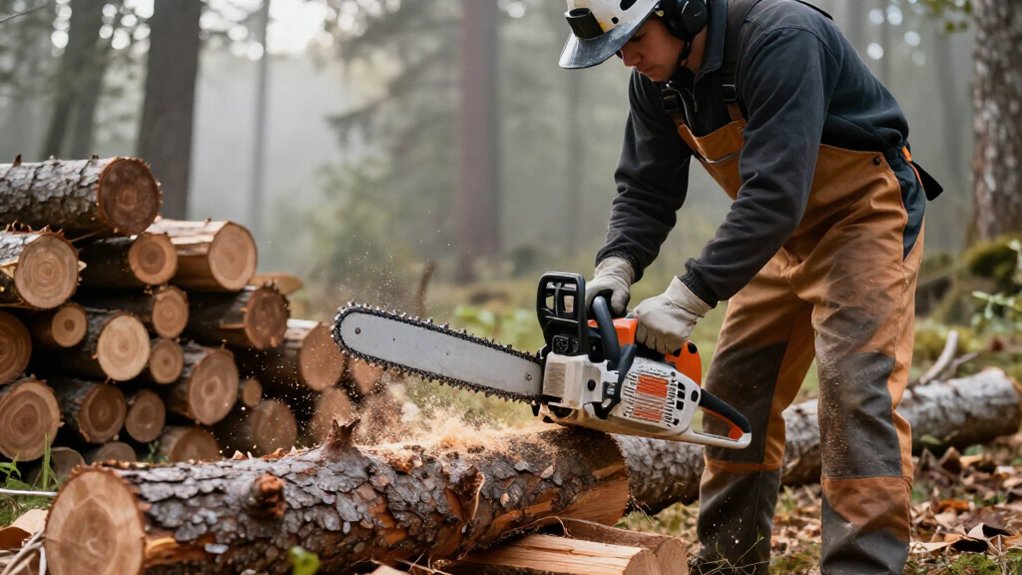
A 16-inch chainsaw is usually enough for routine firewood cutting, limbing, and small-tree work, provided its power matches the wood and your skill.
You can cut 12-inch logs; 14-inch pieces are near the bar’s limit and may need cuts from both sides. Dense hardwood and repeated cuts demand more power, while larger trees call for a bigger saw or professional help.
Secure logs, avoid bar-tip contact, and use protective gear; the guidance ahead can help you choose safely.
Firewood and Tree-Work Fit
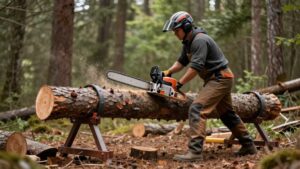
A 16-inch chainsaw is a versatile choice for home firewood, yard work, and small-tree tasks, typically cutting wood about 12–14 inches across in one pass. For routine firewood, you can use it on appropriately sized, stable logs; secure each piece before cutting and keep your footing clear. Wear chainsaw-rated chaps, helmet, eye and hearing protection, gloves, and boots, and follow the saw maker’s instructions.
For thicker pieces, cutting from opposite sides may work, but it takes extra time and control, so don’t force the chain. A 16-inch saw can also suit small-tree felling when your training and conditions allow. Trees near or above 18 to 20 inches usually call for a more powerful saw, more cutting power, and experienced handling. Dense oak and maple also demand more power than pine, so match engine capability to the wood. If the tree’s size or fall is uncertain, hire a professional for that work.
16-Inch Bar Cutting Reach
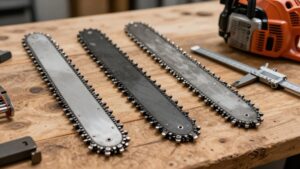
How far can a 16-inch bar cut? Its length gives you reach for routine firewood processing, yard cleanup, and small-tree work without making the saw unwieldy. You can make common cuts in one pass, while oversized pieces may need a second cut from the opposite side.
Keep the saw’s power in mind: dense hardwoods such as oak and maple demand more from the engine than pine or spruce, so don’t force a slow, binding cut. A 16-inch setup can suit small-tree tasks, but larger-tree felling may call for a longer, more powerful saw. Longer bars extend reach, yet add weight and increase kickback risk. Choose a bar suited to the work you do most, and follow the saw maker’s limits and cutting procedures.
Wood Diameter and Bar Reach
For a straightforward cut, a 16-inch bar generally suits wood about 14 inches in diameter, following the rule of choosing a bar roughly 2 inches longer than the wood.
| Wood size | Reach | Practical choice |
|---|---|---|
| Up to 12 inches | Straightforward | Small trees |
| Around 14 inches | Near bar limit | One-sided cut |
| Wider logs | Two-sided passes | Slower, careful cuts |
| Thick oak or maple | More power | Assess capacity |
You’ll handle logs with a 16-inch bar. Logs can be cut from both sides, but repositioning takes longer; keep passes controlled and confirm saw power. Small trees up to 12–14 inches suit reach. Larger trees may need a longer bar and more power. Match the bar to your wood: an undersized bar can bind, while extra length adds weight and kickback risk.
Gas, Electric, and Battery Models
A 16-inch gas saw suits frequent firewood cutting and small-tree work, while a corded electric model gives you steady power near an outlet but limits your movement. A battery saw is quieter and needs less maintenance, though you’ll need to plan around its runtime and charging time. Whichever you choose, match the saw to the wood and don’t use a 16-inch model for large-tree felling.
Gas-Powered Models
When you need mobility and sustained power for remote or extended cutting, a 16-inch gas chainsaw can be a practical middle ground for firewood, yard work, storm cleanup, and small-tree felling. It offers capacity and can cut logs around 14 inches across in one pass. For wider logs, you may need to cut from both sides; do so only if you’re experienced.
Dense oak or maple calls for a sufficiently powerful model, while trees over 18 to 20 inches may exceed this bar’s practical reach. Expect more weight and noise than with other types, plus fuel mixing and maintenance. Match the saw to your skill and workload, wear chainsaw protective equipment, and leave large-tree felling to trained professionals.
Corded Electric Models
With an outlet nearby, a 16-inch corded electric chainsaw can handle light-to-medium firewood cutting and small-tree work. Its cord limits your reach, so plan cuts near power and avoid stretching the cable. A 16-inch bar generally suits logs about 12 to 14 inches in diameter; larger pieces may need multiple cuts and adequate saw power. Corded models run quieter, weigh less, start easily, and need less maintenance than gas saws, making them practical for occasional yard work.
Use a properly rated extension cord and keep it clear of the chain and cutting area to reduce trip and cutting hazards. Keep cord routing behind you, clear of the saw. Avoid large trees, heavy hardwood, and extended work beyond outlet reach; choose a higher-capacity saw or hire a professional.
Battery-Powered Models
For routine firewood cutting, limb removal, and small-to-medium yard trees, a 16-inch battery chainsaw can be a practical choice.
Its capacity depends on saw power and the wood’s diameter and hardness. Dense hardwood or larger logs may cut slowly; frequent heavy-duty work calls for a more powerful saw.
Compared with corded electric models, it offers portability without an extension cord. It’s quieter, lighter, and easier to maintain than a gas saw, but battery runtime is limited; carry a charged spare for longer sessions. Gas models generally provide more power and runtime for demanding or remote work.
Check the manufacturer’s bar-and-chain compatibility guidance, keep the chain sharp and correctly tensioned, and wear appropriate protective equipment. Follow safe cutting procedures consistently for every cutting session.
Engine Displacement and Torque
A 16-inch bar doesn’t guarantee cutting power; engine displacement and motor output determine how well your saw maintains chain speed under load. You’ll need more torque for dense oak or maple than for softer pine or spruce, especially when cutting larger logs. Check the manufacturer’s power specifications and recommended bar range so your saw can handle the work without bogging down.
Displacement and Power
Bar length tells you how much of the saw can cut, not how powerful its engine is. A 16-inch bar describes cutting reach; displacement in cc and engine output determine how well the saw suits your work. For firewood and yard tasks, match power to wood diameter and density. Oak and maple call for more torque than pine or spruce.
A 16-inch saw can handle trees and logs 12 to 14 inches across. Repeated cuts in thicker or denser wood demand more power. Gas models sustain cutting, while a battery saw may suit lighter or medium jobs. Check the maker’s cutting capacity and approved bar sizes. Don’t fit a longer bar than the engine is rated for; inadequate power can slow cutting and strain the saw. Follow the manual.
Torque Under Load
When a cut meets resistance, engine power and torque determine whether a 16-inch saw keeps moving or bogs down. Wood density matters: oak and maple require more cutting force than pine or spruce, so a less powerful saw may slow in thick hardwood. Gas models generally sustain demanding cuts better; comparable battery saws suit light-to-medium work, but power and runtime limit them.
| Condition | Effect |
|---|---|
| Dense hardwood | Higher cutting demand |
| Softwood | Lower resistance |
| Battery power | Limited runtime |
| Dull or loose chain | Added effort |
Choose capacity for frequent firewood, and keep the chain sharp and correctly tensioned; defects raise effort and can mimic weak torque. If cutting speed drops, stop, inspect the chain, and let the saw recover before resuming carefully.
Matching Engine to Bar
Although a 16-inch bar suits many firewood and small-tree jobs, the engine must have enough power and torque to pull the chain through the wood without bogging down. Dense hardwoods such as oak and maple demand more engine power and torque than softer woods such as pine and spruce. For repeated hardwood cutting, you’ll want a powerhead that sustains chain speed under load; don’t judge capability by bar length alone.
Gas saws typically deliver more power for cutting, while a powerful battery saw can handle light-to-medium work. Compare performance ratings and consider your wood’s diameter, hardness, and workload. A longer bar needs more power and can strain the saw or cut poorly if it exceeds the manufacturer’s range. Check the manual for permitted bar lengths and engine specifications. Keep the chain sharp and let the saw do the work; stop if it bogs.
Firewood Bucking Scenarios
For typical firewood bucking, a 16-inch chainsaw handles logs about 12 to 14 inches in diameter or smaller. Match the bar to the log: choose one about 2 inches longer than the wood’s diameter, so a 16-inch bar suits a 14-inch round. With thicker wood, you may need to cut from both sides, which takes longer and calls for adequate power and steady control.
Dense oak and maple demand more from the engine or motor than pine, so consider the wood you’ll process. If you’ll buck larger logs or work through firewood often, an 18- to 20-inch saw offers more capacity. You’ll trade that reach for added weight, which can make the saw harder to handle. Choose based on your rounds and strength.
Kickback and Pinching Hazards
A 16-inch saw can handle many firewood and small-tree cuts, but forcing it through wood that exceeds its capacity can bind the bar or trigger kickback.
Keep the bar nose clear of branches and logs; contact at the tip can cause kickback. Pinching happens when a cut closes on the bar, so support and stabilize firewood against shifting or squeezing the saw.
| Hazard | Check | Response |
|---|---|---|
| Kickback | Tip clear | Avoid contact |
| Pinch | Cut closes | Stabilize log |
| Wide log | Exceeds bar | Use trained method |
| Grip | Control | Hold firmly both hands |
Keep a stable stance; don’t cut above shoulder height. If a log exceeds bar width, use only a method you’ve learned; multiple-pass cuts may increase binding and kickback risk. Stop if wood shifts, and reset its support before continuing the cut safely.
Bar-Length Overconfidence
How much wood can a 16-inch bar handle? For routine firewood cutting, limbing, and small-tree work, it’s often enough—but don’t treat that as a promise for every log. As a rough guide, choose a bar about 2 inches longer than the wood’s diameter, so a 16-inch bar suits roughly 14-inch wood for a one-pass cut.
- Larger logs can be cut from both sides, but this takes extra time and care.
- Check that your saw has enough power for the wood and cutting method.
- Consider wood density, saw weight, and your experience; bar length alone doesn’t determine safe capability.
For trees over about 18 to 20 inches across, or large-tree felling, you may need a more powerful saw and professional expertise. Don’t attempt work beyond your training.
Check Your Firewood Stack
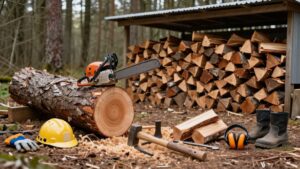
Start by measuring the logs in your firewood stack: a 16-inch bar generally suits wood about 12 to 14 inches thick, leaving clearance for the cut. This suits routine firewood, but check the pieces you cut rather than judging by the stack’s appearance. If many logs exceed the bar’s reach, you may need multiple passes; that slows the job and calls for adequate saw power and controlled technique.
Dense oak or maple also demands more cutting power than pine of the same diameter, so don’t assume size alone determines whether your saw is up to the task. Before cutting, secure each log on a sawhorse or lift it off the ground. Match the bar and chain to your saw manufacturer’s specifications. A 16-inch saw can handle firewood and smaller tree work; for larger logs, choose a more powerful saw or get professional help.
Conclusion
A 16-inch chainsaw can handle most routine firewood bucking and modest tree work when you match its power to the wood and keep cuts within the bar’s reach. Don’t assume bar length guarantees capacity: oversized logs, pinching, and kickback demand a different plan or professional help. Choose gas, electric, or battery power for your workload, and check your firewood stack before cutting. Wear protective gear, secure each piece, and follow the saw maker’s instructions closely.