Are Battery Chainsaws as Powerful as Gas? Cutting Speed and Torque Compared
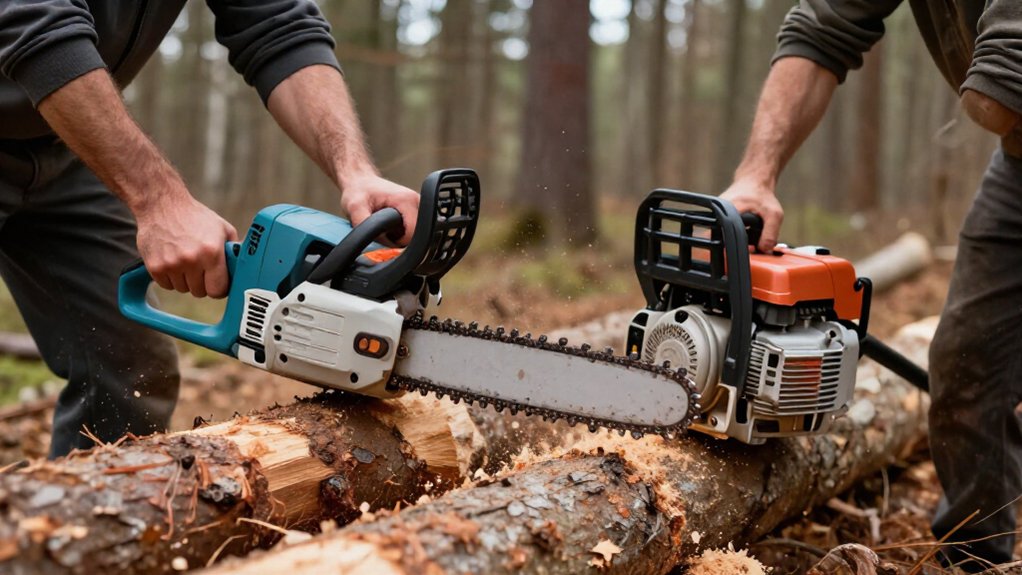
For routine 3–12-inch cuts, modern battery chainsaws can match gas speed. They may cut 8-inch seasoned hardwood near a 40cc gas saw’s pace, but gas usually holds torque better in large logs and sustained work.
Don’t judge power by voltage or no-load chain speed alone; compare loaded cuts in similar wood. With a sharp chain, a 16-inch bar suits routine cuts.
Your log size and workload matter; the guidance below can help you choose confidently.
Battery vs. Gas Cutting Speed
For typical yard work, battery chainsaws can keep pace with gas saws when cutting 3 to 6-inch branches, though hard pecan may slow them slightly. For many routine jobs, a high-voltage model can also cut 8-inch seasoned hardwood at roughly the pace of a 40cc gas saw. Your results depend on the saw and wood, not voltage alone: listed chain speeds span 17 m/s on Skil’s 18-inch saw to about 30 m/s on Stihl’s MSA 300.
Battery models handle many smaller cuts effectively, but capacity and hardwood density affect pace. Once logs exceed roughly 16 inches, gas saws generally cut faster, particularly during sustained work. Choose a sharp, properly tensioned chain, secure the workpiece, and maintain footing; never force the bar or cut above shoulder height.
Torque Under Load
Cutting speed tells only part of the story; torque under load shows how well a saw holds power as the cut gets tougher. A battery saw’s force depends on its motor, battery capacity, and ability to sustain output—not voltage alone. Modern high-voltage models can handle 8-inch seasoned hardwood at the pace of a 40cc gas saw.
In one side-by-side test, the STIHL MSA 220 C-B cut hard pecan slightly slower than its gas counterpart, yet it didn’t bog down. Gas saws generally hold torque better in large logs, so they’re faster beyond roughly 16 inches and during heavy work. Use bucking spikes to guide your cut, but don’t force the bar; excessive pressure can overload a battery saw and stall models.
Cutting Through Oak Logs
How well a battery saw cuts oak depends on log diameter, wood condition, and how long you work. For seasoned oak around eight inches, a modern battery saw can approach a 40cc gas saw’s pace; hard pecan tests show only a slight slowdown, though they don’t prove identical oak performance.
Your chain sharpness, feed pressure, and pauses matter. Use a stance, secure the log, and avoid pinching the bar.
| Oak log scenario | Practical choice |
|---|---|
| 4–12 inches | Battery suits routine firewood |
| Over 16 inches | Gas usually cuts faster |
| Long sessions | 50–60cc gas is stronger |
A 16-inch bar can handle 30-inch timber by cutting from both sides, but reposition and keep the nose clear. For oak cuts above 14–16 inches, choose gas to sustain torque and pace.
Battery Platform Voltage Classes
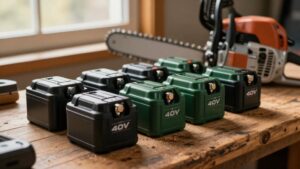
Battery chainsaws commonly use 40V, 56V, 60V, or 80 to 82V platforms, and higher voltage generally sustains power under load. Don’t judge cutting speed or torque by voltage alone; match the saw’s capability to your wood and keep a secure stance as you cut. Check amp-hour capacity too: a 4.0Ah pack may cover a weekend firewood run, while longer sessions call for larger or spare batteries.
Common Voltage Classes
Although battery chainsaws commonly run on 40V, 56V, 60V, or 80V platforms, higher voltage doesn’t automatically mean faster cutting or more torque. You’ll find 40V and 60V models comfortable for roughly 4- to 12-inch firewood, while 80V saws extend that range to about 16 inches. Treat these as guidelines: wood condition, bar length, chain sharpness, and your technique affect results.
Amp-hours (Ah) describe battery capacity and help you estimate runtime; larger packs can sustain work longer, but add weight. When choosing a platform, consider the saw’s intended workload and the batteries you own. Check chain speed and performance in wood rather than relying on motor ratings alone. Match the bar to the task, maintain a sharp chain, secure your footing, and keep both hands on the handles.
Voltage and Cutting Power
Platform voltage tells you the battery system’s electrical potential, not how fast the saw will cut; amp-hours indicate capacity, not cutting power.
Higher voltage and capacity generally help sustain output and extend runtime, but neither rating predicts cutting speed or torque under load. To judge performance, test how steadily the chain moves through wood without forcing the bar.
Modern 40V and 60V saws handle typical 4 to 12-inch firewood comfortably; 80V models remain comfortable around 16-inch logs. A high-voltage saw can cut 8-inch seasoned hardwood about as quickly as a 40cc gas saw, though gas pulls ahead beyond roughly 16 inches.
Your runtime depends on battery capacity and workload: intermittent cutting often lasts 20 to 50 minutes per charge, while heavy continuous work pushes it toward the low end.
Choosing a Battery Platform
When choosing a battery platform, match its voltage class to your typical cuts rather than assuming higher voltage guarantees faster cutting. Common classes include 20V, 36V, 40V, 56V, 60V, and 80 to 82V; higher voltage generally sustains more power, but it doesn’t tell you the whole story. Ah capacity, cell design, and motor tuning also shape runtime and power delivery. A 40V or 60V saw suits many 4 to 12-inch firewood cuts; an 80V model extends comfortable battery cutting to about 16-inch logs.
For seasonal homeowner use, a 40V 16-inch saw and two batteries can be practical. Choose larger-capacity packs and a rapid charger for longer sessions, and pause to swap batteries safely rather than pushing a depleted pack. Check compatibility and availability; your platform powers other tools.
Chain Sharpness and Maintenance
Keep your chain sharp on either saw; a dull chain cuts slowly, strains the motor, and can make control harder. Check tension often, especially while a new chain breaks in, and use the manufacturer-recommended file or sharpener when cutting performance drops. Keep the bar and chain lubricated, check oil delivery if the chain tightens suddenly, and loosen tension after use to prevent damage as the saw cools.
Sharp Chains Cut Faster
A sharp chain cuts faster and more efficiently on either a battery or gas saw, so power source alone doesn’t determine cutting speed.
Keep chain tension correct; new chains stretch quickly, so check tension frequently during break-in and adjust as needed. If the chain suddenly feels tight, don’t loosen it immediately: first confirm bar oil reaches the chain. Oil lubricates and cools moving parts, reduces friction, and helps prevent rapid bar and chain damage. In cold weather, loosen the chain at day’s end; cooling can tighten it and damage components. Stop the saw and follow its safety procedure before checking.
| Condition | What you should do | Why it matters |
|---|---|---|
| New chain | Recheck tension | Stretch is common |
| Sudden tightness | Check oil flow first | Poor lubrication binds |
Sharpening Frequency and Tools
Sharpen the chain when cutting slows or takes more effort; extra motor power won’t compensate for dull cutters on either a battery or gas saw.
You’ll get the cleanest comparison between saws by judging chips and cutting behavior, not motor claims. When cutters crush fibers into fine dust instead of producing distinct chips, stop and sharpen before forcing the saw. Use a file or guide matched to your chain’s pitch and cutter specifications; the wrong size can alter the edge and reduce control.
Follow the specified filing angle, keep every cutter the same length, and use steady strokes to avoid uneven cutting. Secure the saw and wear gloves while sharpening; keep the engine off or remove the battery so the chain can’t start unexpectedly. Recheck your work before cutting, and sharpen sooner in dirty or abrasive wood. A consistent edge helps you judge actual power differences fairly and safely.
Bar and Chain Maintenance
Once the cutters are sharp, correct tension and lubrication help both battery and gas saws cut efficiently.
Keep your chain sharp: a dull chain cuts slowly and forces the motor to work harder, reducing cutting performance on either saw. Check tension often, especially with a new chain, which can stretch during break-in and need several adjustments.
If the chain suddenly feels tight, don’t tighten it immediately; first verify bar-oil delivery. Every chainsaw needs bar and chain oil to lubricate and cool the chain while reducing friction.
Top up the oil reservoir and maintain correct tension so the chain runs smoothly and the bar and chain last longer. At day’s end, loosen the chain. In cold weather, cooling can tighten it and damage components.
Storm-Damaged Fence Cleanup
After a storm, battery and gas chainsaws cut branches around 3 to 6 inches thick at similar rates in side-by-side tests. For fence cleanup, that means either saw can handle many fallen limbs without a meaningful speed advantage. A battery model suits stop-start work: release the trigger to stop quietly, then restart instantly when you’re ready for the next cut.
Before cutting, check that bar oil reaches the chain; inadequate lubrication can make it tighten suddenly. A charged battery lets you begin promptly without mixing fuel or maintaining a carburetor. For a longer cleanup, keep a spare charged battery nearby. Wear chainsaw chaps, a helmet, and hearing protection. Battery power doesn’t lessen chain hazards, so secure unstable fence sections and keep bystanders clear before you cut.
Cold-Weather Battery Performance
In cold weather, a battery chainsaw may deliver 20 to 30% less runtime, so plan for fewer cuts per charge. Keep spare batteries warm—not beside a heater—and swap them in as needed; cold-soaked packs can shorten sessions. Before winter storage, charge and store batteries according to the manufacturer’s instructions. When you return, a fully charged pack can start the saw immediately, while a gas saw may need troubleshooting.
For extended work, bring extra batteries and a rapid charger, or choose gas if charging isn’t practical. Capacity also shapes operating time: Husqvarna lists 25 minutes to 2 hours 25 minutes for a 4.0Ah BLi20, versus 3 hours 20 minutes to 18 hours 40 minutes for a 31.1Ah BLi950X, depending on workload. Check charge status before each cut.
Mistaking No-Load Speed for Cutting Power
Cold-weather runtime is only part of the comparison; don’t mistake a chainsaw’s no-load chain speed for its cutting power.
A no-load figure in m/s or ft/s tells you how fast the chain travels in air, not through wood. Cutting rate depends on chain speed and torque under load. In dense hardwood, a fast chain can bog or stall if the motor can’t sustain power.
Use these checks when comparing saws:
- Compare performance in similar wood and log sizes.
- Treat voltage and chain-speed specifications as clues, not proof.
- Seek loaded-cut tests before judging power.
A modern high-voltage battery saw may cut 8-inch seasoned hardwood near a 40cc gas saw’s pace. MSA 220 C-B cut pecan slightly slower than MS 211 C-BE, without struggling.
Choose a 16-Inch Bar
A 16-inch bar is a practical choice for many homeowner battery saws, covering typical 4 to 12-inch firewood and branches while reaching logs up to roughly 30 inches across with cuts from both sides. Match the bar to your work, not its maximum reach.
| Task | Battery-saw fit | Cutting guidance |
|---|---|---|
| 4 to 12-inch wood | Strong | Typical homeowner work |
| 8-inch seasoned hardwood | Competitive | Modern high-voltage models approach 40cc gas pace |
| Over 14 to 16 inches | Limited | Gas sustains torque better |
| Tree care, cleanup | Manageable | EGO CS1611: 20 m/s chain speed |
Use both-side cuts only when repositioning safely; don’t force the chain or bury the bar tip, which can cause kickback. Keep footing, sharpen the chain, and check the saw’s bar-length rating. The CS1611 suits general care and cleanup, but choose gas for rounds over 14 to 16 inches or sustained torque.
Conclusion
Battery chainsaws can match gas for many cuts, but you should judge them by cutting speed and torque under load, not no-load RPM. When you tackle oak or storm-damaged fencing, keep the chain sharp, choose a suitable voltage platform, and fit a 16-inch bar only when your saw supports it. Cold weather can reduce battery output, so carry spares. Wear proper protective gear, secure your workpiece, and let the saw cut; don’t force the chain.
Battery Chainsaw Runtime Estimator
Estimate battery chainsaw runtime from battery voltage, amp-hours, rated watts and duty cycle, with an optional corded-saw energy comparison.
Battery vs Gas Chainsaw Cost-of-Ownership Calculator
Compare the total cost of a gas and a battery chainsaw over the years with your own fuel, power and usage numbers, and find the break-even point.
Chainsaw Chain Speed Calculator
Turn RPM, drive sprocket teeth and chain pitch into chain speed in ft/s, m/s, mph or km/h, and compare 7- vs 8-tooth sprockets.
Chainsaw Chaps Size Calculator
Enter your belt-to-boot length, waist and chap style to see the matching size in STIHL, Labonville and Husqvarna size tables.
Chainsaw Mill Bar Length & Max Log Width Calculator
Find the widest log your bar can mill after your mill's allowance, or the bar length you need for a given log, in inches or mm.
Matterhorn Chainsaw Boots Size Chart
Find your Pfanner Matterhorn chainsaw boot size (EU 39–48) from foot length or a US, UK or EU shoe size, using Pfanner's published charts.