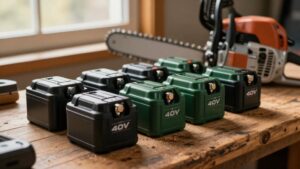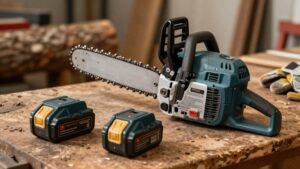
Are Battery Chainsaws Worth It? Pros, Cons and Who Should Buy One
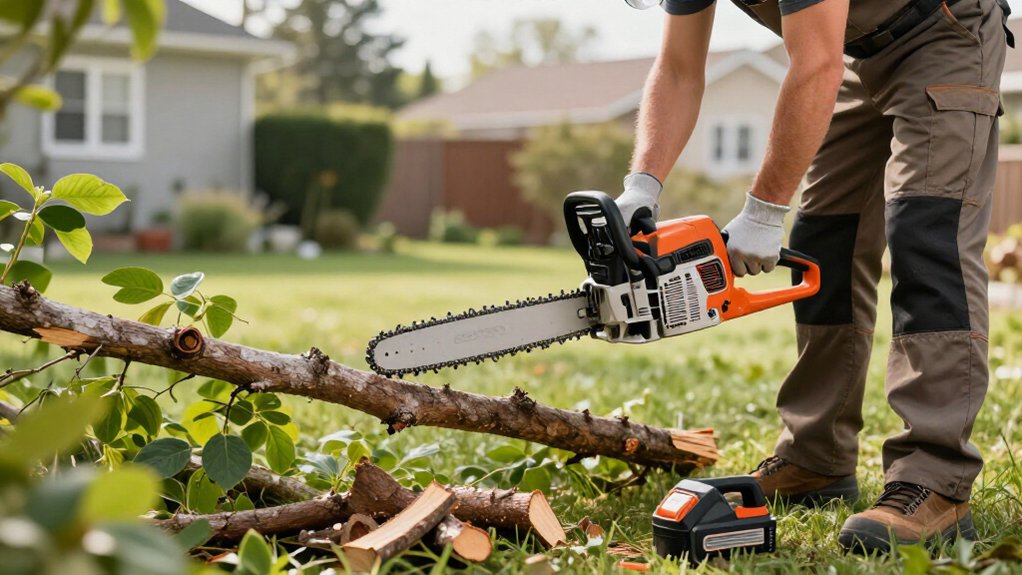
Battery chainsaws are worth it if you want easy starting, quieter cutting, and less maintenance for pruning, storm cleanup, or occasional firewood. You’ll avoid fuel mixing and carburetor upkeep, but pay more upfront and may need spare batteries for longer jobs.
Choose a model and battery matched to your cutting needs, and check platform compatibility before buying. For frequent hardwood cutting or sustained heavy work, a 50cc-plus petrol saw is usually more practical.
The details below can help you decide.
Upfront Cost Versus Convenience
Battery chainsaws usually cost more upfront than comparable petrol models, but you’re paying for easier operation and less routine maintenance. A professional Stihl setup with powerhead, battery, and charger can reach about $950, comparable to an MS 461 or two Husqvarna 455 Ranchers. Push-button starting, quieter operation, no exhaust fumes, and no carburetor cleaning or premixed fuel preparation reduce hassle.
For homeowners, packaged kits can offer stronger value: the EGO CS1800 costs $399 with a 5-Ah battery, while Ryobi’s 20-inch kit costs $469 with an 8-Ah battery.
Your total cost may fall if you already own tools on the same battery platform; Milwaukee’s M18 system supports more than 175 tools. Still, include future battery purchases in your budget: a replacement battery for the Stihl MSA 161-T costs almost $200. A spare battery can also extend working time without forcing you to stop mid-job.
Battery Care and Storage
To preserve long-term capacity, store modern chainsaw batteries at about 50% charge and avoid draining them to 0%, which can reduce their usable life. Before storage, let your pack cool, then follow its manual; don’t leave it connected to a charger indefinitely.
| Situation | Your move | Why it matters |
|---|---|---|
| Long-term storage | Keep near 50% charge | Preserves capacity |
| Before use | Avoid 0% discharge | Protects usability |
| Longer jobs | Check spare compatibility | Avoid costly mismatch |
Stihl MSA 161-T replacement batteries cost nearly $200; plan ahead carefully. A spare can keep longer jobs moving, but confirm it fits your saw and remains available. Manufacturers may change battery designs or discontinue older packs, leaving you with limited replacement options. Check compatibility before buying, and consider availability when weighing a spare against the risk of future replacement costs. You’ll protect your investment by choosing batteries you can maintain and replace.
Cold-Weather Cutting Performance
Even in freezing weather, a battery saw can handle extended light-to-moderate cutting if you match the workload to its capacity. A field test of a Stihl MSA 161-T in Adirondack temperatures as low as 8°F supports that conclusion. After five hours limbing and trail clearing, its battery still showed 25%.
A separate two-hour session, including limbing a 70-foot white pine, left 75%. Results show cold doesn’t rule out productive work, but runtime varies by saw, battery, and workload. Published estimates for a Husqvarna 536LiXP ranged from 25 minutes to 2 hours 25 minutes with 4.0Ah, versus 3 hours 20 minutes to 18 hours 40 minutes with 31.1Ah. Expect output to vary with temperature. Plan around your actual workload and carry enough charge for the job.
Battery Platform Compatibility
Your existing battery platform can make a chainsaw a better value when its batteries also power your other tools. Before you buy, check cross-tool compatibility and whether the saw needs one battery or several. Compare battery capacity, replacement cost, and availability to gauge the platform’s long-term expense.
A shared battery platform lets one battery power compatible tools from the same brand, such as a chainsaw, string trimmer, and leaf blower. If you own Milwaukee M18 batteries, its chainsaw may appeal: the platform includes more than 175 compatible tools.
Before buying, verify that the saw accepts your battery’s voltage platform and specific model; the same brand name alone doesn’t guarantee a fit. Check how many batteries the chainsaw requires, since some models need more than one. For longer jobs, keep extra compatible batteries ready so you can work while another charges. A rapid charger can shorten downtime and make that rotation practical.
Also confirm that replacement batteries remain available: battery designs can change, and an aging platform may limit your options for future use.
Cross-Tool Compatibility
Cross-tool compatibility can make a battery chainsaw a better value if you already own tools on the same platform. That system may also run a trimmer or leaf blower, letting you share packs and chargers instead of maintaining separate setups. Milwaukee’s M18 FUEL chainsaw is especially attractive if you already use M18 equipment: its batteries fit a platform of more than 175 Milwaukee tools.
Still, verify battery and charger compatibility. A shared brand name or voltage doesn’t guarantee that every pack fits every tool; check specifications. Also confirm what the chainsaw kit includes, since some packages may not supply a battery or charger. If you can use batteries you already own, the saw can integrate into your existing tool system for everyday yard tasks.
Platform Expansion Costs
Owning compatible batteries and chargers can reduce a chainsaw’s upfront cost, but check platform fit and compare bare-tool and kit prices.
If you already own batteries, a bare tool may be the economical choice. Makita’s XGT GCU08 costs $799 bare, compared with $1,349 as a kit. Confirm that your batteries and charger match the saw’s platform; Milwaukee’s M18 FUEL, for example, draws value from compatibility with more than 175 M18 tools.
Don’t assume the saw-only option costs less overall: kits may include batteries and chargers, so compare the purchase price against what you’d need to buy separately. For longer sessions, budget for spare batteries and enough charging capacity to rotate packs. Replacements can be costly, and older-platform batteries may become unavailable. Expanding a platform pays off most when you’ll use its packs across several tools; otherwise, a dedicated battery and charger can make a kit expensive.
Job Size and Cutting Frequency
The right battery chainsaw depends on the size of your cuts and how often you work. For pruning and occasional cleanup, a compact saw may be enough; larger trees and routine firewood cutting demand greater capacity and runtime. Match the bar, power, and spare-battery plan to your workload.
Job Size Matters
How often you cut—and what you cut—determines whether a battery chainsaw is a practical fit. For pruning, limbing, and occasional storm cleanup, a compact model may be enough: the 6.63-pound Worx WG322 has a 10-inch bar. If you tackle larger limbs or homeowner projects, the EGO CS1611’s 16-inch bar gives you more reach and capacity.
For regular property work involving medium-sized trees, consider an 18 to 20-inch saw. The EGO CS1800, with an 18-inch bar, performed well in trail work and cutting tests. Battery models can also fell small trees and process modest firewood loads. But frequent hardwood cutting or large logs demand more power; you’ll generally want a 50cc-plus petrol saw. For heavy workloads, refuelling keeps petrol saws working continuously, often.
Cutting Frequency
Cutting Frequency
Beyond the size of the job, how often you cut determines whether a battery saw will keep pace.
Occasional pruning, storm cleanup, and small branches rarely demand long run times; a compact saw such as the 10-inch Worx WG322 can handle them, though limited battery life may interrupt work.
If you cut regularly, homeowner models such as the 18-inch EGO CS1800 or 20-inch CS2000 suit ongoing maintenance and small-to-medium tree work.
For occasional small-tree felling or modest firewood sessions, battery power can be practical; longer workloads require spare batteries, larger packs, or recharge breaks.
For frequent hardwood firewood or several hours of continuous cutting, petrol may be more practical. Battery users can extend work with spare packs, but runtime still depends on workload and conditions.
Matching Saw Capacity
Match bar length and power to the wood you cut most often: a compact 10-inch Worx WG322 suits pruning and occasional storm cleanup, but its slower cutting and limited battery life make sustained heavy work impractical.
For regular homeowner tree care, an 18-inch EGO CS1800 or 20-inch CS2000 offers greater capacity. The CS1800 includes a 5Ah battery and performed strongly in timed cuts and trail work.
| Work pattern | Saw capacity |
|---|---|
| Homeowner tree care | 18-inch EGO CS1800 or 20-inch CS2000 |
| Frequent trees or firewood | 20-inch Stihl MSA 300 or Makita GCU08, roughly 50cc equivalent |
For thick hardwood or professional workloads, consider Greenworks Commercial H.O.G. (bars up to 28 inches) or Milwaukee M18 Fuel Dual Battery (20-inch bar, high torque). One EGO CS2005 battery lasted 35 minutes; sustained cutting may require spare batteries and a rapid charger. Match capacity to workload, not voltage alone.
Pruning Fallen Limbs
For pruning fallen limbs, a battery chainsaw starts instantly, runs quietly, and produces no exhaust—advantages around homes and on trails.
Compact, lightweight models let you maneuver between branches. The 6.63-pound Worx WG322, for example, pairs a 10-inch bar with capacity suited to smaller, less demanding cuts.
Larger limbs or cleanup may call for more reach: the EGO CS1611 has a 16-inch bar, while the Skil CS1800C-15’s 18-inch bar suits seasonal work.
Field results show runtime: in cold weather, a Stihl MSA 161-T limbed large branches on a 70-foot white pine, with 75% battery remaining after over two hours.
Choose the saw and battery for limb diameter and workload; for extended cleanup, bring a spare battery so you can continue while the other charges.
Bar-and-Chain Maintenance
Bar-and-chain maintenance keeps a battery chainsaw cutting safely and efficiently. Before each use, check the bar-oil supply and keep it filled. Never run the saw dry: inadequate lubrication creates friction and heat that can severely damage the bar and chain.
If the chain suddenly feels tight, verify that oil is reaching it before adjusting tension; poor lubrication may be the cause.
Check tension frequently, especially during a new chain’s break-in, when stretching may require several adjustments. Keep the chain snug against the bar. At day’s end, loosen it, particularly in cold weather, when cooling can tighten the chain and damage components. With a tool-free adjuster, turn the knob or dial to loosen the bar, reposition it, then lock it securely.
Motor and Battery Overheating
A battery chainsaw can overheat if you force the motor through a cut. Use it; don’t treat resistance as a signal to press harder.
A change in motor pitch can warn you to ease off. Match the saw and battery to the wood, and let the tool cut without excessive pressure.
- Engage the bucking spikes gently to steady the saw.
- Back off when the motor pitch changes or cutting slows.
- Don’t force the chain through dense or oversized wood.
- Allow the tool to recover if it begins struggling.
Battery capacity and cell connections help maintain power under load, but tests don’t establish temperature limits or safe continuous run times. Watch performance and follow the manufacturer’s guidance rather than relying on an assumed threshold.
Compare Battery Models
Which battery chainsaw fits your work depends on bar length, power, weight, and budget. For versatile homeowner cutting, choose the EGO CS2000: its 20-inch bar, 55cc-equivalent power, and 82-fps chain speed handle substantial work. The Ryobi 40V HP offers a cheaper 20-inch option at $349 bare or $469 as a kit. For better value, the EGO CS1800 includes an 18-inch bar and 5Ah battery for $399. Need a lighter, smaller kit? The 16-inch CS1611 costs $329 and weighs 13.7 pounds with battery.
For professional use, compare the Stihl MSA 300 C-O and Makita XGT GCU08. Both have 20-inch bars; Stihl reaches 30 m/s and weighs 17.2 pounds, while Makita reaches 29 m/s and weighs 17 pounds. Makita costs $799 bare or $1,349 as a kit. For larger cuts, Greenworks’ H.O.G. accepts 28-inch bars, but its kit costs $1,810 to $1,880 and weighs 24.2 pounds.
Conclusion
Battery chainsaws are worth it when you value quick starts, low noise, and simple upkeep over maximum runtime. For pruning, storm cleanup, and occasional cuts, a compatible battery model can handle the work without fuel or exhaust. Choose one only after checking upfront cost, battery care, cold-weather limits, and bar length. Match the saw to your job size and cutting frequency, and maintain its chain. If you cut wood often, gas may suit you better.