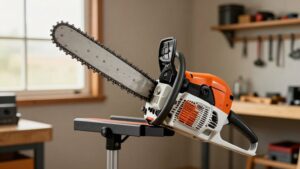
Do You Need a Chainsaw Case? Hard Case vs Bag vs Bar Cover
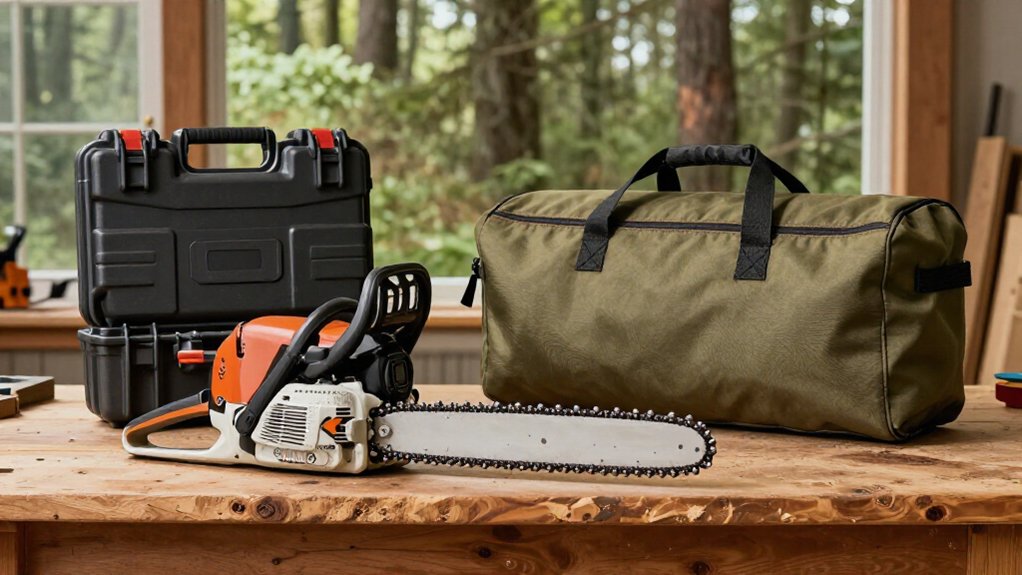
You don’t need a hard chainsaw case for every trip, but you must secure the saw, protect its bar, and carry fuel separately in an approved sealed container.
A hard case shields the powerhead and handle from dust and impacts; a bag offers lighter, roomier transport, while a bar cover protects only the bar.
Check brake clearance and case fit, and let a wet saw dry before closing it. More checks help you choose safely.
Transport Fuel Separately
Keep gasoline in an approved, sealed fuel container separate from the chainsaw, not in its case or bag. A bar sleeve or scabbard protects the chain during transport, but it doesn’t make the saw a safe place for fuel. Keep fuel and other supplies in a separate toolbox or 5-gallon bucket.
When you load a vehicle, tractor bucket, or UTV bed, secure the fuel container upright and away from the saw. This separation helps limit spills and reduces fire risk if fuel escapes. Before loading, inspect both the saw and fuel container for leaks. Check especially after storage; seals can deteriorate, and some saws may leak bar oil.
Don’t assume a case contains a leak safely. If you find fuel or oil, address it before transport.
Keeping Sawdust off Your Gear
Separating fuel from the saw also leaves room to protect your gear from sawdust. A hard case can keep chips and fine dust off the powerhead and accessories during storage or transport. Choose enough capacity for the items you actually carry; one Husqvarna box reportedly fits gloves, bar oil, an extra chain, files, and a wrench. Keep tools secured so they can’t shift against the saw.
A bar cover or scabbard shields the bar, but it won’t enclose your other gear. Put accessories in a small toolbox or 5-gallon bucket to keep them cleaner. For broader protection, place the saw in a plastic box with a bar cutout, then set that box inside a larger, stackable hard-plastic case. Store clean supplies in separate compartments.
TSA-Friendly Chainsaw Travel
A travel bag can make a chainsaw easier to carry, but don’t assume it’s allowed on a flight. Check current TSA and airline requirements before flying; no example here confirms that a chainsaw is permitted aboard. A travel bag has carried saws as large as an 084, plus 066, 372, and 5000 models, but that doesn’t guarantee approval.
Short bars fit in the bag; remove longer bars for transport. Keep accessories separate in a small toolbox or bucket when you travel without a hard case.
Before packing, drain and secure fluids as carrier rules require, protect the saw from movement, and verify whether the saw, fuel, and batteries may travel. If you can’t confirm, choose ground transport instead, and allow time to check requirements before departure.
Chain-Brake Clearance
Before storing your saw in a hard case, bag, or bar cover, check that the brake handle has enough clearance. Make sure nothing blocks its movement or presses against it. If the fit forces the handle, reposition the saw or choose different storage.
Brake Handle Clearance
Even with the chain brake engaged, your case, bag, or bar cover must leave enough room around the brake handle to prevent pressure or snagging during storage and transport. Before relying on any option, test it with your own saw and the brake engaged. Check whether the handle contacts the shell, fabric, seams, straps, or a cover fastening.
Pressure can shift the brake or damage the handle, while a snag can catch when you remove or stow the saw. Close a hard case gently and inspect the fit; with a bag, check the fabric and closures; with a bar cover, confirm its edge doesn’t bear against the handle. Don’t assume a listed size guarantees clearance. Choose another option if the handle contacts or catches.
Room For Brake Movement
Check that your hard case or bag leaves enough room for the brake handle to move fully between engaged and released positions without catching or pressing against the interior.
With the saw’s engine off, check its full travel before you close the case. The handle should reach both positions smoothly, and the case should accommodate its path rather than restrict it. Recheck after arranging any removable liner or insert, since the fit can change.
If the handle catches, can’t complete its movement, or contacts a wall that limits travel, choose a roomier case or adjust the interior setup. Don’t assume that a case labeled for your saw fits every handle configuration. A bar cover or scabbard shields the bar, but it doesn’t confirm clearance around the brake handle. Verify movement with your specific saw and chosen carrier. Confirm handle movement, then close the carrier and reassess the fit with the saw in place.
Avoiding Brake Pressure
After confirming the brake handle moves freely, make sure the packed saw’s case or bag doesn’t press on it when the lid is closed.
A tight fit can contact the handle. Pack the saw, close the lid, then inspect clearance; don’t force a tight lid or compress the brake or controls. A bar sleeve or scabbard protects the bar, but it doesn’t replace storage that leaves controls unloaded. A plastic box with a bar cutout inside a hard case may organize the saw, but it doesn’t guarantee brake clearance.
| Check | What to do |
|---|---|
| Handle clearance | Confirm no contact with lid |
| Storage fit | Choose space without pressure |
Follow your saw maker’s storage guidance. If the handle touches the case, choose a roomier case or bag.
Case Size and Storage
Choose a case that fits your saw and bar without forcing the chain or powerhead against the shell. Allow room for oil, gloves, tools, and spare chains, and secure them so they can’t shift onto the saw. If you need compact storage, remove a long bar for transport or use a small bag sized for a short-bar saw.
Chainsaw Fit And Clearance
Before buying, compare the case’s interior length and clearance with both your saw and its bar; a travel bag that fits a short bar may require you to remove a longer one. Check the maximum bar length and clearance around the powerhead, handles, and chain brake; molded ribs or a narrow opening can obstruct loading. Don’t force the saw inside or let the chain press against the case. A Husqvarna box can hold a saw with its bar removed, plus gloves, oil, a spare chain, files, and a wrench.
For oversized equipment, a large case has reportedly fit a Stihl 088 powerhead, 32-inch bar, Alaskan Mark III mill, and accessories. You can nest a bar-cutout plastic box for the saw inside a larger stackable hard case. Measure usable interior dimensions; exterior dimensions and nominal bar ratings don’t confirm a safe fit in your case.
Storage Space Requirements
How much storage space can you spare? Measure the shelf, vehicle compartment, or wall area before choosing a case, and account for lid and handle clearance. A hard case protects the saw, but its footprint can be substantial; rounded Stihl-style shells may also stack less securely than box-shaped designs.
Some box-style OEM cases remain easy to carry while holding gloves, oil, a spare chain, files, and a wrench. Decide whether you need that accessory capacity or would rather store accessories separately. Bags can accommodate varied saws for travel; short bars may fit inside, while longer bars may need removal. Oversized cases can hold a powerhead, long bar, mill, and sundries, but verify the loaded weight and secure the contents so they can’t shift.
Compact Storage Options
If shelf or vehicle space is tight, store the saw with a bar sleeve and keep tools and supplies in a small toolbox or 5-gallon bucket. Choose an OEM case by checking its interior dimensions and accessory capacity, not its label alone. Husqvarna’s box-style case can hold gloves, oil, an extra chain, files, and a wrench; some Stihl cases leave little room for extras.
You can store a saw with its bar removed in a Husqvarna case; one owner used one with a Stihl Wood Boss. Remove the bar if the case allows, and secure the powerhead so it can’t shift. For stackable storage, place the saw in a plastic box with a bar cutout, then nest that box inside a larger hard-plastic case.
Storm Cleanup Transport
Storm Cleanup Transport
When moving between storm-cleanup sites, cover the bar with a sleeve or scabbard to protect the chain while keeping the saw compact. Before loading, engage the chain brake and keep the bar pointed away from you and others. Carry files, a wrench, oil, and other supplies separately in a small toolbox or 5-gallon bucket; loose tools can shift and damage equipment.
A tractor bucket or UTV bed can move your saw and supplies to the work area, but secure each load so bumps won’t spill or dislodge it. An OEM hard case can help keep leaking bar oil off a truck bed or trailer, though oil may collect inside. For longer bars or multiple saws, choose a roomy transport bag. If the saw won’t fit, remove the bar only if you can transport and protect it safely during loading and transport between storm cleanup work sites.
Avoid Sealing a Wet Saw
After transport, let the saw dry before closing it in a hard case or bag; trapped moisture can linger, and leaked bar oil can pool inside. Don’t put away a wet or oil-covered saw. Check the case and wipe out pooled oil before storage; owners have reported Stihl cases collecting a lake of bar oil.
If your saw leaks, place absorbent rags, newspaper, or a grain bag beneath it, and replace the liner when saturated. A bar sleeve or scabbard offers less enclosed storage while the saw dries. For a persistent leak, store the saw on its side if that helps conserve oil, or use a case with a drain pan. Close the case only when the saw and interior are completely dry.
Handle Protection During Loading
A hard case shields the saw’s handle from knocks and crushing as you load it into a pickup bed or trailer. Use these checks before moving the saw:
- With a hard case, close and latch it before lifting; don’t treat an unlatched lid as protection.
- A bar sleeve guards the bar, not the handle, so guide the bare handle clear of bed rails and trailer walls.
- A soft travel bag contains the saw with other gear, but don’t assume it cushions the handle.
- For loose transport, secure the saw against shifting and keep tools from striking its handle.
Before loading, switch off the engine, engage the chain brake, and lift by points you can grip securely; never rely on the handle or cover to restrain a moving load.
Choose a Case for Your Saw
Once you’ve protected the saw during loading, choose a case that fits its bar and the gear you carry. Choose an OEM hard case for accessories; a Husqvarna box reportedly held gloves, oil, an extra chain, files, and a wrench. Check the shape: a box-style case may have a bar-cover slot and fit the saw with its bar removed. Rounded Stihl cases can stack less neatly. For long bars or milling gear, consider an oversized case, but weigh its carrying and storage demands. Prefer a lighter setup? Sleeve the bar and store tools and supplies separately.
| Need | Practical choice |
|---|---|
| Accessories | OEM case with room for gear |
| Bar-off storage | Box-style case with cover slot |
| Long bars | Oversized case for milling gear |
| Light carry | Bar sleeve; separate toolbox or bucket |
Conclusion
When you transport a chainsaw, protect the chain, control fuel, and keep debris off gear. A hard case offers impact protection; a bag saves space, while a bar cover suits short, careful trips. Check chain-brake clearance and case dimensions before buying.
Don’t seal a wet saw inside—dry it first to limit corrosion. For storm cleanup, secure the saw during loading and carry fuel separately. Choose protection that fits the saw and route.