Chainsaw Protection Class 1 Vs Class 2: Chain Speed Ratings Explained
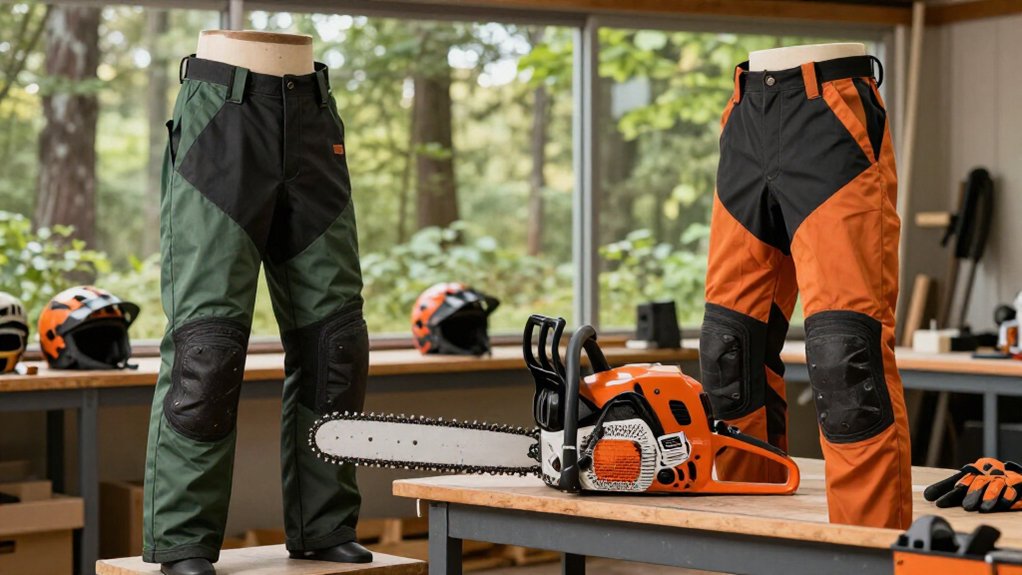
Class 1 chainsaw trousers are tested at 20 m/s; Class 2 trousers are tested at 24 m/s and generally contain more protective material. Match the marked class to your saw’s actual rated chain speed, not a nominal figure that includes a 33% increase.
Class 1 covers an actual speed of 18.6 m/s; above 20 m/s and up to 24 m/s, choose Class 2. Neither class guarantees injury prevention. Check certification, fit and site requirements; the details below can help you choose safely.
EN 381 and ISO 11393 Speed Classes
EN 381 and EN ISO 11393 classify chainsaw protective clothing by the chain speed used in testing: Class 0 is tested at 16 m/s, Class 1 at 20 m/s, Class 2 at 24 m/s, and Class 3 at 28 m/s.
| Class | Test chain speed |
|---|---|
| Class 0 | 16 m/s |
| Class 1 | 20 m/s |
| Class 2 | 24 m/s |
| Class 3 | 28 m/s |
These figures describe test speeds, not guarantees against injury in every cutting condition. To choose trousers, check your saw’s manual for its actual rated chain speed. Don’t use the EN ISO 11681 figure, which adds 33% to nominal speed. Class 0 isn’t permitted for chainsaw trousers. Match the garment rating to your equipment, and follow garment care and use instructions.
Class 1: 20 M/S, Class 2: 24 M/S
Class 1 protection is tested at chain speeds up to 20 m/s, while Class 2 is tested up to 24 m/s. That 4 m/s difference matters when you match protective clothing to your saw. Check the manual for its actual rated chain speed; don’t substitute a figure increased by 33% for a separate test method.
- At 18.6 m/s, your saw falls within Class 1’s speed range.
- Above 20 m/s and up to 24 m/s, choose Class 2 by speed rating.
- Don’t infer the saw’s speed from its model or appearance.
- Confirm that your garment’s label identifies the required protection class.
- Use a risk assessment and follow the saw maker’s instructions.
Classes describe test speeds, not guaranteed protection. Assess risks, choose PPE, follow your saw’s instructions.
Cut-Test Impact Resistance
Beyond the rated test speed, cut-test impact resistance depends on how the garment responds when a moving chain contacts it: protective fibres are pulled into the drive sprocket to help stop the chain.
This action can slow or stop the chain, but it doesn’t make the garment cut-proof. Class 1 protection is tested at 20 m/s; Class 2 at 24 m/s and generally uses more protective material.
Neither rating guarantees that you’ll avoid a cut. Real impacts can differ because chain sharpness, tension, impact angle, and a powered saw continuing to drive the chain affect the outcome. Choose protection that matches your saw’s rated chain speed, then assess the task and hazards. Don’t treat the class number as a prediction of injury severity.
Mobility While Climbing
When you’re climbing, extra protection can affect how freely you move. Class 1 garments rated to 20 m/s generally provide a lighter, flexible balance. Class 2, rated to 24 m/s, may use more protective material and feel less flexible during movement.
Consider how coverage and bulk influence climbing tasks:
- Assess whether added material restricts your reach when you extend or reposition.
- Notice any bulk that affects balance on limbs or in the canopy.
- Match class to your saw’s rated chain speed and task-specific risk assessment.
- Try garments with your harness and other PPE before work.
- Stretch and change position to confirm comfortable movement and adequate overlap.
The class rating alone can’t determine suitability; choose protection that supports safe movement without compromising required coverage for climbing.
Fit Across Body Shapes
Protection only works as intended if the garment fits securely across your body shape. Check the manufacturer’s size guide against your measurements, and account for any base layers you’ll wear underneath. If you’re broader through the waist, have fuller thighs, or have a longer or shorter build, compare garment measurements and leg lengths rather than trusting the size label alone.
Try the garment in your working positions. Bend, squat, and step to confirm you can move freely without pulling layers out of position. The fit should stay secure without pinching, gaping, or restricting movement. Fit and comfort vary across body shapes, so don’t assume one cut suits everyone. If it shifts or limits movement, seek a different cut or style. Never alter the protective material.
Protective Garment Layering
Layering chainsaw-protective garments helps prevent exposed gaps, but it doesn’t raise their certified protection class.
Choose every item for the saw’s actual rated chain speed: Class 1 covers up to 20 m/s, while Class 2 covers up to 24 m/s. Layering adds coverage, not a higher rating or guaranteed protection beyond that rating.
- Match each garment’s protection class to your saw’s rated chain speed.
- Check that trousers, jacket, gloves, and boots overlap during movement.
- Choose Type A for front-leg coverage; Type C wraps around your legs.
- Follow both garment and saw instructions before combining protective layers.
- Adjust fit so movement won’t shift protected areas or expose skin.
Inspect overlaps before work, then recheck them if garments shift; keep each layer within its stated use.
Heat and Breathability Tradeoffs
Heat and Breathability Tradeoffs
Class 2 trousers handle chain speeds up to 24 m/s, compared with Class 1’s 20 m/s, but their extra protective material may limit flexibility and add warmth.
When you work in hot conditions, heavier or bulkier clothing can raise heat stress and fatigue, which may weaken your concentration. Compare garment weight, breathability, stretch, and ventilation before choosing trousers. Openings at the backs of the legs can improve airflow, while added protection may restrict movement or trap heat. Choose a fit that lets you move freely without compromising coverage.
Above 40°C, lower-class trousers may ease heat-related discomfort, but don’t downgrade protection for comfort alone. First complete a risk assessment and confirm that Class 1’s protection remains adequate for the chain speed and hazards you face.
Maintenance and Garment Lifespan
Wash your chainsaw-protection garments before first use, then follow the care label to clean and store them without damaging their protective layers. Inspect clothing and boots regularly for wear or damage, and replace any item that may no longer protect you. Proper care can extend service life, but it can’t restore compromised protection.
Proper Washing and Storage
To help preserve their protective performance, wash chainsaw-protection garments before first use and follow the care label. Use the label’s instructions every time you clean them; improper washing can affect the materials you rely on for protection.
- Wash at no more than 60°C and 400 rpm with mild detergent; don’t use fabric softener or bleach.
- Close Velcro fasteners and zips, and leave the garment right-side out before washing.
- After washing, dry it flat in the air, not hanging from a line.
- If ironing’s needed, use only a low temperature to limit heat exposure.
- Once fully dry, store it clean and away from direct light.
These steps help you maintain the garment’s intended condition between uses; check its care label before each cleaning.
Replace Damaged Garments
Even with proper washing and storage, you need to inspect chainsaw-protective garments regularly for wear or damage.
After each use, especially after chain contact or a snagging incident, check the protective layers for cuts, tears, snags, or damage. Damaged fibres may no longer stop the chain as intended, even if outer fabric looks intact. Don’t attempt to repair protective inlay yourself; follow the manufacturer’s instructions or replace the garment.
Replace clothing that’s worn out or no longer fits properly. Protection depends on intact layers that stay correctly positioned while you work. A loose or misshapen garment can leave areas exposed, reducing coverage when you need it. Continue washing and storing your gear according to its care label, but remember that maintenance can’t restore damaged protection.
Site Rules and Certification
Check that your chainsaw PPE meets the relevant EN ISO 11393 requirements and carries clear certification and protection-class markings. Follow your site rules and applicable national regulations, and confirm that the gear suits your risk assessment and the saw’s actual rated chain speed. Use the chainsaw and PPE as their manufacturers instruct, including maintaining the required overlap between garments.
EN ISO 11393 Standards
EN ISO 11393 sets requirements and test methods for chainsaw-protective clothing, including trousers, gloves and upper-body protectors. It also covers footwear through a related standard. For you, class identifies the chain speed used in testing, not a promise that you’ll avoid injury.
- Trousers: EN ISO 11393-2:2019.
- Gloves: EN ISO 11393-4:2019.
- Upper-body protectors: EN ISO 11393-6:2019.
- Footwear: EN ISO 17249:2013.
- Class 1 tests at 20 m/s; Class 2 at 24 m/s.
Before choosing equipment, check its certification label and manufacturer information for the standard, class and intended design. Your employer should select certified PPE through a risk assessment, considering the saw, task, exposure and fit; don’t rely on chain-speed class alone. Make sure items suit the work and are maintained as instructed. A higher test speed doesn’t remove the need for safe work practices, training and site controls. Confirm compatibility across garments and footwear so protection supports mobility and operation.
Certification Markings
Look for the chainsaw-protection class and applicable standard on the PPE’s certification label, not just in the product description. Class 1 indicates testing for chain speeds up to 20 m/s; Class 2 covers speeds up to 24 m/s. Check that the marking matches your saw’s rated chain speed and the work you’ll perform.
For chainsaw-resistant footwear, look for EN ISO 17249. Its chainsaw-protection class is separate from general safety-footwear ratings such as S1 or S3, so don’t treat those ratings as proof of cut resistance. A class reflects performance under standardised test conditions; it can’t guarantee protection in every accident.
Follow your site rules and risk assessment when choosing certified PPE, and check that each item carries the appropriate marking before use. If you can’t verify its certification, don’t rely on it for chainsaw work.
Regional Compliance Rules
A protection class identifies a garment’s test speed, but your site rules and regional regulations determine whether it’s suitable for the job.
In Europe, chainsaw protective clothing must meet EN ISO 11393; older EN 381 labels may still appear. Class 1 is tested at 20 m/s, while Class 2 is tested at 24 m/s. Neither rating guarantees you’ll avoid injury. Check these requirements before choosing gear:
- Confirm each garment’s certification covers its intended use and region.
- Don’t assume European trousers meet North American standards.
- Review your employer’s risk assessment and site rules.
- Select adequate protection; chain speed alone doesn’t automatically require Class 2.
- Follow the saw manual, national accident-prevention rules, and site procedures for fit and overlap.
Your employer must select suitable protection for assessed hazards. Make sure trousers, footwear, and required garments fit correctly and overlap as procedures specify; gaps can expose you despite certification.
Confirm Your Saw’s Speed
Before choosing protective equipment, check your chainsaw’s manual for its actual rated chain speed.
Some manuals list two figures. The EN ISO 11681 figure is the nominal speed plus 33%; don’t use it to choose protection. Use the other figure, which represents your saw’s actual rated speed.
Then compare that speed with the protection class ratings. Class 1 covers chain speeds up to 20 m/s, while Class 2 covers speeds up to 24 m/s.
For example, the STIHL MS 211C manual lists 24.8 m/s as nominal speed plus 33% and 18.6 m/s as actual rated speed. Use 18.6 m/s when selecting its class, not 24.8 m/s.
If your manual doesn’t clearly identify actual chain speed, ask the manufacturer or your dealer for help.
Conclusion
Chainsaw Protection Class 1 Vs Class 2: Chain Speed Ratings Explained
Choose chainsaw trousers and chaps by matching their certified class to your saw’s chain speed, not by assuming higher always means safer. Class 1 covers 20 m/s; Class 2 covers 24 m/s, with protection tested under defined standards. You’ll still need a fit that lets you move, appropriate heat management, and regular inspection.
Follow site rules, care instructions, and replacement guidance. Confirm your saw’s chain speed, then use properly maintained, certified protection every time you cut.