Should You Store a Chainsaw Vertically? Best Storage Position Explained
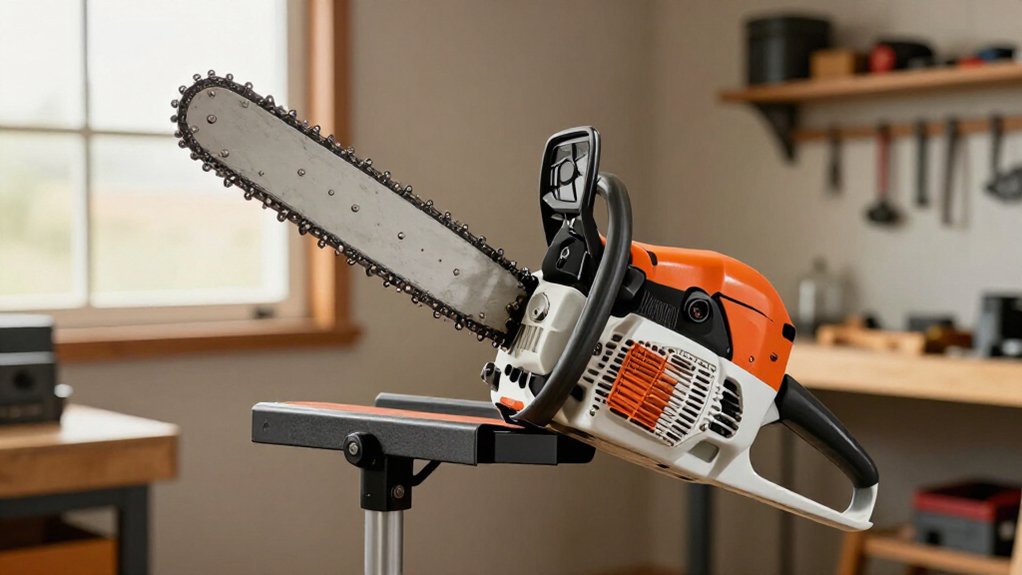
You can store your chainsaw vertically if its manual permits it. Empty the fuel tank, then secure the saw by its powerhead on a sturdy mount; never suspend it by the guide bar. Point the bar downward, fit its cover, and leave clearance for removal and airflow.
For long-term storage, drain chain oil to reduce seepage, unless your oil type requires a full tank. Check seals and vents, and follow your manual. More specifics follow.
Vertical Storage: Yes or No?
Yes, you can store a chainsaw vertically or hang it securely, but empty the fuel tank first to reduce the risk of leaks. Before hanging it, point the saw downward so it sits in a controlled position. Never suspend it from the guide bar; the bar isn’t designed to carry the saw’s weight and could bend or become damaged. Use a sturdy support that holds the body securely and keeps the chain away from people and nearby equipment.
Store the saw clean and dry in a well-ventilated area away from direct sunlight and moisture. Keep it out of reach of children and prevent accidental contact with the chain. If vertical storage isn’t practical, lay the saw on a stable surface. Check your owner’s manual for model-specific storage instructions and required preparation steps. Keep the mounting point secure and clear of foot traffic.
Preventing Vertical-Storage Oil Leaks
To prevent bar-and-chain oil from leaking during long-term vertical storage, empty the oil tank and check its seals and gaskets for wear.
A damaged seal or gasket can let oil escape, so replace worn parts before you put the saw away. Follow your model’s operating instructions for storage steps or limits; designs differ, and the manual takes priority. Before positioning the saw upright, make sure the fuel tank is empty, as required for vertical or hanging storage. Secure the saw against tipping in a safe location.
If you need to store it on its side instead, place a drip tray or absorbent pad underneath and check for oil before and after storage. Don’t assume a dry exterior means the seals are sound; inspect for seepage.
Real-World Storage Examples
For vertical storage, mount the saw securely with the bar pointing down, never hang it by the guide bar, and empty the fuel tank first to reduce leak risk. In a shed, verify the saw can’t shift or fall; keep its chain guarded.
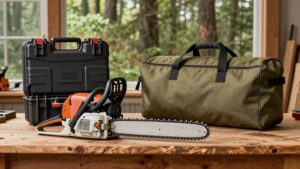
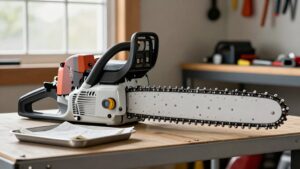
For shelf storage, lay the saw on its side only on a sturdy, level surface. Set it in a tray or use raised edges to contain seepage. A chainsaw bag or case works well; clean and dry the saw before packing it to limit dust buildup. You can also use a plastic tote as a case: cut a ¾-inch slot for the bar, then leave the bar cover in place. Keep the storage area dry and out of children’s reach, too.
Chainsaw Mounting Options
You can choose wall-mounted storage, a sturdy shelf, or a purpose-built holder rated for your saw’s weight. Before mounting, empty the fuel tank, support the powerhead, and point the bar downward. Never hang the saw by its guide bar. Keep the saw secured out of children’s reach, and use a tray or case to contain leaks and debris.
Wall-Mounted Storage
A secure wall mount keeps a chainsaw off the floor, but hang it with the powerhead downward and never support its weight by the guide bar.
Before you hang the saw vertically, empty its fuel tank to reduce leak risk. Choose a mount rated for your saw’s weight and fasten it securely into wall structure, following the hardware instructions. Some mounts can hold more than 100 pounds when installed correctly, but verify the rating and installation rather than assuming capacity.
Clean and dry the chainsaw before storage, then fit a bar cover to help protect the chain. Place the mount indoors in a dry, well-ventilated area away from direct sunlight. Position it beyond children’s reach, and make sure the saw can’t be bumped loose.
Chainsaw Shelves
Chainsaw Shelves
If wall mounting isn’t practical, a sturdy shelf offers a good option for longer-term chainsaw storage. Lay your saw on its side and secure it against sliding or falling. Choose a dry indoor shelf rather than a damp concrete floor; moisture can corrode metal. Empty the fuel tank first to reduce leakage onto the surface. Clean the saw and remove the bar and chain only as your model’s instructions direct.
| Check | Action | Benefit |
|---|---|---|
| Fuel | Empty tank | Limits leaks |
| Position | Lay saw sideways | Stable support |
| Restraint | Secure saw | Prevents falls |
| Shelf | Keep dry indoors | Reduces corrosion |
Check that the shelf supports the saw’s weight and stays clear of loose items. A raised, tray-like edge or tether can catch debris or leaks and improve stability, but still secure the saw against movement.
Purpose-Built Holders
Purpose-built wall mounts provide secure vertical storage when they’re correctly sized and firmly installed. Before you hang your saw, empty its fuel tank to reduce leak risk. Confirm the mount is firmly anchored and rated for your chainsaw’s weight. Support the powerhead with the guide bar pointing downward; don’t hang the saw by its bar, which isn’t designed to bear the machine’s weight.
A holder-and-tray system offers added containment: secure the saw with its bungee cord, and let the tray catch leaks and debris. This setup can work for storage or transport, provided you secure the saw appropriately. Choose a mount or holder made for your chainsaw’s size. Holder-and-tray models aren’t available in every size, so verify compatibility before buying. Check it before use.
Oil-Tank Vent Design
Your chainsaw’s tank vent balances pressure and vacuum, but its design varies by model, so check the manual before choosing a vertical storage position. If you store the saw on its side or hang it vertically, oil may seep through the vent; upright storage can reduce this risk. For long-term vertical storage, drain the oil tank, or inspect its seals and gaskets and set the saw over an absorbent pad.
How Tank Vents Work
The oil-tank vent admits air as chain oil leaves the tank, preventing a vacuum from restricting flow to the bar and chain. On most saws, a small one-way valve allows replacement air to enter while limiting oil seepage when you tilt the tool. Its layout and service method vary by model, so check your operator’s manual before inspecting or cleaning it. If lubrication drops, don’t assume the chain or pump is at fault: follow the manual’s checks for the vent and oil passages.
A blocked vent can interrupt delivery and increase wear, so stop cutting if the bar and chain aren’t receiving oil. A dirty or damaged vent may leak. Wipe the saw clean, check for seepage, and store it in a stable position.
Pressure And Vacuum Relief
As chain oil leaves the tank or its temperature changes, the oil-tank vent lets air move in or out to balance pressure. When oil leaves, the vent must admit replacement air; otherwise, a vacuum can form and restrict flow to the bar and chain. You may then see reduced lubrication even when the tank contains enough oil.
If lubrication drops or you find an oil leak, inspect the vent and its seals for blockage or damage, following your chainsaw’s manual. Vent designs differ by model. Don’t plug, modify, or remove the vent to control oil release. Doing so can disrupt pressure relief, impair oil delivery, or create a leak path. Switch off the saw and let hot components cool before servicing. If the vent remains damaged, arrange repair per your manual before running the saw.
Positioning And Oil Leakage
Because oil-tank vents differ by model, follow your manual’s guidance on storage position to reduce leakage. Store your chainsaw upright when practical; this position generally limits chain oil from seeping into unsuitable areas. Don’t assume every saw can hang safely, because vent layouts and approved orientations vary.
Use vertical or hanging storage only after you’ve emptied the fuel tank, which helps prevent fuel leaks. For long-term storage, drain the oil tank as well to reduce seepage. If you must store the saw on its side, set it on a stable surface and place a drip tray or absorbent pad underneath. Before storage, inspect tank seals and gaskets for wear or damage; replace faulty parts, since they can leak in any position. Lock it away.
Cabinet Clearance Measurements
Measure the chainsaw’s full height with its bar cover fitted, then add enough cabinet clearance to insert and remove it without scraping. Check internal depth against the saw’s overall length, including the guide bar; a cabinet that fits the powerhead may still be too shallow for the complete tool. If you store it vertically, leave clearance below the powerhead, and hang the empty-fuel saw securely so it won’t touch the cabinet floor.
Allow space around the saw for air circulation, and keep the cabinet dry and well ventilated. Before placing the saw inside, check that its mount supports the weight without slipping or obstructing removal. Choose a cabinet you can lock, and position it to keep the chainsaw safely out of children’s reach.
Cold-Weather Storage Concerns
Even in a well-fitted cabinet, prepare the saw for prolonged cold-weather storage. For storage longer than a month, drain the fuel tank and run the engine until it stops, reducing stale-fuel and carburettor-blockage risks. If your saw uses vegetable-based chain oil, fill its oil tank before storage to help prevent gumming.
Semi-synthetic STIHL SynthPlus can remain in the tank without topping up. Clean sawdust, dirt, and oil from the saw, then apply a light protective-oil coating to the bar and chain to help prevent rust. Store it throughout the entire winter storage period in a dry, cool, well-ventilated place away from moisture and direct sunlight, and keep it out of children’s reach. Vertical or hanging storage works only with an empty fuel tank; point the saw downward and never hang it by the guide bar.
Forgetting the Bar Cover
Forgetting the Bar Cover
Before storing or hanging your chainsaw, fit the guide-bar cover to reduce the risk of accidental contact with the sharp chain and keep dust and debris off the bar and chain. Treat the cover as part of your storage setup, whether you place the saw horizontally or hang it vertically. A bare bar can snag clothing or expose anyone handling the equipment to sharp cutters.
- Fit the cover before moving the saw into storage.
- Keep it on as the bar passes through a tote slot.
- Confirm it sits securely without pressing on the chain.
- Replace a loose or damaged cover before storage.
Recheck the cover after positioning the saw; it should stay seated, protect the chain, and avoid pressing against or damaging it in storage.
Disconnect the Spark Plug
Once the bar cover is secure, disconnect the spark plug to reduce the risk of accidental starting during storage. Before you handle the plug, switch the saw off and let it cool completely. Follow your model’s instructions for removal; procedures and plug access vary. Keep the disconnected lead away from the plug so it can’t make contact during storage.
Winter storage calls for extra cylinder protection. Remove the plug only if your manual directs you to do so. Add a small amount of oil into the cylinder, then pull the starter cord a few times to spread it evenly. Don’t overfill; use the amount and method specified by the manufacturer.
| Step | Action |
|---|---|
| Storage | Disconnect lead |
| Winter | Oil cylinder |
| After | Pull cord |
Conclusion
Before storing your chainsaw vertically, check the manufacturer’s instructions and confirm the oil tank vent won’t leak in that position. Secure the saw on a suitable mount, allow clearance for the bar and handle, and account for cold-weather changes. Always fit the bar cover and disconnect the spark-plug lead before handling or storing the saw. A stable, correctly positioned setup helps prevent spills, accidental contact, and damage while keeping your chainsaw ready for its next use.