10 Best Gas Chainsaws for Hardwood in 2026
The best gas chainsaws for hardwood in 2026 match engine power and bar length to your typical logs. For thick oak, maple, or hickory, consider the 68cc PROYAMA or 71cc NEO-TEC; for firewood and general cutting, the Husqvarna 460 Rancher, PINKWAY 6220G, and Lewhale 63ACK offer practical options.
Lighter jobs may suit the Husqvarna 120 Mark III or 130. Compare chain compatibility, vibration control, safety features, and parts support to find your best fit. The key differences can help you choose with confidence.
| VEVOR 52CC 18-Inch Gas Chainsaw |  | Best Compact Power | Engine Size: 52 cc | Bar Length: 18 inches | Power Source: Gasoline | VIEW LATEST PRICE | Read Our Analysis |
| PROYAMA 68CC Gas Powered Chainsaw 24 Inch 20 Inch Top Handle Chain Saw |  | Best for Heavy-Duty Cutting | Engine Size: 68 cc | Bar Length: 20- and 24-inch bars | Power Source: Gas | VIEW LATEST PRICE | Read Our Analysis |
| Husqvarna 120 Mark III 14-Inch Gas Chainsaw |  | Best for Homeowners | Engine Size: 38 cc | Bar Length: 14 inches | Power Source: Gas | VIEW LATEST PRICE | Read Our Analysis |
| 62cc Gas-Powered 20-Inch Chainsaw (6220G) |  | Budget-Friendly Pick | Engine Size: 62 cc | Bar Length: 20 inches | Power Source: Gas | VIEW LATEST PRICE | Read Our Analysis |
| Husqvarna 460 Rancher Gas Powered Chainsaw 24 Inch |  | Best Overall | Engine Size: 60.3 cc | Bar Length: 24 inches | Power Source: Gas | VIEW LATEST PRICE | Read Our Analysis |
| 63cc Gas Chainsaw with 20-Inch Bar (63ACK) | 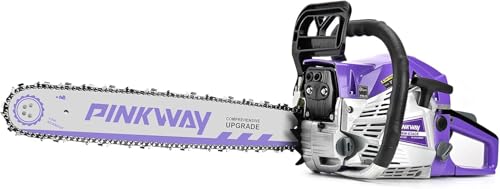 | Best for Firewood | Engine Size: 63 cc | Bar Length: 20 inches | Power Source: Gasoline | VIEW LATEST PRICE | Read Our Analysis |
| NEO-TEC NH872 71cc Gas Chainsaw Compatible with Husqvarna 372XP |  | Professional Grade | Engine Size: 71 cc | Bar Length: Compatible with 24- or 28-inch bars; not included | Power Source: Gasoline | VIEW LATEST PRICE | Read Our Analysis |
| Husqvarna 130 Gas Powered Chainsaw 16 Inch |  | Best for Beginners | Engine Size: 38 cc | Bar Length: 16 inches | Power Source: Gas | VIEW LATEST PRICE | Read Our Analysis |
| NAZEAOB 20-Inch 58CC Gas Chainsaw Kit | 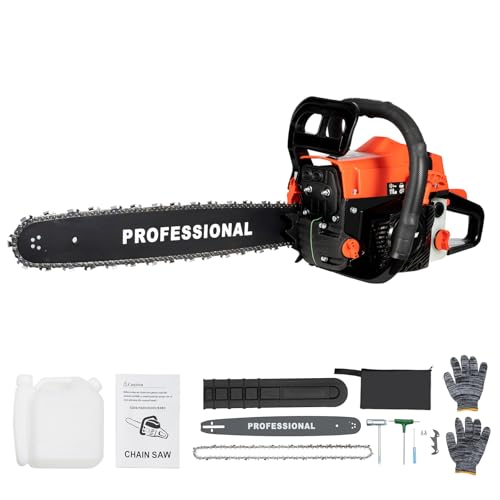 | Best Lightweight Kit | Engine Size: 58 cc | Bar Length: 20 inches | Power Source: Fuel-powered | VIEW LATEST PRICE | Read Our Analysis |
| 62cc 20 Inch Gas Chainsaw for Tree Cutting Firewood Logging (20in) |  | Best Easy Maintenance | Engine Size: 62 cc | Bar Length: 20 inches | Power Source: Gas | VIEW LATEST PRICE | Read Our Analysis |
More Details on Our Top Picks
VEVOR 52CC 18-Inch Gas Chainsaw
For homeowners tackling hardwood, the VEVOR 52CC packs compact power into an 18-inch chainsaw. Its 52CC engine delivers 2.55 HP (1.9 kW) and runs at 8,500 RPM, reaching 12,000 RPM. The steel bar and chain cut wood up to 16.93 inches, letting you tackle felling, trimming, branches, and land clearing.
Built-in shock absorption cuts vibration, helping you work steadily and extend service life. The fuel tank holds 0.58 qt, while the chain oil tank holds 0.27 qt. Its outer fuel-tank shell resists rough conditions and leaks. The handheld, cordless design gives you mobility, and customer service offers startup assistance.
- Engine Size:52 cc
- Bar Length:18 inches
- Power Source:Gasoline
- Cutting Uses:Tree cutting, trimming, felling, and wood cutting
- Starting:Startup assistance available through customer service
- Additional Feature:Built-in shock absorber
- Additional Feature:Durable fuel-tank shell
- Additional Feature:Startup assistance available
PROYAMA 68CC Gas Powered Chainsaw 24 Inch 20 Inch Top Handle Chain Saw
The PROYAMA 68CC chainsaw suits heavy-duty cutting, giving landowners and forestry crews 4.5 horsepower and 20- and 24-inch bars for tackling thick hardwood, felling trees, and preparing firewood. Its 68cc two-cycle engine also handles storm cleanup, farm work, landscaping, and outdoor projects. Choose the 20-inch bar for more manageable cuts or attach the 24-inch option for large trees and substantial logs.
A magnesium-alloy case and chain brake resist impact, while hard-wearing components stand up to demanding use. You’ll get easier starts, reduced vibration, and ergonomic handles for improved control and less fatigue during longer cutting sessions. Durable parts also help limit maintenance.
- Engine Size:68 cc
- Bar Length:20- and 24-inch bars
- Power Source:Gas
- Cutting Uses:Felling, firewood, cleanup, and outdoor projects
- Starting:Efficient starting system
- Safety:Magnesium-alloy chain brake
- Additional Feature:Includes two guide bars
- Additional Feature:Magnesium-alloy construction
- Additional Feature:Ergonomic handles
Husqvarna 120 Mark III 14-Inch Gas Chainsaw
A 14-inch bar makes the Husqvarna 120 Mark III a practical choice for homeowners pruning and cutting light hardwood. Its 38-cc, two-cycle X-Torq engine uses efficient combustion to deliver power and torque for routine woodcutting. The 3/8-inch-pitch chain has a .050-inch gauge, suiting the saw’s compact setup to smaller jobs rather than heavy hardwood bucking.
An inertia-activated chain brake helps protect you if kickback occurs. Separate choke and stop-switch controls simplify starting, and the switch resets automatically when you pull out the choke, helping prevent flooding. LowVib dampeners reduce vibrations between the engine and chassis, so you can work more comfortably during pruning and light cutting.
- Engine Size:38 cc
- Bar Length:14 inches
- Power Source:Gas
- Cutting Uses:Homeowner wood cutting and pruning
- Starting:Separate choke and stop controls
- Safety:Inertia-activated chain brake
- Additional Feature:X-Torq engine technology
- Additional Feature:LowVib dampeners
- Additional Feature:Separate choke and stop controls
62cc Gas-Powered 20-Inch Chainsaw (6220G)
Woodcutters tackling hardwood will find the PINKWAY 6220G a budget-friendly pick for demanding cuts. Its 62cc two-stroke engine powers felling, lumber work, and firewood cutting; the maker claims about 10% lower fuel consumption than the original engine. The 20-inch bar and durable chain help you move through thick stock, while the comfortable handle aids comfort during longer sessions.
Automatic oiling reduces chain and bar wear; some oil near the clutch is normal. Dual throttle switches require simultaneous operation, while a brake baffle supports emergency braking and helps protect your hands. You get a 12-month warranty and support for parts or technical questions.
- Engine Size:62 cc
- Bar Length:20 inches
- Power Source:Gas
- Cutting Uses:Tree felling, lumber, and wood cutting
- Safety:Dual throttle switches and brake baffle
- Additional Feature:Lower fuel consumption
- Additional Feature:Automatic chain lubrication
- Additional Feature:12-month warranty
Husqvarna 460 Rancher Gas Powered Chainsaw 24 Inch
With its 60.3 cc engine and 24-inch bar, the Husqvarna 460 Rancher stands out as a top all-around pick for hardwood work. Its 3.6 HP X-TORQ engine delivers power at low RPMs, helping you tackle demanding cuts. Smart Start makes startup easier, while the combined choke/stop control helps prevent flooding. You’ll also get an inertia-activated chain brake to help reduce kickback-related injury risk. Air Injection removes larger debris before it reaches the filter, helping extend engine life. The offset front handle and LowVib system support a steadier, more comfortable grip. Its recommended bar range spans 13 to 24 inches.
- Engine Size:60.3 cc
- Bar Length:24 inches
- Power Source:Gas
- Starting:Smart Start
- Safety:Inertia-activated chain brake
- Additional Feature:Smart Start system
- Additional Feature:Air Injection cleaning
- Additional Feature:Offset front handle
63cc Gas Chainsaw with 20-Inch Bar (63ACK)
For homeowners preparing firewood, the Lewhale 63ACK pairs a 63cc engine with a 20-inch bar. It runs a two-stroke engine delivering 3.5 horsepower and up to 8,500 rpm, giving you power for firewood and felling trees. A low-kickback chain adds control, while the starter wheel can help you start with fewer pulls. Automatic oiling lubricates the bar and chain.
The non-slip, anti-vibration handle helps reduce discomfort, and its ergonomic design supports handling. An air-cleaning system helps extend filter life and cut fuel use by 20%. You get a reinforced chain, hardened bar, safety device, and tool kit for home and wood-cutting work.
- Engine Size:63 cc
- Bar Length:20 inches
- Power Source:Gasoline
- Cutting Uses:Firewood and tree felling
- Starting:Large starter wheel
- Safety:Safety device to help prevent accidental activation
- Additional Feature:Large starter wheel
- Additional Feature:Air-cleaning system
- Additional Feature:Tool kit included
NEO-TEC NH872 71cc Gas Chainsaw Compatible with Husqvarna 372XP
Built for demanding hardwood work, the professional-grade NEO-TEC NH872 delivers 71 cc and 5.3 horsepower for felling and storm cleanup. Its full-crank engine and magnesium-alloy chassis suit large timber and land clearing. You can fit compatible 24- or 28-inch bars using the D009 mount and 3/8-inch chain pitch; bar and chain aren’t included. Husqvarna 372XP-compatible parts broaden replacement options.
An anti-vibration system helps limit fatigue, while the centrifugal air-cleaning system, quick-release filter, and adjustable oil pump simplify upkeep. You also get an inertia-activated chain brake, throttle lock, quick-start system, one-year commercial warranty, and technical support. It isn’t CARB-certified.
- Engine Size:71 cc
- Bar Length:Compatible with 24- or 28-inch bars; not included
- Power Source:Gasoline
- Cutting Uses:Felling, cleanup, and land clearing
- Starting:Quick-start system
- Safety:Inertia-activated chain brake and throttle lock
- Additional Feature:Magnesium-alloy chassis
- Additional Feature:Adjustable oil pump
- Additional Feature:Quick-release air filter
Husqvarna 130 Gas Powered Chainsaw 16 Inch
The Husqvarna 130 gives beginners a manageable starting point for occasional hardwood cutting, pairing a 38-cc, 2-HP engine with a 16-inch bar. Its X-TORQUE engine is designed to deliver power at low RPMs, making it suited to lighter jobs rather than demanding, prolonged felling. A fuel pump and combined choke/stop control help you start it easily and reduce flooding.
When you cut, the inertia-activated chain brake helps reduce kickback injury risk, while LowVib dampeners limit vibration and fatigue. Centrifugal Air Injection removes larger dust and debris before they reach the filter. You can fit a 14- to 16-inch bar.
- Engine Size:38 cc
- Bar Length:16 inches
- Power Source:Gas
- Starting:Fuel pump and combined choke/stop control
- Safety:Inertia-activated chain brake
- Additional Feature:Fuel pump
- Additional Feature:Air Injection cleaning
- Additional Feature:LowVib dampeners
NAZEAOB 20-Inch 58CC Gas Chainsaw Kit
Homeowners cutting hardwood around gardens or farms may appreciate this portable 58cc kit. The NAZE AOB GUIOL452 pairs a fuel-powered, 2-stroke engine with a 20-inch bar, giving you reach for cutting wood and trees. Its 58cc displacement suits jobs where portability matters, though you should match the saw to the size and condition of your hardwood.
A hand-pull starter gets the engine running, while air cooling helps manage heat during operation. Use it for garden or farm cutting, and follow safe handling practices. This kit fits your needs if you want gas-powered capability with a 20-inch cutting setup.
- Engine Size:58 cc
- Bar Length:20 inches
- Power Source:Fuel-powered
- Cutting Uses:Wood and tree cutting
- Starting:Hand-pull start
- Additional Feature:Air-cooling system
- Additional Feature:Portable design
- Additional Feature:Kit format
62cc 20 Inch Gas Chainsaw for Tree Cutting Firewood Logging (20in)
For demanding hardwood jobs, Baococo’s 62cc chainsaw makes upkeep simple with tool-free chain tensioning. Its 20-inch bar suits tree cutting, firewood preparation, and logging, giving you reach for larger cuts. The forged magnesium crankcase provides a sturdy foundation, while the 3D anti-kickback chain brake system adds a safety feature you’ll want during demanding work.
Its EPA Phase III and CARB compliant engine meets stated emissions requirements. For cold-weather use, the winterized carburetor includes pre-heating to help you operate in lower temperatures. Model YYJ2601RB1822 comes in black. Before each job, check the chain, brake, and operating instructions to work safely.
- Engine Size:62 cc
- Bar Length:20 inches
- Power Source:Gas
- Cutting Uses:Tree cutting, firewood, and logging
- Safety:3D anti-kickback chain brake system
- Additional Feature:Forged magnesium crankcase
- Additional Feature:Tool-free chain tensioning
- Additional Feature:Winterized carburetor
Factors to Consider When Choosing Gas Chainsaws for Hardwood
When choosing a gas chainsaw for hardwood, match engine displacement and power to the wood you’ll cut. Consider bar length and reach, chain quality and pitch, and the hardwood type and log size. Don’t overlook vibration and handling, since they affect your comfort and control.
Engine Displacement and Power
Engine displacement matters in hardwood because a larger engine generally delivers more torque to keep the chain cutting under load.
Compare displacement and horsepower rather than relying on engine speed; speed alone won’t tell you how well a saw handles dense wood. The specifications span 38 to 71 cc, with output ranging from 2 HP at 38 cc to 5.3 HP at 71 cc. A 68 cc model produces 4.5 HP, illustrating why you should check both figures.
For pruning and lighter homeowner cutting, a lower-displacement saw may meet your needs. If you’re felling trees or cutting large logs, choose greater capacity and output to sustain cutting through thick hardwood. Still, don’t buy more engine than your usual work demands; extra capacity isn’t automatically useful. Judge the saw by displacement and rated power.
Bar Length and Reach
Choose a bar long enough to reach through the hardwood you expect to cut without making the saw unwieldy. Your bar length should match both your routine workload and the saw’s engine capacity. A 14 to 16-inch bar works well for smaller cuts and pruning, while an 18 to 20-inch bar gives you more reach for larger logs.
For especially thick hardwood, a bar of 24 inches or longer can extend your cutting reach, but you’ll need more room and control. Longer bars place greater demands on the saw, so don’t choose extra length unless your engine and cutting needs can support it. Before selecting a replacement, check that its length is compatible with your chainsaw and chain. Matching reach to the work helps you handle cuts efficiently without carrying more bar than you need. That balance matters when you move between pruning and felling larger trees.
Chain Quality and Pitch
Dense hardwood puts extra strain on a chain, so look for durable, wear-resistant cutters that hold their edge. Match the chain’s pitch to the saw’s drive sprocket and guide bar. Pitch measures the distance across three consecutive rivets divided by two. Check the chain’s gauge, or drive-link thickness, against the guide bar groove, too; mismatches can prevent proper operation.
Consider a low-kickback chain to help reduce kickback risk, but don’t treat it as a substitute for sound technique and suitable safety equipment. Keep the chain sharp and correctly tensioned. A dull or loose chain cuts less effectively and can place added strain on the saw, so inspect and maintain it regularly.
Hardwood Type and Log Size
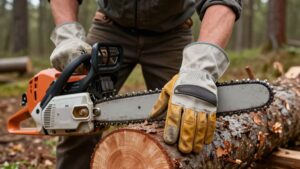
Hardwood species and log size both affect how much power a gas chainsaw needs. Oak, maple, and hickory are dense, so you’ll need more cutting power and a sharp, well-maintained chain than you would for softer wood. A large, dense log demands more from your saw than a small piece of the same species.
Match the guide bar to the logs you’ll cut. A 14 to 16-inch bar works well for smaller cuts, while logs nearing 20 inches typically need a longer bar. Check the saw’s stated cutting diameter, too: it may be less than the bar’s full length. Leave safe clearance, and don’t force the bar through an oversized log. If a log exceeds the bar’s usable reach, make controlled cuts from more than one side rather than attempting one pass.
Vibration and Handling
Vibration and handling affect how comfortably and safely you can cut hardwood over time. Choose a saw with vibration-dampening mounts or an anti-vibration system to help reduce hand fatigue during long cutting sessions. Ergonomic, non-slip handles give you a secure grip and steadier control when the saw meets dense wood.
If you’re using a longer, heavier bar, check the balance and make sure you can guide the saw comfortably through thick logs. An offset front handle may improve your grip and wrist position, making extended cuts easier to manage. Also match the saw’s size and weight to your strength and experience. A powerful model isn’t a good choice if you struggle to control it; poor fit can increase fatigue and make steady work harder.
Safety Features and Braking
When a chain catches or kicks back, an inertia-activated chain brake is designed to stop it quickly. Look for a hand guard or brake baffle that shields your hand and supports emergency braking. A throttle lock or dual-switch control adds another step before the throttle engages, helping prevent accidental starts.
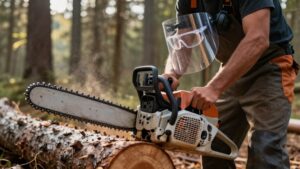
Before cutting, keep the brake and its controls clean and in good working order, then check that the brake engages. These safeguards can reduce risk, but they can’t eliminate it. Wear appropriate protective equipment, including eye, hearing, hand, leg, and foot protection, and keep a stable stance as you cut hardwood. Choose controls you can reach and operate confidently. A brake can’t replace careful handling or attention to saw position as you cut hardwood.
Maintenance and Parts Availability
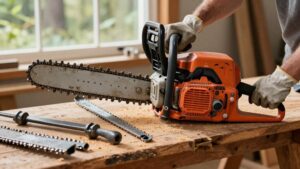
Because cutting hardwood puts heavy demands on a saw, check that replacement chains, guide bars, air filters, spark plugs, and other wear parts are easy to find. Before buying, confirm the bar mount, chain pitch, and gauge match widely stocked parts; that compatibility can simplify sourcing when a component wears out. Look for accessible service features, such as a quick-release air filter or adjustable oil pump, so routine maintenance takes less time.
You should also choose a saw with clear instructions and dependable technical support, helping you diagnose problems and identify compatible replacements. Finally, review warranty terms and parts support, especially for components that face heavy wear during hardwood cutting. Reliable availability helps keep your saw working and limits delays during the cutting season.
Frequently Asked Questions
How Often Should a Gas Chainsaw Chain Be Sharpened When Cutting Hardwood?
You should sharpen your chain whenever it stops cutting cleanly, produces fine sawdust, or pulls sideways. In hardwood, check it after each tank; dirt, knots, and use may require sharpening sooner. Don’t wait for damage.
What Protective Equipment Is Essential When Operating a Gas Chainsaw?
You need a helmet with face shield, hearing protection, safety glasses, chainsaw chaps, sturdy gloves, and steel-toed, slip-resistant boots. Don’t skip close-fitting clothing; it helps protect you from cuts, debris, and noise while you’re working.
How Should a Gas Chainsaw Be Stored During the Off-Season?
Before storage, drain the fuel or add stabilizer, then run your saw briefly. Clean and dry it, sharpen the chain, lubricate components, and store it covered where you can’t reach children, safely all winter long.
What Fuel Mixture Should I Use for a Two-Stroke Gas Chainsaw?
Use the ratio your chainsaw manual specifies; most modern models require a 50:1 gasoline-to-two-stroke-oil mix, while some need 40:1. Measure carefully, use fresh unleaded gasoline and air-cooled two-stroke oil; never guess to avoid engine damage.
How Can I Reduce Kickback Risk When Cutting Hardwood?
Reduce kickback by keeping the bar nose clear, holding handles firmly, and cutting at waist height. Use a sharp, properly tensioned chain, engage the chain brake when moving, and don’t cut with the bar tip.
Conclusion
Choose a gas chainsaw that matches your hardwood, workload, and experience. For occasional firewood, a lighter model may be easier to control; for larger logs, you’ll want more power and bar length. Don’t buy on engine size alone: consider weight, vibration, safety features, maintenance, and reliable parts. Whichever saw you choose, keep the chain sharp, wear proper protective gear, and follow the manual. With the right tool and careful technique, you’ll cut hardwood more safely and efficiently.