Are Chainsaw Gloves Necessary? Cut Protection vs Regular Work Gloves
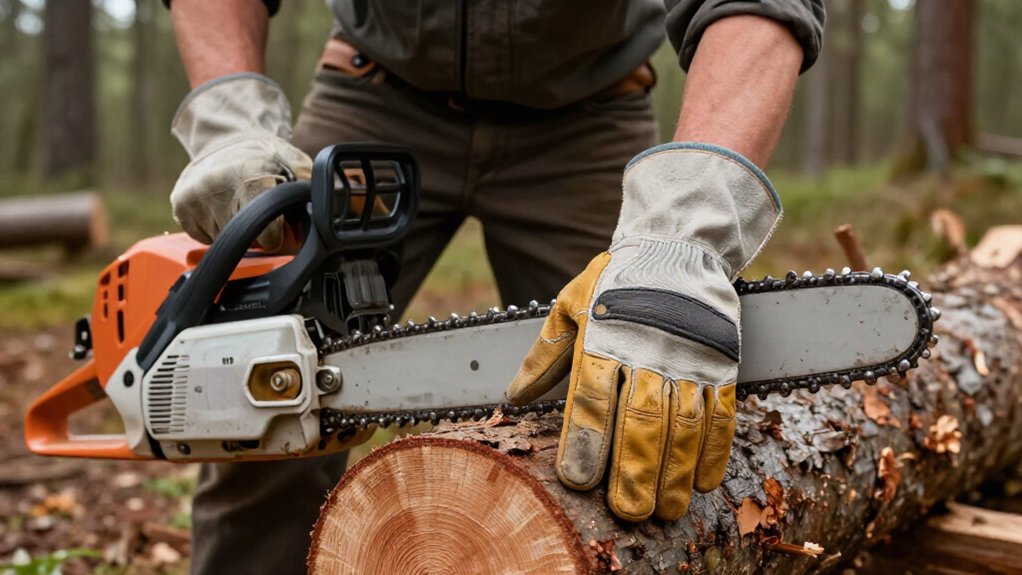
Yes, you should wear chainsaw-specific gloves for added protection, but don’t treat them as permission to approach a moving chain.
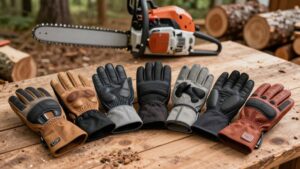
Regular work gloves may protect against splinters and abrasion, while certified chainsaw gloves provide tested protection only in labeled areas and classes.
They can’t stop a running chain or replace safe technique, a functioning chain brake, and required protective equipment.
Check the certification label, fit, grip, and coverage. Details ahead can guide your choice.
Chain Contact Protection Limits
Although chainsaw gloves may reduce injury from brief, glancing contact, they can’t stop a running chain or make contact safe. Treat gloves as protective equipment, not permission to approach a moving chain. Chainsaw-specific models may place protective layers on the back of your hand, but coverage and performance vary by product. Check the standard and design.
EN 381-7 classifies protection from Class 0 through Class 3 according to chain speed. Design A covers the back of your hand; Design B also covers the tops of your fingers. A cut-resistance rating under ANSI/ISEA 105 or EN 388 alone doesn’t demonstrate chainsaw-chain protection, because those standards test different blade contact. Keep both hands on the saw and follow operating technique and appropriate protective equipment requirements.
Left-Hand Chainstop Layer
Some chainsaw gloves add a cut-resistant layer to the back of the left hand as limited protection if it contacts the chain; it won’t stop the chain or guarantee you’ll avoid injury. Check the label for the glove’s protection zone and rating. EN 381-7 classifies by chain speed: Class 0 covers up to 16 m/s; higher classes cover faster speeds.
Design A protects the back of your hand; Design B also covers the tops of your fingers. Husqvarna lists its Functional glove for left-hand protection, rated Class 0 at 16 m/s. Check that its rating and coverage meet applicable requirements. Treat this layer as supplemental: you’ll still need safe saw handling and other required protective equipment. It can’t guarantee protection in every chain contact.
Chain-Brake Activation During Kickback
During kickback, a chainsaw can move rapidly toward you, so keep both hands on the handles and learn how your saw’s chain brake works before use. The brake is designed to stop the chain when activated, but it can’t replace sound technique or required protective equipment. Don’t assume any gloves will trigger the brake or shield your hands from a moving chain.
| Situation | Required action |
|---|---|
| Kickback | Keep both hands on handles |
| Pre-use | Test brake; arrange repair if faulty |
| Between cuts | Engage brake before walking |
Before operation, test the brake; arrange repair if it won’t engage or stop the chain. Engage it after each cut and before walking with the saw running. A working brake reduces risk, but it doesn’t guarantee protection; follow manufacturer’s instructions and safety rules.
Chainsaw Glove Construction Types
Chainsaw gloves combine shell materials, reinforced palms, and protective fiber layers, but designs don’t provide equal coverage. Check whether cut-resistant material covers the back of your hand or extends to your fingers, and verify the glove meets the chainsaw-specific standard required for your work. A general cut-resistance rating alone doesn’t confirm chainsaw protection.
Protective Fiber Layers
Although Kevlar and other aramid fibers can form cut-resistant glove layers, the coverage varies: a lining may cover the whole glove or pair with a leather palm for grip and padding, while knuckle or finger reinforcements add coverage and cushioning. Check placement before work; protection isn’t uniform across both hands or every area.
| Design | Coverage | What to check |
|---|---|---|
| Full lining | Whole glove | Confirm labeled protection |
| Mixed build | Fiber lining; leather palm | Verify zones |
| Targeted panels | Knuckles or fingers | Check fit and scope |
Husqvarna Functional uses a goatskin palm and cut-resistant protection on the left hand, showing coverage can differ by hand. Don’t treat fiber content alone as proof: verify a chainsaw-specific rating, such as EN 381-7, and match its chain-speed class and design to your task.
Reinforced Palm Materials
A reinforced palm can improve grip, cushioning, and abrasion resistance when you handle wood, but leather alone won’t provide significant cut protection. Goatskin and other leathers can help you hold logs and withstand wear. For added palm cut resistance, look for a liner made with Kevlar or another aramid fiber; some Youngstown gloves use Kevlar throughout.
Non-slip pads or coatings may improve control, and foam inserts may cushion vibration, but neither feature necessarily reduces cut risk. Reinforced stitching can extend service life during wood handling. Don’t treat these features as protection from contact with a running chain. Before buying, check the glove’s stated rating and confirm where its protective material sits. Standard cut-resistance ratings generally test the palm, not every glove area, so don’t assume the back or fingers offer equivalent protection. Follow safety requirements and use gloves as one part of a chainsaw safety program.
Glove Construction Types
Because glove construction varies, check where each model places its protective materials rather than assuming the whole glove offers equal cut protection. A common design pairs a durable leather palm, often goatskin for grip and padding, with a flexible textile back such as spandex. Some gloves add cut-resistant lining throughout; Youngstown’s General Utility is one example.
Chainsaw-specific models may instead position protective layers on the back of your hand, so verify task coverage.
Reinforced knuckles, thermoplastic-rubber finger overlays, and foam inserts can address impact, abrasion, vibration, and fatigue. Non-slip pads aid grip; a terrycloth thumb wipes sweat, while an adjustable strap secures more reliably than loose elastic. Check labels: Husqvarna’s Functional glove, for example, pairs goatskin with left-hand cut protection and a stretchy back.
Wet-Weather Grip Loss
Rain can make your glove palms and finger pads slick, reducing your control of the saw and wet logs. Choose a properly fitting glove with a non-slip palm, and test its grip in expected conditions; cut-resistance ratings don’t show wet-weather performance. Replace worn grip pads, since grip loss can compromise safe handling.
Slick Grip in Rain
Wet weather can make smooth leather, rubber, or coated glove palms slick, reducing your control of the chainsaw handles and increasing the risk of a slip. Before cutting, test your grip in expected conditions and confirm you can hold both handles securely. Choose well-fitting gloves with textured, non-slip palms and fingers; grip pads can improve handling.
Don’t assume a high cut-resistance rating guarantees wet grip; these qualities differ. Inspect palms and replace gloves if coating peels or surfaces become worn or slick. Stop if you can’t maintain a secure hold before starting each cutting task. Gloves may guard against scrapes and splinters, but they aren’t designed to stop a moving chain. Keep a secure two-handed grip and follow the manufacturer’s instructions and safe operating practices.
Wet Glove Materials
When wet wood, rain, or damp sawdust slicks your gloves, your hands may slip on the chainsaw handles and reduce control. Choose a close-fitting glove with a grippy palm, such as rubber-coated textile or textured leather. Test its hold on wet handles before cutting; a dry-surface check doesn’t show how it’ll perform in damp conditions.
Grip depends on the palm’s material and condition. Smooth or worn coatings may provide little traction, and cushioned palms have been reported to wear quickly. Leather can help you handle wet wood, but ordinary leather work gloves aren’t a substitute for certified chainsaw protective gloves. If your gloves become soaked, muddy, or slick with sap, clean or replace them before resuming work. Keep both hands firmly on the saw handles.
Grip Loss Risks
If moisture makes your glove palms or finger pads slick, you may lose control of the saw or logs. That loss of grip can undermine safe handling, especially when you’re cutting or moving wet wood. Choose gloves designed to retain traction when damp, and look for non-slip palm pads that help you hold saw handles and logs securely.
Smooth, low-friction surfaces can slide against wet equipment or timber, increasing the chance of a dropped load or weakened control. Leather may help when you handle logs, but material alone doesn’t prove the glove will grip reliably in rain. Check that your glove fits snugly; oversized fingers or palms can shift and compromise your hold on the handles. Before cutting, test your grip and fit with the saw switched off. Don’t treat a cut-resistant rating as evidence of wet-weather traction; verify grip and follow equipment instructions.
Gloves for Limbing and Bucking
During limbing and bucking, well-fitting gloves can help protect your hands from splinters, scratches, and sharp bark. When handling branches and logs, regular leather work gloves can help, but leather alone offers little cut resistance. For meaningful cut protection, choose gloves with a cut-resistant liner.
Select a secure-fitting pair with grippy palms to maintain control on the saw handles and wood; loose gloves can slip and compromise your grip. Gloves may also reduce vibration and help shield your hands from cold or wet wood. However, they aren’t designed to stop a running chain.
Keep both hands on the saw handles and follow safe operating procedures. Treat gloves as supplementary protection, not a replacement for chainsaw training or protective chaps. Check fit before work.
Snagging on Moving Chains
Loose or oversized gloves can weaken your grip, let your hands slip on the saw handles, or snag on a moving chain. Choose gloves that fit securely without material, and check that no threads or parts can catch. A wrist strap can help keep a glove in place, but it doesn’t make contact with a moving chain safe.
Chainsaw gloves may contain cut-resistant material; they aren’t designed to stop a running chain or prevent injury. Keep both hands on the handles and use the saw according to operating instructions. Don’t rely on gloves to control chain hazards. Before you move with the saw running, engage the chain brake. If the brake doesn’t work, stop using the saw and have it repaired before operating it again.
Wrist-Cuff Coverage Gaps
A wrist cuff that shifts can expose skin when you reach, bend, or grip the saw. Choose gloves that fit snugly, and secure an adjustable strap without restricting movement.
- Check that the cuff overlaps your sleeve in working positions, with no exposed wrist skin.
- Inspect cuffs before use for tears, loose stitching, or worn closures that could loosen the fit.
- Treat the strap as a fit aid, not protection; tested glove areas don’t cover exposed skin or clothing gaps.
Gloves reduce hand hazards, but they won’t stop a running chain. Keep protective clothing, including chainsaw chaps, in use and follow safe technique; cuff coverage doesn’t replace either. Recheck the overlap whenever you change gloves or clothing layers during each task.
Check the Glove Certification Label
Before relying on chainsaw gloves, check the label for a chainsaw-specific standard such as EN 381-7. Class 0 to 3 ratings indicate tested chain speeds; the glove’s design also states whether protection covers only the back of your hand or extends over the tops of your fingers.
Don’t confuse ANSI/ISEA 105 A1 to A9 or EN 388 cut-resistance ratings with chainsaw certification. These tests measure resistance to hand-blade cuts, not a moving chainsaw chain. Read the exact standard, class, and design printed on each glove; ratings or coverage may differ between hands.
Treat older ANSI “level 5” labels cautiously: the pre-2016 scale used a different test and isn’t equivalent to A5. Verify the rating applies to that glove model and protection area. Palm-only testing doesn’t establish 360° protection.
Conclusion
Choose chainsaw gloves by checking the certification label and confirming the model meets applicable cut-resistance standards. They can reduce injury risk, but they can’t stop every chain contact or replace safe technique, guards, and a functioning chain brake.
Don’t assume left-hand protection covers your right hand or wrist. Match gloves to the task, weather, and fit; keep them clear of moving parts. Follow the saw manufacturer’s instructions and workplace rules, and replace damaged gloves promptly.