Safety Glasses vs Face Shield for Chainsaw Work: Do You Need Both?
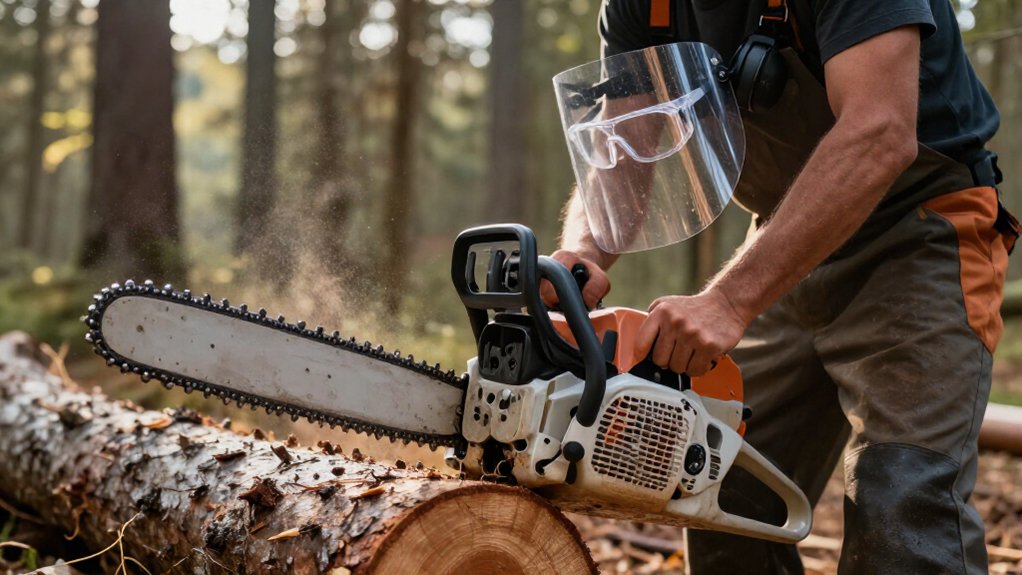
For chainsaw work, wear ANSI Z87.1-rated safety glasses or goggles beneath a properly fitted face shield; neither layer alone provides complete protection. Safety eyewear helps stop fine particles, while the shield intercepts larger chips and debris.
Choose impact-rated eyewear, check that it fits securely with your helmet, and keep your view clear. During overhead cutting, assess loose limbs and stay outside their fall path. Learn how fit, visibility, and chain-break risks affect setup before cutting.
ANSI Ratings and Coverage
Choose eye and face protection that meets ANSI Z87.1 requirements for arboriculture work. Safety glasses or goggles protect your eyes from flying chips, sawdust, and small particles. A face shield adds broader facial coverage, but it’s secondary protection; wear approved eyewear beneath it. For mesh visors, fine particles can pass through or around the mesh, so keep your eyewear on.
| Equipment | Marking/check | Coverage |
|---|---|---|
| Glasses/goggles | Z87.1+ on lens and frame | Eyes |
| Face shield | Applicable rules; ANSI Z87.1 | Face; eyewear underneath |
Check the Z87.1+ impact rating on both the eyewear’s lens and frame before use; don’t assume a shield alone provides eye protection. Select gear that fits securely and remains compatible, and inspect it regularly, replacing damaged components according to manufacturer guidance for your specific task.
Chainsaw Kickback Debris Paths
When the chain nose strikes an object, kickback can drive the saw suddenly upward and back toward you, while chain fragments and debris may reach your face from unexpected angles. Your protection must account for both the saw’s motion and projectiles.
- A nose strike can lift the powerhead toward your head before you react.
- A thrown chain may reach your face even after the chain catcher engages.
- Rebounding chips and small particles can enter around an unprotected eye.
- A mesh shield can block larger debris, but fine material may pass through or around it.
Wear safety glasses beneath a face shield; it adds coverage, while glasses protect your eyes if particles bypass mesh or approach from below or sides. Keep both fitted during cutting.
Sawdust and Sap Visibility
Sawdust and wood chips can rebound into your face, while sap or debris on protective eyewear can obscure your view. Use safety glasses or goggles as your primary eye barrier: their close fit helps stop sawdust and fine particles before they reach your eyes. A face shield adds coverage across your face, but don’t treat mesh as a substitute; fine debris can pass through or around it.
A clear plastic visor can block sawdust from your eyes, nose, and mouth, yet fogging may narrow your field of view. Sap, dust, and scratches can also compromise visibility. Before cutting, check that you can see clearly and consistently through each lens and shield. Clean them when debris accumulates, and replace any item with scratches, haze, or damage that obstructs your view. Stop work if contamination or fogging prevents you from tracking the chain and cutting area safely.
Prescription Eyewear Fit
Clear vision also depends on a secure fit over prescription eyewear. Prescription glasses alone may not provide high-impact protection, so don’t rely on them for chainsaw work. Wear ANSI Z87.1-rated safety eyewear beneath your face shield; guidance for mesh shields recommends spectacles underneath.
- Choose over-the-glass (OTG) safety glasses if they fit your prescription frames; look for a Z87.1+ impact-resistant rating.
- Put on both pairs, then check that neither shifts when you move your head.
- Inspect the edges for gaps and confirm the frames don’t press together or obstruct your field of vision.
- Store safety glasses in an integrated helmet-shell compartment, if available, so they stay accessible and are less likely to be lost or damaged.
Replace eyewear that won’t sit securely during work, always.
Hard-Hat Slot Compatibility
Choose a face shield designed for your hard hat’s specific slots and mounting system; an insecure fit can leave gaps or shift during chainsaw work.
Check that the shield and helmet attach securely, then confirm the helmet, visor, and eye-protection combination meets standards, including ANSI Z87.1 requirements for eye and face protection in arboriculture. A face shield doesn’t replace safety glasses or goggles, so wear compatible, rated eyewear beneath it.
If your integrated system lets shields or glasses move between active and stowed positions, verify each locks firmly and doesn’t obstruct your vision. Before use, inspect the hard-hat slots, adapters, and attachment points for damage or looseness. Replace any components that no longer hold the face protection securely; don’t rely on a loose mount.
Replacement Visor Availability
Before replacing a chainsaw face shield visor, check the helmet or shield manufacturer’s instructions for compatible models; don’t assume another visor will fit or provide approved protection.
Replacement availability varies, and no specific models or suppliers are identified here. Use this check before you buy:
- Match the replacement to the exact helmet or shield model and approved parts.
- Inspect the visor; replace it if scratches, haze, cracks, or other damage limits visibility or protection.
- If the correct visor isn’t available, confirm an alternative is approved for your helmet and meets applicable eye- and face-protection requirements.
- Keep properly rated safety glasses or goggles under the visor; a face shield alone doesn’t replace eye protection.
Don’t use an unverified substitute, and follow the maker’s installation and inspection guidance.
Dust Penetrates Mesh Visors
Although a mesh visor can stop larger flying debris, fine sawdust may pass through the mesh or around its edges and reach your eyes. Treat the visor as impact protection, not as a seal against airborne particles. Wear safety glasses or goggles beneath it; ANSI Z87.1’s selection guidance recommends spectacles under mesh face shields.
Choose eyewear suited to chainsaw work and marked ANSI Z87.1, rather than relying on mesh alone. If sawdust exposure is a concern, a clear plastic visor can create a barrier against particles that mesh allows through, but it doesn’t replace appropriate eye protection. Inspect both visor and eyewear before use. Replace or repair items with scratches, haze, or damage, since these defects can reduce visibility and compromise protection during cutting.
Long-Session Comfort
For long sessions, choose lightweight, balanced eye and face protection that fits securely without pressure points. Prioritize ventilation, but pair mesh shields with ANSI Z87.1-compliant safety glasses to block fine sawdust. Take breaks, and clean or replace damaged lenses so clear vision supports safe work.
Lightweight, Balanced Gear
A lightweight, balanced helmet-and-face-gear setup can reduce fatigue during long chainsaw sessions, but it must stay secure without creating uncomfortable pressure. Before extended work, test the complete setup:
- Choose a snug helmet whose weight sits evenly; adjust its fit so it won’t shift or press painfully.
- Keep impact-rated safety glasses beneath a face shield or mesh visor; lightweight gear never replaces eye protection.
- Check that the shield moves smoothly between working and raised positions without loosening the helmet.
- Confirm clear sightlines, and use anti-fog lenses or approved cleaning products if fogging obscures your view.
During a trial, wear components and move; address pressure points or instability before cutting. Recheck fit after adjustments, because a balanced system protects only when it remains positioned throughout the task.
Ventilation for Extended Wear
When you wear chainsaw eye and face protection for long sessions, choose a setup that allows airflow while maintaining full coverage. Good ventilation reduces heat buildup and fogging, but never trade protective coverage for airflow. A clear face shield may fog less than safety glasses and can keep sawdust away from your eyes, nose, and mouth.
Apply compatible anti-fog and lens-cleaning products as directed to preserve clear vision; don’t let residue or scratches interfere with visibility. Mesh shields typically ventilate well, yet fine particles can pass through or around the mesh. Wear compliant safety glasses or goggles beneath a mesh shield. Check fit before starting: your eyewear should sit securely without pressure points or gaps.
During extended work, stop in a safe place to clean lenses or clear fog. Take breaks as needed; impaired vision can undermine control and expose you to injury during work.
Overhead Limb Cutting
When you cut overhead limbs, falling chips and twigs can reach your eyes from above. Wear a helmet with a face shield, but don’t rely on the shield alone: use ANSI Z87.1 safety glasses or goggles underneath. A mesh shield may let fine sawdust through, so keep your eye protection clear and unobstructed.
Falling Debris Exposure
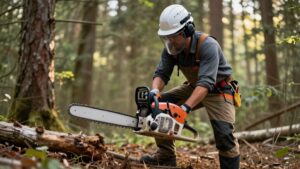
Overhead limb cutting exposes you to falling branches and wood debris, so wear a properly fitted safety helmet along with impact-rated safety glasses or goggles. Your helmet helps protect your head and face from impact, while eye protection blocks falling chips, sawdust, and small particles.
- Assess the canopy and identify loose limbs before you start; postpone cutting if hazards remain uncontrolled.
- Keep your position clear of the branch’s likely fall path, and never rely on PPE to prevent a strike.
- Inspect your helmet for cracks or warping before use; replace it after significant impact.
- Replace an expired helmet, and follow its manufacturer’s service instructions.
A safety plan and sound positioning matter: PPE reduces exposure, but it can’t eliminate the risk of falling overhead limbs.
Face Shield Coverage
A properly fitted face shield on a protective helmet helps intercept falling chips and debris during overhead limb cutting. It covers more of your face than safety glasses, reducing direct exposure to larger chips, twigs, and other debris. A mesh shield can stop substantial pieces, but fine particles may pass through its openings or travel around its edges; don’t treat it as a sealed barrier.
Choose a clear, correctly sized shield that sits securely and preserves your view of the cutting area. During utility line-clearance work, avoid black mesh if it could obscure overhead conductors. Before each use, inspect the helmet and shield for cracks, warping, loose fittings, or other damage. Replace damaged components, and replace the helmet after a significant impact, even if damage isn’t obvious. Keep the shield positioned as designed while cutting overhead to maintain full intended coverage and stability.
Eye Protection Underneath
Because a face shield can leave gaps and mesh can pass fine particles, wear ANSI Z87.1-rated safety glasses or goggles beneath it during overhead limb cutting. ANSI Z87.1 guidance recommends spectacles under mesh; a Z87.1+ mark identifies high-impact testing.
- Expect sawdust, chips, or small branches to fall toward your eyes; keep both layers in place.
- Choose clear lenses that preserve your view of the cut and overhead hazards.
- For utility line-clearance work, avoid black mesh if it could hide overhead conductors.
- Inspect glasses and shield before use; replace either if damaged or visibility suffers.
Don’t rely on the shield alone: fit glasses securely, keep lenses clean, and stop work if debris or fogging prevents a clear view of the limb and your surroundings clearly.
Chain-Break Protection
When a chain breaks or is thrown, it can strike your face; a reported kickback incident shows that a chain catcher may not stop it.
Don’t assume the catcher prevents facial injury. A face shield may reduce exposure to a thrown chain, but it isn’t guaranteed chain-break protection. Choose equipment designed for chainsaw hazards.
Wear ANSI Z87.1-compliant safety glasses or goggles beneath the shield. Mesh can admit fine particles, and a shield alone may leave your eyes exposed. Inspect both items regularly for cracks, distortion, loose mounts, or other damage that could compromise protection, and replace damaged gear. Follow manufacturers’ instructions and match protection to your task. PPE reduces exposure but can’t make chain failure safe. Keep your equipment properly fitted before every cut.
Conclusion
For chainsaw work, wear both properly rated safety glasses and a compatible face shield: glasses protect your eyes from debris that can slip beneath or around the shield, while the shield adds facial coverage. Choose equipment that fits your prescription eyewear and hard hat, and account for dust that can pass through mesh.
Neither option guarantees protection from a chain strike. Follow the saw and PPE manufacturers’ instructions, and replace damaged gear before cutting.