OSHA Chainsaw PPE Requirements: What the Rules Say You Must Wear
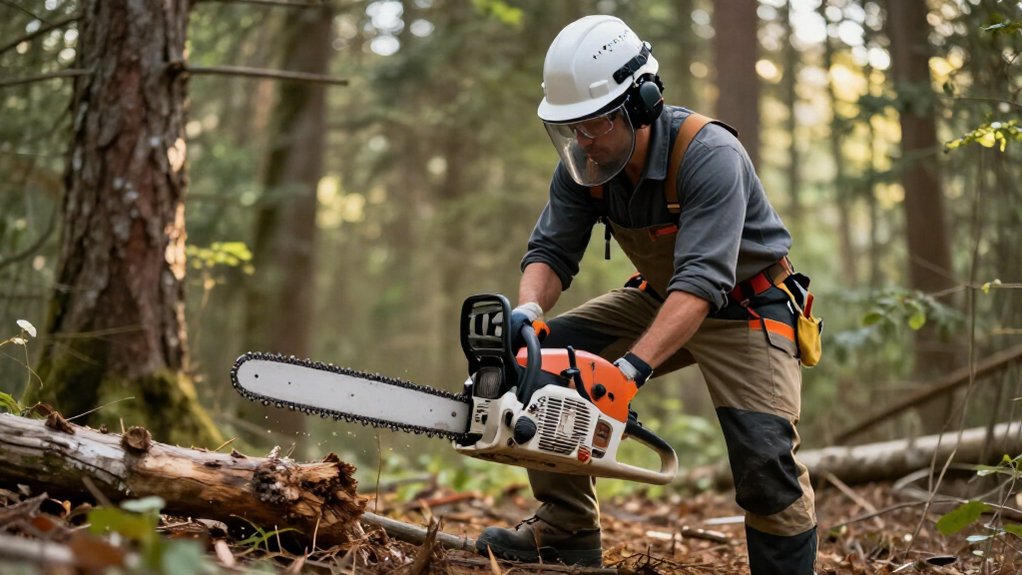
OSHA requires you to assess chainsaw hazards and select task-specific PPE; a generic checklist won’t suffice.
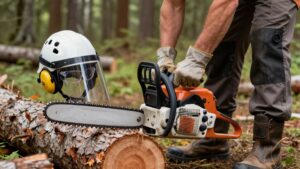
Wear a hard hat where falling objects threaten, eye protection for flying debris, hearing protection above 85 dB, and suitable footwear and close-fitting clothing.
If you perform logging work, wear chain-resistant leg protection covering both legs from upper thigh to boot top.
Fit and inspect gear, especially around storm-damaged trees. The sections ahead explain ratings, heat, helmets, and visibility.
OSHA PPE Selection Duties
Before assigning chainsaw work, employers must identify task-specific hazards, assess the risks, and select suitable PPE and other controls.
For each assignment, examine the work location, cutting method, equipment, and worker exposure. Use that assessment to determine what protection and safeguards the task requires; don’t rely on a general checklist alone. OSHA logging rules require chainsaw users to wear chain-cut-resistant leg protection covering from the upper thigh to the top of the boot.
Choose garments that fit securely and allow safe movement; close-fitting clothing can reduce entanglement risk. Select head, eye, hearing, hand, and foot protection suited to identified hazards, and verify applicable standards. Follow each manufacturer’s care and use instructions. Inspect equipment regularly before use and replace damaged items promptly. Replace leg garments after a cut compromises protection.
OSHA Chainsaw PPE Matrix
Match each chainsaw hazard to the protection it requires: use a hard hat for falling objects, eye protection for flying debris, hearing protection for saw noise, chain-resistant leg protection for chain contact, and suitable safety footwear for foot hazards.
| Hazard | Required protection |
|---|---|
| Falling objects | Hard hat |
| Flying debris or saw noise | Eye and hearing protection |
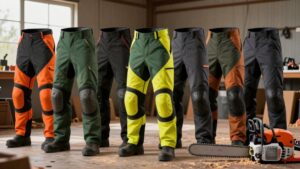
| Chain contact | Chain-resistant chaps or pants |
| Foot hazards | Suitable safety footwear |
Under OSHA’s logging standard, 29 CFR 1910.266(d)(1)(iv), you must wear leg protection that resists chain cuts. Choose chaps or pants covering both legs from upper thigh to boot top. OSHA doesn’t set manufacturing requirements for chaps; check labels and ASTM F1897, and follow the maker’s care and replacement instructions. Keep items serviceable and suited to hazards you face.
Cut-Resistance Rating Terms
What does a chainsaw leg-protection rating mean? It identifies protection tested for resistance to chainsaw cuts; it doesn’t promise injury prevention. ASTM F1897 sets the standard specification for leg protection used by chainsaw operators and addresses cut resistance. Under OSHA’s logging rule, 29 CFR 1910.266, you must wear chain-cut-resistant protection covering your upper thigh to the top of your boot.
UL tests and labels products that meet minimum cut-resistance requirements. Before you buy or use chaps or pants, check the label for the applicable ASTM F1897 edition, certification details, and a third-party mark, such as UL. Treat the rating as evidence of tested performance, not a guarantee that the garment will stop every chain or prevent every injury in all conditions of use.
Hearing Protection Exposure Thresholds
OSHA requires hearing protection when your noise exposure exceeds 85 dB. Chainsaws can produce about 110 dB, so you need protection rated at NRR 25 dB to reduce exposure below that threshold. Wear it consistently, and choose protection that still lets you hear people, cracking trees, warning signals, and important machine sounds.
OSHA Exposure Limits
When noise exposure exceeds 85 dB, hearing protection is required. Chainsaws can produce roughly 110 dB, with levels ranging from 95 to 115 dBA, so you must select protection suited to the sound. At about 110 dB, use hearing protection with a noise reduction rating (NRR) of 25 dB to reduce exposure below 85 dB.
Check the product rating and follow its fitting instructions; a device that doesn’t seal or fit correctly may not provide its rated protection. Wear your protection consistently whenever you operate a chainsaw in hazardous noise. Choose equipment that reduces noise adequately while allowing you to hear warnings, people speaking, and cracking trees. Don’t remove protection to communicate or monitor your surroundings; use a safe method to maintain awareness and protect your hearing.
Daily Noise Dose
Your daily noise dose depends on both sound level and exposure time, so use hearing protection whenever chainsaw noise exceeds 85 dB.
Chainsaws commonly produce about 110 dB, with reported levels of 95 to 115 dBA, so even a short task can add substantially to your daily dose. At roughly 110 dB, select hearing protection with a 25 dB noise reduction rating (NRR) to reduce exposure below 85 dB. Wear it continuously while you operate a chainsaw; removing it intermittently undermines its protective effect and increases your accumulated exposure.
Choose equipment that provides adequate attenuation without blocking your ability to hear coworkers, warning signals, cracking trees, or important machine sounds. Follow your employer’s hearing-conservation procedures and assess the noise and duration of each task. Don’t assume brief operation is harmless: sound intensity and time together determine your dose. Keep daily exposure records where your workplace program requires them.
Hearing Protection Thresholds
Because chainsaws can produce 95–115 dBA, wear hearing protection whenever exposure exceeds 85 dB. At roughly 110 dB, choose hearing protection with an NRR of 25 dB to reduce your exposure below 85 dB. Select protection that provides adequate reduction without isolating you from people, cracking trees, warning signals, or important machine sounds. Excessive attenuation can prevent you from hearing hazards and communicating.
Wear your protectors throughout the full period of noise exposure; removing them, even briefly, reduces their effectiveness. Fit and use them according to the manufacturer’s instructions, and make sure they remain in place while you operate or work near a chainsaw. Don’t treat protection as optional once noise exceeds the threshold. Your selection must control exposure while preserving awareness of critical cues.
Chainsaw Noise Levels
Chainsaws typically produce 95 to 115 dBA, with levels around 110 dB. These levels can expose you to hazardous sound during operation. Exposure varies by saw and task.
OSHA’s benchmark is 85 dB; compare measured levels with that limit when evaluating risk.
At approximately 110 dB, select hearing protection with an NRR of 25 dB to reduce exposure below 85 dB. Wear it consistently; intermittent use undermines effectiveness. Choose protection that reduces noise adequately while allowing you to hear coworkers, warning signals, cracking trees, and important machine sounds.
Follow the manufacturer’s instructions and maintain the device. Proper selection and use help deliver expected attenuation. These levels make hearing protection a necessary part of your chainsaw PPE assessment at the ear under actual operating conditions and task-specific exposure.
When Protection Is Required
Wear hearing protection when noise exposure exceeds 85 dB. This threshold applies to your exposure, not merely the tool’s stated sound level. Chainsaws can produce about 110 dB, so operating one can place you above the limit. Use hearing protection with a noise reduction rating (NRR) of 25 dB to reduce exposure below 85 dB.
You must wear the protection consistently; removing it during operation leaves your hearing exposed. Select equipment that provides adequate noise reduction while allowing you to hear people, warning signals, cracking trees, and important machine sounds. Don’t assume that maximum noise blocking is always the safest choice if it prevents you from detecting hazards. Check the protection’s fit and use it as directed so its reduction can help control your exposure.
Chainsaw Chap Coverage Requirements
Under OSHA’s logging standard, 29 CFR 1910.266, chainsaw users must wear leg protection that covers both legs from the full thigh to the top of the boot.
Your chaps or protective trousers must provide continuous coverage across each leg; protection on only one leg doesn’t meet the requirement. Choose garments that reach your boot tops and cover your thighs. Fasten buckles snugly, then check that the material stays in place as you bend, lift, or change position.
Recheck coverage if a chap shifts or loosens; exposed areas leave your legs vulnerable to accidental contact with a moving chain. Replace any chap after a chain cut or strike, even when its fabric looks intact. Don’t rely on appearance to judge whether its layers remain effective.
PPE for Hot-Weather Work
Even in hot weather, you must use chainsaw PPE suited to the task; choose breathable, moisture-wicking materials and ventilated designs where available, without compromising required protection.
On wildland jobs, heavy, heat-trapping gear can increase dehydration, fatigue, and heat-exhaustion risks, especially during long hikes over steep terrain. Manage heat without removing required protection throughout your entire work shift.
For radiant-heat exposure, select flame-resistant materials that resist ignition and won’t melt or drip; nylon and polyester outer shells can melt against your skin. Keep chainsaw leg protection from your upper thigh to the top of your boot. Secure the fit so you can move freely without creating a tripping hazard. Follow the manufacturer’s washing instructions; don’t use bleach or fabric softeners, which can damage flame-resistant coatings.
PPE for Storm-Damaged Trees
Because storm-damaged trees can release falling limbs, spring poles, and rolling logs, assess hazards and uneven ground before starting, then select task-appropriate PPE. Wear a protective hard hat where falling objects could injure your head. Use ANSI Z87.1-rated safety glasses or goggles; a mesh face guard alone doesn’t provide adequate eye protection.
Use hearing protection when noise exceeds 85 dB. Chainsaws can reach about 110 dB; choose hearing protection with an NRR of 25 dB to reduce exposure below 85 dB.
Wear chainsaw chaps or pants that cover your legs from the upper thigh to the top of your boots. Replace any garment that’s been cut.
Choose nonslip safety boots and close-fitting clothing. If you’re working near moving traffic, wear high-visibility clothing. Reassess often.
Helmet Inspection and Replacement
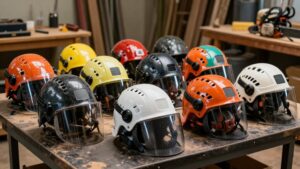
Along with selecting the right PPE, inspect your hard hat before each use for cracks, defects, or other signs of deterioration. Before you work, verify the helmet carries the required identifying information; a missing or unreadable marking can prevent you from confirming its suitability.
- Confirm the manufacturer identification, manufacture date, type and class, head-size information, and ANSI Z89.1 marking.
- Check that the liner sits securely and has no wear or broken parts; replace the helmet if it does.
- Remove damaged or deteriorated helmets from service. Replace helmets every three to five years, or sooner when the manufacturer recommends it.
Don’t rely on looks alone: record manufacture date, follow the maker’s instructions, and never use a helmet that fails inspection or exceeds its listed replacement interval.
ANSI/ISEA 107 Visibility Classes
ANSI/ISEA 107 classifies high-visibility apparel by how visible it makes workers and the conditions it’s designed for. For chainsaw work, assess traffic speed, separation, and visibility before selecting apparel; the standard’s class reflects exposure, not a universal chainsaw-specific rule.
- Choose Class 1 when you work in lower-risk areas with separated traffic and slow vehicles; it provides the least visibility.
- Select Class 2 when you work near moving traffic or face greater vehicle exposure; it gives you more visibility.
- Use Class 3 for high-risk tasks or poor visibility; it offers the greatest visibility, covering your torso and limbs.
Check the applicable ANSI/ISEA 107 edition and match its class to your site hazards.
Conclusion
You must select chainsaw PPE through a workplace hazard assessment and follow applicable OSHA requirements, not rely on one universal checklist. Verify that each item fits the task, exposure, and relevant standards; train workers to use and inspect it. Check hearing, leg, head, eye, and visibility protection where hazards warrant them. Replace damaged or expired equipment, and reassess when conditions change. If you’re unsure whether your protection meets the rules, consult OSHA requirements and your safety professional before work begins.
Chainsaw Chaps Size Calculator
Enter your belt-to-boot length, waist and chap style to see the matching size in STIHL, Labonville and Husqvarna size tables.
Matterhorn Chainsaw Boots Size Chart
Find your Pfanner Matterhorn chainsaw boot size (EU 39–48) from foot length or a US, UK or EU shoe size, using Pfanner's published charts.