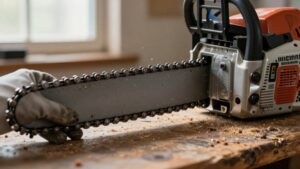
How to Store a Chainsaw Without Oil Leaking Everywhere
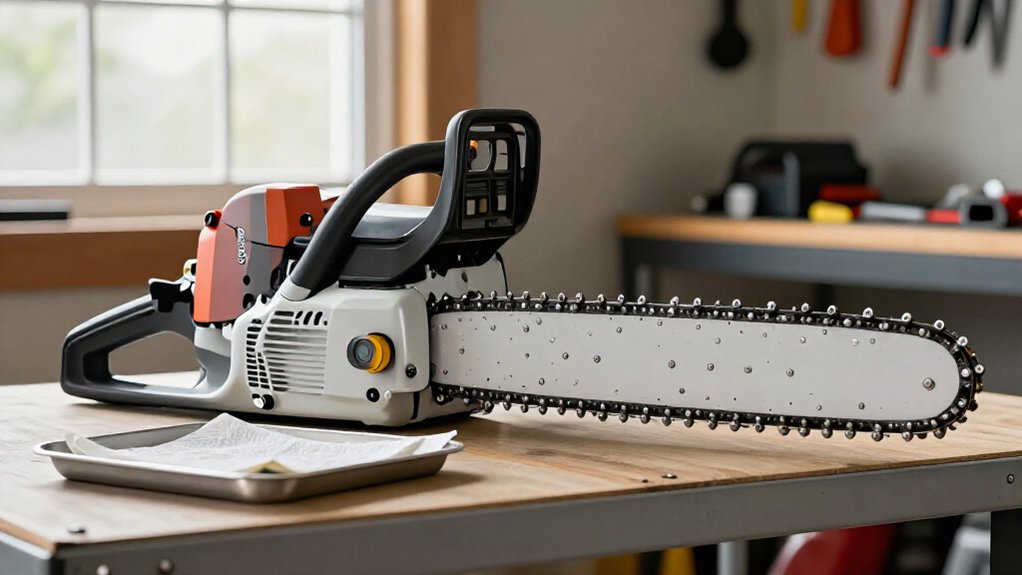
To keep bar oil off your floor, store your chainsaw level on a surface inside a raised-edge drip tray, with an absorbent mat beneath the bar. Don’t overfill the reservoir; follow the manual’s fill mark and leave room for oil to expand.
Wipe the saw and check for drips after it cools. If seepage continues, test a different position and inspect the cap and oiler area; leaks may need seal service. These checks can help pinpoint the cause.
Bar-Oil Leak Causes
Bar oil can seep by gravity through the oiler outlet near the drive sprocket, even when the saw is off. After use, warm oil and changing temperatures can raise pressure inside the tank, pushing oil toward the outlet. Check the tank cap and seal for damage, a loose fit, or contamination; a failed sealing surface can let oil escape. Don’t assume a faulty cap is the only cause, though.
Oil left in the reservoir may leak through the outlet even when the cap seals correctly. The amount varies among saws: owners report seepage on gas, electric, and battery models, while comparable saws may stay dry. Pump design could influence flow, but that remains a possible factor, not a confirmed explanation. Inspect the outlet and cap area after use, and note when seepage appears to help identify the source. Use these clues during troubleshooting later.
Oil-Absorbent Storage Tray
Even after you’ve checked the cap and oiler outlet, a tray can catch seepage during storage. Set your saw on an old cookie sheet or metal tray sized to contain oil escaping around the bar and reservoir. Add an absorbent mat inside the tray or beneath the saw to soak drips and shield shelves or floors.
Choose a stable spot where you won’t bump the saw or tip it over. Replace the mat when it’s saturated; in many setups, that may be infrequent. Periodically wipe oil and grime from the tray so residue doesn’t build up.
- Choose a tray with raised edges.
- Keep mat beneath the bar area.
- Keep absorbent material from hot parts.
- Leave room for the saw to sit.
- Store level.
Weekly Oil-Drip Checks
Check the shelf, floor, and saw case weekly for fresh bar-oil drips, and wipe up any oil promptly.
Inspect near the drive sprocket; seepage from the chain-oil outlet can collect there. Before treating a drip as a leak, rule out oil spilled during refilling. If the saw still seeps, change its storage position: keep the oil cap facing up or point the bar upward. Set an absorbent mat, tray, or hard-shell case underneath to catch oil and simplify checks.
| Check | Action |
|---|---|
| Drips | Wipe promptly |
| Sprocket | Watch for seepage |
| Spill | Confirm refill source |
| Persistent leak | Drain reservoir; filter oil into container |
If oil keeps escaping, drain the reservoir before storage; pour it through a fine paint filter back into its container before next use.
Clean the Bar Groove
Remove the guide bar and chain, then brush debris from the groove and clear the oil-feed port. Check the groove for wear, wipe the bar dry, and apply a light coat of protective oil. Reinstall the bar and chain per your saw’s instructions, then check chain tension before use.
Remove the Guide Bar
Before storing the saw, take off the guide bar and chain so you can clean them separately. Set the saw on a stable surface and engage the chain brake. Wear gloves to protect your hands from sharp cutters.
Loosen the bar nuts and release the brake before sliding the cover off. Lift the bar and chain from the sprocket and bar studs; keep the chain seated around the bar as you remove both. Keep track of the nuts and any spacers.
Clean the bar and chain separately to limit residue transfer during storage. Wipe the bar dry and apply a light coat of protective oil to help prevent rust. Store the parts in a dry place, with the bar protected from moisture.
Clear Debris From Groove
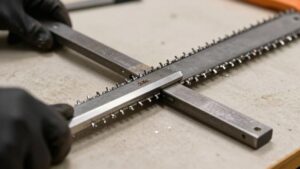
With the guide bar and chain off, clear packed sawdust, dirt, and old oil from the bar groove using a groove-cleaning tool or small brush.
Set the bar over a tray or work surface before scraping; loosened debris and residual bar oil can drop as you work. Run the tool along the full length of both groove rails, moving from one end to the other. Pay close attention to the nose, where compacted material can restrict chain travel.
Don’t gouge or widen the groove; use light, controlled strokes and remove buildup rather than metal. Brush out remaining particles, then wipe the groove clean with a lint-free cloth. Once the channel is clear and dry, reinstall the guide bar and chain according to your saw’s instructions.
Clean the Oil Port
After shutting off the engine and letting it cool, take off the guide bar and chain according to your saw’s manual. Set the parts on a clean work surface, then locate the oil outlet beside the bar mount. Brush away sawdust, packed oil, and debris with a soft brush or suitable nonmetal tool.
Don’t push wire or sharp tools into the port; they can damage the passage or its components. Clean the full bar groove and small oil-feed holes so chain oil can travel freely along the guide bar. Wipe off loosened residue, then check that each oil passage is open. Reinstall the bar and chain as directed in the manual, tightening and adjusting them to the specified settings before storing the saw safely.
Check for Groove Wear
Once the oil port is clear, remove the guide bar and chain, then brush sawdust, dirt, and packed oil from the bar groove.
Inspect both groove rails along the full length. Look for uneven wear, raised burrs, or spreading that widens the channel. A chain that sits loosely or crooked may track poorly and contribute to oil mess. Use a groove cleaner or narrow plastic scraper to lift residue; don’t gouge metal.
Clear oil-feed holes and the groove entrance near the bar mount; blockages can interrupt oil flow.
Check the groove stays deep and even along the bar. Compare rail height on both sides; if either rail is badly worn or damaged, replace the guide bar. Wipe the groove clean and inspect under good light before storing.
Reinstall the Bar Properly
Before reinstalling the guide bar, brush sawdust and debris from its groove so the chain can travel freely and oil passages stay clear. Use a narrow brush or suitable bar-groove cleaner, working along the full length of the channel. Check both rails for remaining packed debris.
Clear the bar’s oil-inlet hole and the matching outlet on the saw body, since a blockage can disrupt lubrication. Refit the bar in its original orientation, aligning the inlet with the saw’s oil outlet. Seat the chain in the groove with its cutting teeth facing the correct direction. Replace the side cover and tighten the bar nuts as your manual specifies. Then adjust chain tension: the bar and chain must sit correctly before you store the saw, or lubrication may suffer.
Cold-Weather Storage Tips
Before winter storage, drain the fuel from a gas saw you won’t use for a month or more, then run the engine until it stops; remove a cordless saw’s battery and store it separately in a cool, dry place. Let the saw cool, drain the bar-oil reservoir to limit cold-weather drips, and wipe the chain and guide bar with fresh oil to guard against rust. Store the saw upright in a dry, ventilated spot protected from rain, snow, and direct sunlight.
Prepare Fuel for Winter
How you prepare the fuel depends on how long you’ll store the saw.
For a month or longer, work in a well-ventilated area. Pour the fuel into a suitable, approved container, then start the engine and let it run until it stops; this clears fuel from the carburettor. Clean the empty tank, and take unused fuel to an appropriate disposal facility under local environmental rules. Follow your chainsaw’s operating manual for any model-specific storage steps.
Under a month? Add fuel stabilizer to the fuel, then run the saw for a few minutes so treated fuel circulates through the system. Don’t leave stabilizer sitting only in the tank.
If you use a battery-powered chainsaw, remove its battery and store it separately in a cool, dry place. Check the manual for battery storage guidance before putting the saw away.
Protect Against Freezing
When temperatures drop, store your chainsaw in a dry, well-ventilated place protected from rain, snow, and freezing moisture. Don’t leave it outdoors under a tarp; trapped dampness can freeze against metal and promote corrosion. Keep the saw out of direct sun and away from furnaces or wood stoves; uneven heating can cause condensation as temperatures shift.
Before storage, wipe fresh bar oil over the bar and chain to shield exposed steel from moisture and rust. For long-term gas storage, drain the tank and run the engine until it stops; handle leftover fuel safely and take unwanted fuel or oil to an approved disposal facility. With cordless saws, remove the battery and store it separately in a cool, dry place at 50 to 80°F when practical during storage.
Choose a Dry Storage Spot
Choose a dry, well-ventilated indoor spot, such as a garage or tool room, rather than leaving your chainsaw outdoors or in a damp shed. Keep the saw off damp floors and away from windows that collect condensation; moisture can rust the chain and guide bar. In cold weather, choose a cool, stable location and avoid moving the saw rapidly between temperatures.
A hot vehicle or storage spot beside a furnace or wood stove can warm the metal, then encourage condensation as it cools. Keep the chainsaw out of direct sunlight, and shield it from rain, snow, and other elements. If your storage area feels humid, wipe the chain and exposed guide bar with fresh bar oil or a suitable tool protectant before putting the saw away. Check that the space stays ventilated, and don’t park the saw near a heat source or on concrete that feels damp or cold.
Clear Cardboard Test
Place a clean piece of cardboard beneath the parked chainsaw and check it after several hours or overnight. Fresh spots show that bar oil is escaping while the saw sits. Before testing, make sure the cardboard is dry and large enough to catch drops from the bar, oil cap, and drive-sprocket area.
Note where each spot lands in relation to those parts; the pattern can help you narrow down where oil is coming from. Replace the cardboard before every new test so old stains won’t hide fresh drops. If you still see spots, change the saw’s storage position, such as turning it onto its side with the bar pointing up. Leave it there for several hours or overnight, then compare results.
Check Oil Pump Seal
If oil keeps leaking after you’ve stored the saw with the oil cap facing up or drained the reservoir, inspect the oil-pump seal for wear or damage.
Shut off the saw and let it cool. Wipe away spilled oil around the pump and nearby fittings, then inspect for fresh oil. Old residue can hide the source. Oil near the drive sprocket may be ordinary seepage from the chain-oil outlet, not a failed seal.
Don’t diagnose the seal from a stain or assume every leak points to it; oil left in the reservoir can also seep during storage. Use a bright light to check where the pump meets the case, and note where fresh oil reappears. If fresh oil appears around the pump, examine the seal for cracks, deformation, or looseness. If it looks damaged or the leak continues, have the saw serviced or replace the seal according to the manufacturer’s instructions.
Avoid Overfilling the Reservoir
Fill the bar-and-chain oil reservoir only to its marked level; leaving headspace helps limit seepage as the oil warms or the saw is moved. Don’t top off for storage, especially if you’ll lay the saw on its side or store it at an angle.
- Use the manual’s fill mark and storage instructions; recommendations vary by model and oil.
- Leave headspace rather than filling to the brim before moving the saw.
- For long storage or leak concerns, drain bar oil into a suitable container; it takes about 15 seconds.
- Return the drained oil to its original container for clean reuse.
- With vegetable-based oil such as STIHL BioPlus, fill to the top only if you’ll store the saw upright; a full tank can help prevent gumming.
Track Leaks After Storage
After storage, check the shelf, case, or floor beneath the saw for fresh oil and note how much has collected. Put an absorbent mat or old cookie sheet under the saw to catch drips and make changes easy to spot. Before setting it down, wipe away old oil so any new drops stand out clearly during your checks routine.
Recheck after the saw has cooled and over the next few days. Oil may seep from the chain-oil outlet near the drive sprocket.
If oil appears, store the saw with the cap facing up or on its side, then check whether the leak slows. If the reservoir keeps emptying, drain the bar oil before storage and inspect the tank, cap, and seals for a fault.
Conclusion
To store your chainsaw without oil spreading everywhere, clean the bar groove, avoid overfilling the reservoir, and check the oil pump seal if leaks continue. Keep the saw on an oil-absorbent tray, especially in cold weather, and inspect it weekly.
Place clean cardboard beneath the bar to spot drips after storage. Track when and where oil appears; those clues help you pinpoint the cause and keep your next storage session cleaner and safer.