What Size Chainsaw Do I Need? Bar Length and Power Matched to Your Jobs
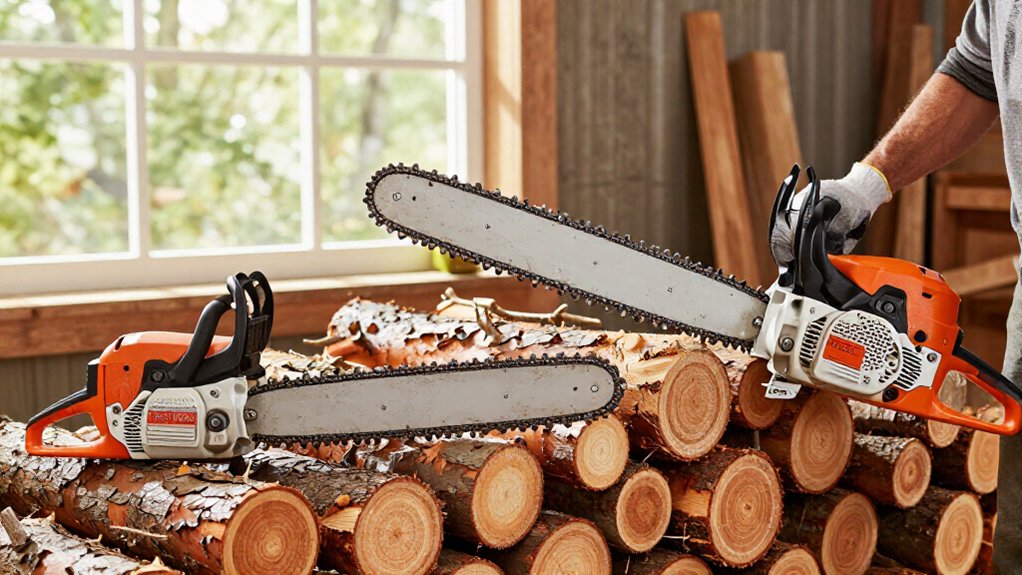
Choose a bar a few inches longer than your wood’s typical diameter, and use the shortest length that fits. For branches and logs under about 12 inches, 12–14-inch bars are manageable; 16–18-inch bars suit medium logs. Match engine power to the bar and follow your manual’s approved range.
Choose battery for quick, light jobs or gas for extended cutting. Before storm cleanup, check chain condition, wear protective gear, and assess unstable wood. Next, compare fit, costs, handling.
Wood Diameter and Bar Length
Match the bar to the wood you typically cut: as a general guide, choose one a few inches longer than the wood’s diameter. A 12 to 14-inch bar suits branches and brush under about 10 inches thick, while a 16 to 18-inch bar works well for logs roughly 10 to 18 inches across. For trunks around 18 to 20 inches or more, a 20 to 24-inch bar may fit, but use it only if your saw is approved and powerful enough. Logs up to about twice the bar’s length can often be cut from both sides; you may need to reposition the saw and workpiece safely. For occasional cuts, a shorter bar is usually easier to control. Choose a longer bar only when the wood’s diameter and your saw’s specifications call for it specifically.
Check Storage and Transport
Once you’ve chosen a bar length, check that the saw fits your storage space and transport setup. Measure it with the bar attached; longer bars need more room and can be harder to maneuver in tight storage areas.
Keep the saw in a dry, protected location, and cover the chain to reduce damage during storage or travel. In a vehicle, secure the saw so it can’t shift during braking or turns. Keep it separate from passengers and cargo that could contact the chain.
If you’ve got a battery-powered model, remove the battery and store it as the manufacturer directs, usually in a cool, dry place. For a gas saw, follow the manual’s fuel-handling and transport instructions, and keep fuel separately in an approved container.
Match Power to Bar Length
Match Power to Bar Length
Before choosing a bar, check your owner’s manual for the saw’s approved length range; a bar that physically fits isn’t necessarily safe or effective.
| Engine size | Typical bar | Cutting picture |
|---|---|---|
| 30 to 40 cc | 10 to 12 in | Pruning limbs |
| 40 to 50 cc | 12 to 14 in | Bucking small logs |
| 50 to 70 cc | 16 to 18 in | Felling medium trees |
Treat the chart as a rough guide, not approval: saws around 70 to 90 cc commonly handle 18 to 24-inch bars, while bars 24 inches or longer generally need more than 90 cc. Choose a length that leaves enough power for the wood you typically cut.
An oversized bar can slow the chain, bog or stall the engine, burn more fuel, and make control harder. Match chain and bar pitch and gauge to your saw, too. Choose for your usual wood and tasks.
Gas vs Battery Tradeoffs
Choose a gas saw for longer runtimes and demanding work, especially with bars over 18 inches; choose battery power for quieter, quick jobs without fuel mixing or exhaust. Battery models suit pruning and light cutting, but jobs lasting over about 45 minutes may require a spare battery or charging break. Compare purchase and upkeep costs, then match the saw’s power and runtime to your workload and follow its safety instructions.
Gas Power and Runtime
If you’re cutting for several hours, felling multiple trees, or processing a full cord of firewood, a gas chainsaw’s sustained power and longer runtime can be worth its added noise, exhaust, and maintenance.
Gas models suit demanding cuts and bars longer than 18 inches, where output helps maintain speed through thick wood. Match power and bar length to your largest material; an oversized bar can bog down if the engine can’t drive it effectively. For extended work, plan fuel stops and keep the saw supplied with fuel and chain oil.
Check chain tension and sharpness regularly, and let the engine cool before refueling. Wear a helmet, eye and hearing protection, gloves, chainsaw chaps, and sturdy boots. Choose gas when sustained cutting or large-tree work is routine.
Battery Convenience and Limits
For quick jobs, a battery chainsaw starts instantly, runs more quietly, and avoids fuel mixing and exhaust fumes. It suits pruning, light firewood cutting, and small-tree trimming, especially when you can finish in about 45 minutes or less. Its lighter weight can make occasional homeowner tasks easier to control, but keep both hands on the saw and wear protective gear.
Battery runtime and charging time can interrupt longer sessions or sustained heavy cutting, so plan around a spare battery or a recharge break. For felling several trees, processing a full cord of firewood, or using a bar over 18 inches, a gas saw offers more power and longer runtime. If you expect several hours of demanding work, choose gas; battery suits jobs.
Upfront and Ongoing Costs
Battery saws usually cost more upfront, but you’ll avoid fuel mixing, spark-plug changes, and air-filter maintenance. Gas saws can cost less initially, but you’ll pay for gasoline, two-stroke oil, chain oil, and engine upkeep over time. For a short session under about 45 minutes, battery costs may stay predictable; longer use can require spare batteries that raise your total.
A gas saw’s longer runtime may spare you that expense when you’re felling several trees or processing a full cord of firewood. Compare replacement battery prices and warranties with projected fuel and service costs before buying. If you’re uncertain how often you’ll use a saw, renting can limit upfront spending: battery models with 12 to 16-inch bars typically cost $25 to $45 per day, versus $35 to $65 for gas saws with longer bars. Keep protective equipment in your budget; don’t compromise safe operation to save.
Matching Power to Jobs
Match the saw’s power source to the work: battery models start instantly, run quietly, and avoid fuel mixing and exhaust, making them practical for pruning, light firewood, and quick jobs under about 45 minutes. A 12-inch electric saw can be a manageable starting point for occasional home use. Battery saws handle light cutting and medium-sized logs, but heavier work drains packs faster; plan shorter sessions and allow time to recharge.
A 14-inch bar comes on both gas and battery models, so choose by workload, runtime, and power—not bar length alone. If you’re felling several trees, processing a full cord, or using a bar over 18 inches, gas delivers longer runtime and greater cutting power. Follow the manual and always wear protective equipment.
Storm Cleanup Saw Picks
Assess the debris first: a 12 to 14-inch bar handles branches and logs under about 12 inches, while a manual-approved 16 to 18-inch bar suits larger pieces. Choose a lightweight battery saw for quick jobs under roughly 45 minutes or a gas saw for extended cleanup, and don’t use more bar than you need. Before cutting, wear protective gear and check chain tension and sharpness; leave leaning or tensioned storm-damaged trees to trained professionals.
Assess Storm Damage
After a storm, choose a saw based on the wood’s diameter and how long cleanup will take. For branches and logs under 12 inches thick, a 14-inch-bar saw offers reach without excess weight. A 12 to 14-inch bar works for light pruning and brush; downed limbs and logs roughly 10 to 18 inches across call for a 16 to 18-inch bar.
Use a battery saw for quick, light work, especially jobs lasting under about 45 minutes. For longer cleanup or greater cutting demand, a gas saw provides more runtime and power. Check your saw’s approved bar range, and verify the bar and chain share compatible pitch and gauge. Storm-damaged wood can shift under tension or prove unstable. Wear chainsaw protective gear, maintain a secure stance, and leave hazardous tree removal to a trained professional.
Match Saw to Debris
The debris’s diameter and the length of the cleanup help determine the right saw. For branches and brush under 10 inches thick, choose a 12 to 14-inch saw; its shorter bar stays maneuverable and easier to control among tangled limbs. For mixed debris, downed limbs, and logs about 10 to 18 inches across, a 16 to 18-inch saw balances reach with handling.
Before cutting, check the saw’s approved bar-length range and confirm the bar and chain have matching, specified pitch and gauge. Don’t assume a longer bar will make a saw suitable for larger wood. For large, thick storm-felled trees, a 20 to 24-inch bar is appropriate only when the saw is rated for it and you’re experienced. Keep stable footing, clear escape routes, and treat limbs under tension cautiously while cutting.
Choose Portable Power
For storm cleanup with branches and logs under 12 inches thick, a 14-inch chainsaw offers a practical balance of reach and control. Battery saws start instantly, run more quietly, and spare you fuel mixing and exhaust, making them useful for quick cleanup jobs lasting under about 45 minutes. Choose gas when you’re clearing several trees, cutting thick hardwood, or working for hours; longer runtime and greater power suit those demands.
Match the bar to your saw’s approved range, then confirm the bar and chain share compatible pitch and gauge. If cleanup exceeds that window or involves dense, extensive wood, gas reduces interruptions. For a brief, scattered job, battery power keeps setup simple; base your choice on cutting time and the largest wood you’ll tackle.
Prioritize Safe Operation
When storm cleanup calls for branches and logs under 12 inches thick, a 12–14-inch saw is easier to maneuver; choose battery power for quieter, quick jobs or gas for longer runtime.
For logs and limbs 10 to 18 inches, a 16–18-inch saw offers reach, but use it only if your manual approves that bar length. Match bar length and chain specs to your saw; a sharp, tensioned chain reduces bogging and the urge to force cuts.
Before cutting storm-damaged wood, wear a hard hat, eye and ear protection, chainsaw pants, gloves, and steel-toed boots. Watch for tensioned branches or trunks; they may shift suddenly.
Keep footing, avoid cutting above shoulder height, and stop if debris, imbalance, or fatigue makes control difficult. Leave large or tensioned trees to professionals.
Bar Mount and Chain Specs
Before installing a bar and chain, check your saw’s manual and the bar’s mount markings to confirm the mount pattern matches. Then match the bar and chain’s pitch and gauge exactly; a chain that appears to fit may still be incompatible. The bar and chain work as a matched pair, so changing bar length often means selecting a chain with a different number of drive links.
Use only bar lengths the manufacturer approves for your saw. The correct setup supports proper oiling, chain speed, balance, and stable tension. If the bar markings have worn away, measure from the saw body to the bar tip to identify its length, then verify that measurement against your saw’s specifications. Don’t rely on length alone: confirm every compatibility detail before operating the saw.
Sharpening and Chain Replacement Costs
Bar length affects ongoing chain costs: longer bars generally need more expensive chains and can cost more to sharpen, so don’t buy extra length you won’t use.
Regularly inspect chain sharpness; a dull chain cuts poorly and may tempt you to force the saw, reducing control. Sharpen it when needed, following the saw maker’s instructions.
For replacement, match pitch and gauge to your bar and saw, and check the manual for specifications. Changing bar length can change the required drive-link count, so verify it before buying. If you rent, ask whether the chain arrives sharpened and what condition you must return it in. Factor sharpening frequency and replacement price into your choice; buying the length your jobs require can keep maintenance costs manageable.
Cold-Start Reliability Checks
Reliable cold starts depend on both routine maintenance and safe setup. Before you pull the starter, consult your owner’s manual: choke and primer steps vary by model, and the correct sequence prevents unnecessary flooding.
- Use fresh fuel mixed at the manufacturer’s specified oil-to-gas ratio; stale fuel or an incorrect mix can make your saw hard to start.
- Inspect the spark plug and air filter. Clean or replace fouled or clogged parts before operating.
- Engage the chain brake and set the saw on stable ground. Keep the chain clear of people and objects while starting.
- In cold weather, follow the manufacturer’s operating guidance. Don’t use starting fluid unless your manual specifically permits it.
These checks improve confidence before you take the saw to the jobsite.
Vibration and Handle Comfort
During prolonged cutting, vibration and handle comfort affect how well you can control a chainsaw.
Vibration-reduction and damping systems can reduce vibration transmitted to you, making demanding, prolonged cutting more comfortable. Your saw’s weight and balance also shape handling; a well-balanced model may feel easier to control than a lighter, poorly balanced one. Longer bars add weight and leverage, increasing fatigue and making maneuvering harder.
- Check your grip, wrists, shoulders, and back throughout each work session.
- Stop and rest if your posture worsens, your arms tire, or control starts to slip.
- Choose a bar length and saw weight you can maneuver safely around the full work area.
- Make comfort part of sizing: control it consistently through the whole job, not just the first cuts.
Conclusion
Choose a bar that gives you clearance beyond your usual wood diameter, then match engine or battery power to that bar and your toughest routine jobs. Before buying, check storage, transport, bar mount, chain specs, sharpening costs, and replacement availability. For storm cleanup, prioritize dependable starts, manageable weight, and enough power without overreaching. Compare gas and battery tradeoffs honestly. Wear proper protective gear, maintain the chain, and keep both hands on the saw while cutting.