Brushless vs Brushed Chainsaw: Runtime, Power and Lifespan Compared
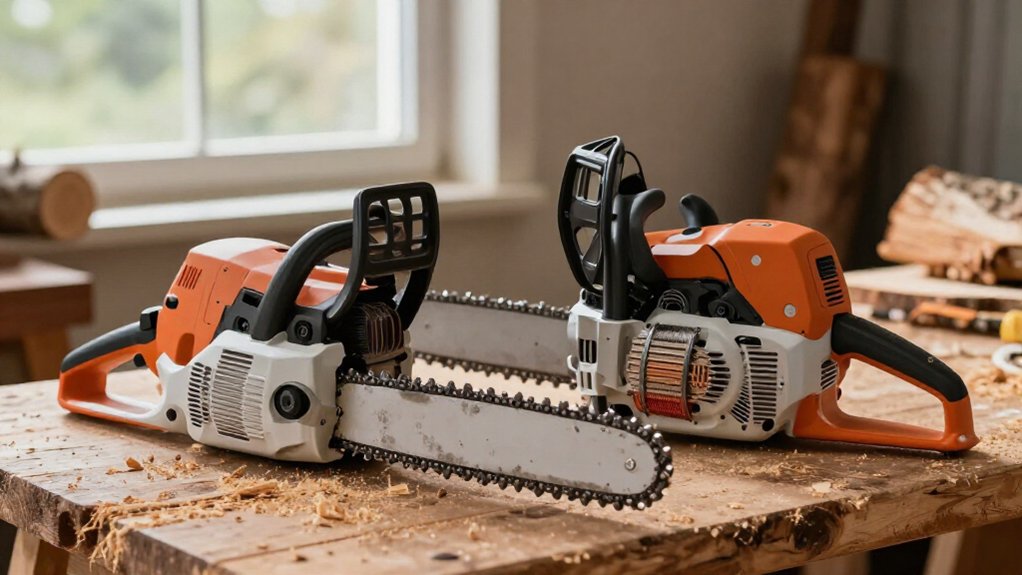
A brushless chainsaw typically converts more battery energy into cutting work, so you’ll often get longer runtime and better speed retention under load than with a comparable brushed model. It also eliminates carbon-brush replacement, though electronic repairs can cost more.
A brushed saw can suit occasional light cutting at a lower purchase price. Your results still depend on battery capacity, chain, wood, and saw design; cold weather can shorten runtime. Bar length, tensioning, and maintenance also shape the comparison.
Brushed vs. Brushless Chainsaw Specs
When comparing brushed and brushless chainsaw specs, look beyond motor type: both can deliver cutting power, but brushless motors convert more battery energy into mechanical work and generally run longer per charge. That runtime advantage matters when charging opportunities are limited. Brushless models also avoid carbon-brush replacement; brushed saws may need brush maintenance as parts wear.
| Factor | Comparison |
|---|---|
| Use | Brushed: light, occasional pruning or firewood; brushless: frequent or demanding cutting |
| Runtime | Brushless often runs longer per charge; compare capacity and workload |
Don’t choose by motor label alone. Check battery runtime, saw weight, handle ergonomics, noise, vibration, and warranty. A lighter, better-balanced saw may improve control, while warranty terms and maintenance affect ownership costs. Match the sheet to your frequency and charging access.
Motor Components and Operation
The runtime and maintenance differences between brushed and brushless chainsaws come from how each motor switches current. In a brushed motor, carbon brushes contact a commutator, directing current through rotor windings and producing rotation. You get a mechanical switching system with contacting parts.
- In brushless motors, copper windings stay in the stator while permanent magnets rotate on the rotor.
- An electronic controller, often using sensors, detects rotor position and switches current through stator coils at the correct time.
- Both designs create rotational force to drive your chain, but their current-switching components differ.
Brush contact creates friction, heat, and wear; with brushless, you avoid that contact and replacing motor brushes. That difference affects motor maintenance; both still produce rotational force to drive your chain reliably.
Cutting Speed Under Load
As cutting resistance rises in dense wood or at a knot, a brushless chainsaw’s electronic controller can increase current to help sustain torque and limit speed loss. This can keep the chain moving consistently through demanding cuts, while a brushed saw may slow as brush friction and heat reduce efficiency. Both deliver cutting power, but you’ll notice the brushless advantage when wood resists the chain.
Its efficiency can shorten cutting time, yet motor type alone doesn’t guarantee speed: saw design, chain, battery, and wood all affect results. For occasional light pruning, either type may cut adequately. If you cut frequently or intensively, you’ll value a brushless saw’s steadier performance under load.
Actual speed still depends on saw design, chain, battery, and wood you choose.
Chain Tensioning Ease
Cutting performance under load depends partly on motor design, but chain tensioning ease depends mainly on the saw’s adjustment system. Brushless and brushed models can use either setup, so compare mechanisms rather than motor labels. Tool-free designs let you set slack with a knob or dial, while conventional systems require a wrench and three steps:
- Loosen the bar nuts.
- Turn the tension screw.
- Retighten the nuts.
Before adjustment, switch off the saw and follow its manual. A chain remains hot after cutting and may tighten as it cools, so don’t set tension immediately after work. Check it regularly: the chain should sit against the guide bar yet pull around it by hand with gloves on. This check supports correct adjustment regardless of motor type.
Wood Type and Cutting Suitability
Wood density and cutting frequency matter more than whether a chainsaw has a brushed or brushless motor.
Both motor types can deliver cutting torque, so match the saw’s capacity to the wood and cut size. For light pruning or occasional firewood, a lower-cost brushed model can suffice because runtime and sustained power demands stay modest. Dense wood and repeated cuts impose greater loads; don’t choose by motor label alone.
For regular or intensive work, a brushless saw’s higher efficiency can support faster cutting and more runtime per charge, an advantage when charging access is limited. If you’ll cut for extended periods, compare weight, handle ergonomics, noise, and vibration as well. These factors affect comfort and control, especially as fatigue builds. Select a bar and power level suited to your typical wood diameter, then assess how often and how long you’ll cut for your usual workload.
Warranty Coverage and Repair Fees
Warranty terms vary by brand and model, so check the coverage period, covered parts, and exclusions before buying.
Compare each model’s terms and local service access before you buy. Your total cost depends on what the warranty covers and what you pay out of pocket.
- A brushed saw may need motor brush replacement; check whether brushes count as covered parts.
- A brushless saw has no motor brushes to replace, but electronic faults may require more complex repairs.
- For frequent use, compare repair fees and exclusions with purchase price; fewer routine motor service needs don’t guarantee lower repair bills.
Ask the dealer for a coverage schedule, authorized repair options, and estimated labor and parts charges.
Battery Degradation in Cold Weather
Cold weather can reduce a lithium-ion chainsaw battery’s available power and runtime because its cells deliver energy less efficiently at low temperatures.
You may also see the tool’s low-voltage protection engage sooner, making the pack seem depleted before it has used all its capacity. Some capacity can return after the battery warms, so don’t treat a cold-weather cutoff alone as proof of permanent degradation. However, repeated exposure to extreme temperatures can cause lasting damage, and charging a frozen battery can harm its cells.
Let the pack warm gradually to the manufacturer’s recommended charging temperature before you connect it; don’t use direct heat sources. Store and transport batteries within the temperature limits in your manual, since safe operating and charging ranges vary by specific model.
Noise and Vibration Trade-offs
Brushless motors eliminate brush-contact noise and can reduce vibration, but chain speed, cutting load, and saw design also determine what you hear and feel. Typical 75 to 85 dB figures for brushless tools aren’t chainsaw-specific, so compare models under matched conditions. Consider handle ergonomics and weight when evaluating fatigue, and wear hearing protection with either motor type.
Motor Noise Levels
Because brushless motors eliminate brush-to-commutator contact, they generally produce less motor noise and friction-related vibration than brushed motors, which can make operation smoother and reduce fatigue.
For motor noise, the key difference is the brush assembly: a brushed motor creates sound as brushes rub against the commutator, while a brushless design removes that contact. You may notice a quieter motor, but don’t treat motor type as a chainsaw’s total noise rating. Actual sound also depends on chain, cutting load, and overall saw design. For residential or frequent use, compare the manufacturer’s stated noise level across models rather than assuming brushless always means quiet. Consider these factors together when selecting your saw:
- Check stated noise ratings.
- Factor in chain load.
- Compare saw designs.
Vibration and Operator Comfort
Noise is only one part of operator comfort: brushless chainsaws can also reduce vibration by eliminating brush-to-commutator friction, helping you maintain control and limit fatigue. That smoother operation may make repeated cuts feel less tiring, especially when you guide the saw through sustained work. Brushless models may also produce less operating noise, improving your comfort and reducing disturbance to nearby neighbours. However, you shouldn’t treat motor type as a complete measure of exposure: chassis design, chain condition, cutting technique, and material all affect vibration and sound. A poorly balanced saw or demanding cut can still feel harsh, regardless of its motor.
Check your tool’s stated vibration figures, then consider weight and handle ergonomics, which also shape control, fatigue, and comfort during each cut overall.
Best for Storm Cleanup
For rapid debris clearing, a brushless chainsaw typically delivers more consistent cuts and longer runtime per charge than a brushed model. Plan battery capacity around the number and size of fallen limbs, since motor efficiency affects how much cutting you’ll get per charge. Before storm recovery work, inspect the chain, battery, and saw, and choose a weight and grip you can manage safely.
Rapid Debris Clearing
When storm debris is spread across a yard, a brushless cordless chainsaw can help you clear it with fewer charging interruptions. Its higher motor efficiency can support faster cuts through scattered branches, while reduced friction may limit heat buildup during repeated cutting. That combination helps you maintain pace across demanding cleanup, especially where mains charging access is limited.
For rapid clearing, consider the whole tool, not just cutting speed:
- Choose suitable weight and balanced handles to preserve control as you reposition.
- Smoother, quieter brushless operation can reduce discomfort during extended sessions.
- Favor brushless for prolonged, demanding work; a brushed saw may suit occasional light cleanup at lower upfront cost.
Brushless costs more, but lower maintenance may justify it during prolonged storm debris clearing work.
Battery Runtime Planning
Because brushless chainsaws waste less battery energy on motor friction, they generally run longer per charge than comparable brushed models.
For storm cleanup, estimate cutting time before you start, and bring fully charged spare batteries. Longer brushless runtime may reduce battery swaps when charging access is limited, but don’t plan around a guaranteed number of extra minutes. Runtime depends on the saw, battery capacity, wood diameter and hardness, and your cutting pace.
Heavy or continuous cutting drains packs faster, so schedule breaks and allow time to recharge rather than assuming one pack will power the entire cleanup. Match the saw’s weight and ergonomics to the task; fatigue can slow your cutting and make longer sessions less comfortable. Track actual pack use during early cuts.
Reliable Storm Recovery
During storm recovery, a brushless chainsaw’s higher efficiency can extend runtime per charge and reduce battery swaps when charging access is limited.
Repeated cuts make this useful when fallen limbs demand sustained work. Brushless motors avoid carbon-brush friction, which can limit heat buildup under load; actual results depend on saw and workload. For frequent, intensive cleanup, reduced brush maintenance may offset a higher purchase price. A brushed model may suit occasional light clearing at lower cost, though brush wear adds upkeep over time.
- Check battery capacity and charging options; longer runtime helps when power access is scarce.
- Compare weight, handle ergonomics, vibration, and noise to maintain control and comfort through extended cutting.
- Match saw capacity to limb size and workload; avoid overloading during recovery.
Bar Length and Reach
A chainsaw’s bar length determines how much wood it can cut in one pass and how far it can reach into a branch or log. Choose a bar matched to your typical cutting job. For light pruning or occasional firewood, a shorter bar may provide capacity with less weight. If you’re making regular, demanding cuts, choose a bar suited to that workload, while staying within the saw’s specifications.
A longer bar extends reach, but it adds weight and can increase fatigue. Check saw balance and handle ergonomics; a longer bar may feel harder to control.
Match bar length to your chainsaw’s capabilities and follow the manufacturer’s recommendations for safe operation. Motor type alone doesn’t determine reach. Compare bar lengths on brushed and brushless models.
Conclusion
Choose a brushless chainsaw if you need longer runtime per charge, stronger cutting under load, and reduced motor wear; its electronic control helps maintain speed as resistance changes. A brushed model can cost less and handle limbing or storm cleanup, but brush wear adds maintenance and limits service life. Match bar length to wood and reach, keep chain tension right, and expect cold weather to reduce battery output. Compare runtime, cut speed, and vibration before buying.