How to Transport a Chainsaw in a Car Without Leaks or Damage
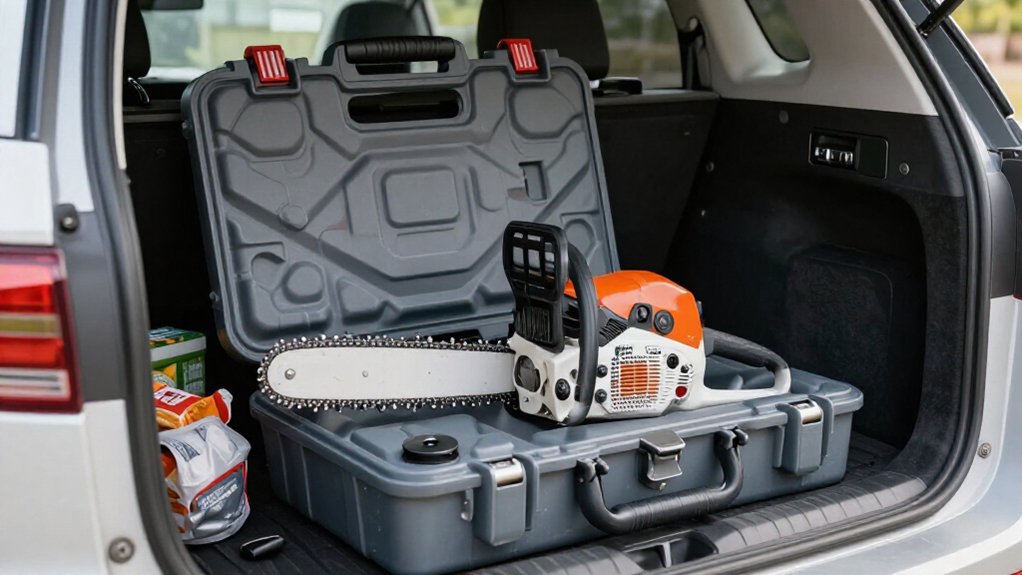
You can transport a chainsaw safely by cooling it completely and checking its fuel and oil tanks, caps, seals, and lines for leaks. Wipe residue only after it cools; don’t carry it if fuel odor or fresh oil persists.
Fit a snug bar cover, place the saw upright in a stable tray or case, and secure it in a ventilated cargo area, away from passengers. Recheck restraints and leaks after first turn. More safeguards follow.
Prevent Fuel/Oil Leaks
Before loading the saw, let it cool and check its caps, seals, and gaskets for damage. If you find a crack, loose seal, or worn gasket, don’t rely on the cap to contain liquid. For longer trips, drain fuel and chain oil into approved, sealed safety containers to reduce leak risk. Keep each container upright and secure it against tipping or shifting during the drive.
Never carry fuel or oil in the passenger compartment; fumes and spills can expose you to avoidable hazards. Use a separate, well-ventilated cargo area when available. Keep containers and the saw away from hot surfaces and sparks while loading and in transit. Place the saw upright in its case or on an absorbent pad to catch any drips. Recheck.
Gather Transport Supplies
Gather Transport Supplies
Once you’ve checked for leaks, gather supplies to contain the saw and keep it secure. Choose a sturdy carrying case or scabbard that covers the chain and cushions the saw against bumps. If you plan to drain fuel or chain oil, bring approved leak-resistant safety containers.
Place absorbent pads or a drip tray beneath the saw to catch residual oil and protect your cargo area. Pack straps to anchor the case so it can’t shift during transit. Keep the manual and tools inside the case, separate from fuel and oil containers.
- Sturdy case or scabbard covers the chain and protects the saw.
- Approved leak-resistant containers hold drained fuel or oil.
- Absorbent pads or a drip tray catch residual oil.
- Straps secure the case during transit.
Step 1: Cool Chainsaw Before Loading
After shutting off the engine, let the chainsaw cool completely before loading it into the car. Keep the saw in a clear, well-ventilated area while it cools, away from fuel, oil, sparks, and hot surfaces. Heat retained in the engine, muffler, and chain can damage nearby materials or create a fire hazard.
Never put a hot saw in its case; trapped heat can harm components and may ignite residue. Keep it away from upholstery, plastic trim, and other heat-sensitive items in your car until it’s fully cool to the touch. Don’t rely on a quick surface check alone; give the powerhead and muffler time to lose heat. Check your manufacturer’s manual for any specified cooling times and transport precautions before you load it.
Step 2: Fit the Bar Cover
When the chainsaw has cooled, fit a scabbard or bar guard over the guide bar and chain before loading it into your car. Choose a cover designed for your saw’s bar length; a loose or undersized guard may leave sharp cutters exposed. Slide it fully over the guide bar so it encloses the entire chain, including the tip. This barrier helps prevent contact injuries and shields the bar from scratches, impacts, and other transport damage.
Check that the guard seats firmly and won’t slip off if the saw shifts during the drive. Keep it in place for the whole trip, even when you carry the chainsaw inside a case; the case doesn’t replace the bar cover. Inspect before departure for cracks or poor fit.
Step 3: Secure Saw in a Tray
Secure Saw in a Tray
Set the cool chainsaw upright in a sturdy, leak-resistant tray in the vehicle’s cargo area, not the passenger compartment. Before loading, confirm the engine and muffler have cooled, and tighten both the fuel and bar-oil caps. Keep the bar scabbard fitted and engage the chain brake; these steps help contain drips and limit chain movement while you secure the equipment. Choose a tray large enough to support the saw without rocking, with raised, leak-resistant sides that can catch escaping fuel or oil.
Set the tray on a stable cargo-area surface, away from items that could press against the controls or damage the saw. Use suitable straps to bind the saw and tray firmly to vehicle tie-down points. Pull each strap snug, then test the load by hand. Neither the tray nor the saw should slide or tip when the vehicle turns or brakes.
Step 4: Position the Saw Upright
To limit movement during the drive, secure the chainsaw upright on a flat, stable surface where it can’t tip or slide.
Keep the bar guard or scabbard fitted, and orient the bar away from people and other cargo so its cutting edge can’t strike anything if the load shifts. Place a drip tray or absorbent pad beneath the saw to catch oil that may escape. Keep the muffler clear of nearby items to prevent contact with heat-sensitive materials.
Confirm the saw sits firmly and won’t move under braking or cornering. Use straps or securement points only if they hold the saw without pressing controls or damaging parts. If you can’t keep it upright and stable, use a suitable carrying case and follow the manufacturer’s transport instructions.
Step 5: Check for Fuel Odor
Before loading the saw, check around the fuel tank, cap, and lines for a strong fuel odor, which can signal a leak. If you smell fuel, don’t put the chainsaw in your car. Move it to a well-ventilated area away from sparks and hot surfaces, and keep it there until you resolve the problem.
Check that the fuel cap is secure, then look for visible spills or damp spots around the tank and fuel lines. Don’t transport the saw until you identify and address any leak.
Keep fuel and oil containers out of the passenger compartment; secure them separately in approved containers. If the odor persists or you can’t identify its source, consult the owner’s manual or a qualified service technician before transporting the saw.
Step 6: Inspect the Drain Tray
With the chainsaw upright and stable, place it over a drip tray or absorbent pad to catch oil that may leak during transport. Before you load the saw, inspect the tray closely. Look for cracks, holes, or other damage that could let oil escape. Replace a compromised tray rather than relying on it to contain a leak.
Confirm the tray’s clean and dry; fresh oil will be easier to spot against an uncontaminated surface. After you secure the chainsaw, check that the tray hasn’t shifted and remains directly beneath the saw. Keep it level and unobstructed so it can collect drips effectively.
At your destination, inspect the tray for oil and clean up any spill promptly using suitable absorbent material. Dispose of oily waste safely.
Recheck After First Turn
After the first turn, stop in a safe place and check that the chainsaw and its case haven’t shifted or come loose. Inspect the saw, case, and drip tray or absorbent pad for fuel or chain-oil leaks. Confirm the bar cover remains seated, then test the case and restraints; the saw shouldn’t slide, rock, or strike cargo.
If you find any leak, don’t carry the saw in the passenger compartment. Keep it secured away from occupants, contain the spill, and clean the affected area before you continue. Recheck the load after handling it, and make sure the tray or pad still sits beneath the saw. Close doors carefully. Resume only when the case remains stable and the cargo area is clean and dry.
Oil Seeping at Cap
Even if the saw stayed secure on the first leg, check the chain-oil cap before loading: it should be clean, fully tightened, and seated correctly. If oil seeps, inspect the seal for dirt, wear, or damage; replace worn parts according to your manufacturer’s manual.
| Issue | Check | Action |
|---|---|---|
| Cap not seated | Verify fit | Tighten fully |
| Seal contamination | Inspect seal | Clean cap seating |
| Seal worn or damaged | Check manual | Replace parts |
Keep the saw upright and stable during transport, with an absorbent pad or drip tray underneath to catch seepage. For longer trips, consider draining the tank into an approved container, especially if the cap or seal continues leaking. Keep the chainsaw and oil containers out of the passenger compartment during every trip.
Wipe Oil Residue
Shut off the chainsaw and let it cool, then wipe oil from the guide bar, chain, and exterior with an absorbent cloth.
Before you load it, inspect the area around the oil tank, cap, seals, and gaskets. Fresh residue there may signal a leak, so don’t assume wiping alone has solved the problem. If oil reappears, address the leak before driving.
Keep the cloth away from hot parts, ignition sources, and the muffler. Once the surfaces are clean, fit a scabbard or bar guard over the chain and guide bar. This contains remaining oil and helps prevent contact damage. Place the saw in a carrying case or on an absorbent pad, then secure it so it can’t shift in transit. Keep oily cloth contained securely.
Conclusion
Before loading your chainsaw, let it cool, fit the bar cover, and gather a tray, absorbent material, and tie-downs. Secure the saw upright in the tray, away from passengers, and keep it from shifting during travel.
Check that the tray’s clean and dry, then inspect it again after your first turn. If you spot oil at the cap, tighten it as specified and wipe residue away before continuing. Don’t transport a leaking saw; fix it.