12 Inch Vs 16 Inch Chainsaw: What Each Size Can Actually Cut
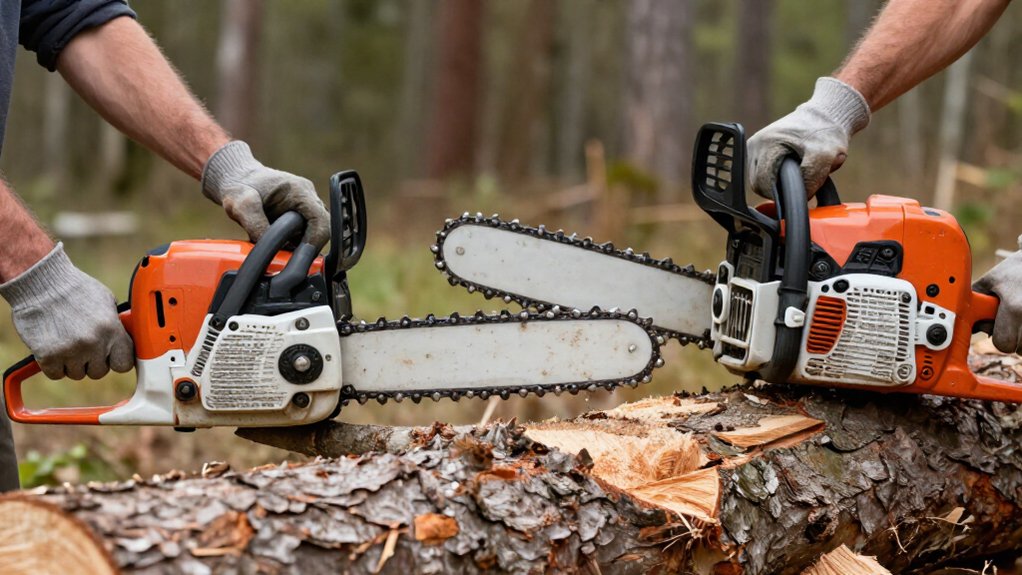
A 12-inch chainsaw suits pruning and routine limbs about 4 to 10 inches wide; a 16-inch bar adds reach and can handle limbs near 14 inches with enough saw power. Two-sided reach is roughly 24 and 32 inches, respectively, but single-pass capacity is lower.
Choose based on your usual wood and the saw’s power, weight, and control. Keep the chain sharp, secure fresh limbs, and never force a cut. The rest explains safe setup and fit choices.
12-Inch vs. 16-Inch Bar Reach
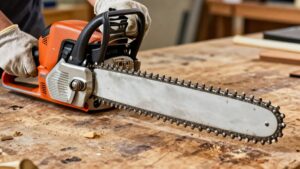
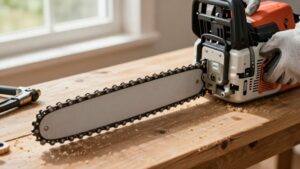
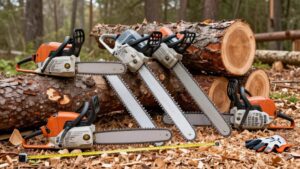
How much reach do you need? A 12-inch bar stays easier to maneuver for pruning and smaller cuts; a 16-inch bar reaches farther into thicker branches and logs.
| Bar | Typical use | Approx. two-sided reach |
|---|---|---|
| 12-inch | Pruning, smaller cuts | Near 24 inches |
| 16-inch | Thicker wood, farther reach | Near 32 inches |
These are rough guides: you generally cut from both sides to reach the full span. On a single pass, usable reach is shorter because part of the bar sits inside the saw. Match the bar to your usual wood, and choose the shorter setup when it meets your needs. A longer bar adds weight and can make control harder. Don’t use a 16-inch bar unless your saw can power it; insufficient power slows cutting and reduces control.
Bar Length and Cutting Capacity
Beyond reach, bar length determines whether you can cut through wood in one pass: a 12-inch bar generally suits wood around 10 inches thick, while a 16-inch bar handles roughly 14 inches.
Choose a bar about two inches longer than the wood’s diameter to clear the far side in one cut. If a log exceeds the bar’s reach, you may cut from both sides; with suitable conditions and technique, capacity can approach twice the bar length. Don’t try this if footing is unstable or the kerf might pinch the chain.
For small branches, a 12-inch bar’s easier to maneuver; a 16-inch bar handles thicker limbs and medium logs more readily. Check that your saw has enough power for its bar and the wood; extra length doesn’t guarantee capacity.
Cutting Speed on Hardwood
When cutting hardwood, a 16-inch saw can handle thicker logs with fewer repositioning cuts, but it won’t automatically cut faster. On hardwood logs that fit either saw, your pace depends more on motor power, chain sharpness, and chain speed than on bar length. Near its cutting-capacity limit, a 12-inch saw may cut more slowly through dense wood because its chain has to work harder.
Keep the chain sharp and properly tensioned, and let the saw feed steadily without forcing it. Forcing the bar can bog the motor and make the cut less predictable. Keep both hands on the saw, maintain balance, and stay clear of the bar’s path. Choose a 16-inch saw when its extra reach reduces awkward repositioning; when both sizes fit the log, compare power and chain condition instead.
Starting and Chain Tensioning
A longer bar may reduce repositioning, but safe operation starts with the same checks on either saw: read the manual and follow its model-specific starting procedure.
Before each use, check tension with the saw off and chain brake released. The chain should sit snugly against the bar yet move freely by hand; don’t force it. The shorter chain on a 12-inch saw is usually easier to inspect and adjust.
On a 16-inch saw, check more often during long cuts, because heat can make the chain stretch. If your saw has a tool-less tensioner, use it as directed. Otherwise, loosen the bar nuts, turn the tension screw until the fit is correct, then retighten the nuts securely. Start on stable ground with the chain brake engaged. Never start one-handed or with the bar near the ground. Maintain a firm, two-handed starting grip.
Drive-Link and Pitch Matching
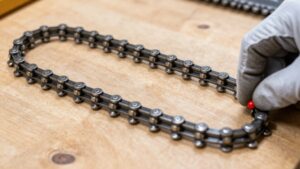
Chain fit depends on more than bar length: match the chain’s pitch to the bar-tip and clutch sprockets, its drive-link count to the specific bar, and its gauge to the bar groove.
Check the bar’s stamp or saw manual for pitch and drive-link count; confirm gauge matches the groove. Common pitches include ¼-inch, .325-inch, and 3/8-inch. Pitch must match both bar-tip and clutch sprockets.
In practice, two 12-inch bars may need different chains because usable length and sprocket arrangement vary. A 16-inch bar may need a different drive-link count, even when pitch and gauge match. Never choose by bar length alone: an incorrect fit can prevent proper seating and tensioning. Verify every specification before use; if markings are unclear, consult the manual or a service technician.
Chain Sharpening Intervals
Correct chain fit keeps a saw running safely, but sharpness determines how well it cuts. Don’t set sharpening by the bar’s length: a 12-inch and a 16-inch chain both need attention according to cutting conditions, not a fixed number of hours or cuts. Check the cutters after each tank of fuel or battery charge.
Abrasive dirt, sand, and dry hardwood can dull them sooner. Sharpen when the chain makes fine sawdust instead of coarse chips, or you have to push the saw to keep it cutting. Stop the saw and follow its manual. Wear gloves, use the specified file size and cutting angle, and tension the chain correctly before filing. Keep each cutter even; uneven filing can make the saw cut crooked. Check regularly.
Kickback and Operator Safety
Although a 12-inch chainsaw is generally easier for beginners to control, a 16-inch model’s added reach and weight can make it harder to maneuver and more tiring to use. Both sizes can produce severe kickback, so keep a firm two-handed grip, plant your feet on stable ground, and never cut with the bar tip. Don’t cut above shoulder height; you’ll have less control and less room to react if the chain catches.
Match the bar length to the wood: forcing a short bar through thick material can bind it and raise kickback risk. Wear a hard hat, eye and ear protection, chainsaw pants, gloves, and steel-toed boots. Get trained, and leave tree felling or other hazardous cuts to a professional.
Power-to-Weight Balance
When you compare power per pound, a 12-inch saw is often easier to control for pruning and occasional cuts, while a 16-inch model can handle thicker wood but may tire you sooner. Judge the complete saw’s weight and balance—not bar length alone—because the engine, battery, and construction affect handling. Choose the lightest saw with enough power for your usual wood; an underpowered model can make thick cuts slower and more demanding.
Power Per Pound
How much usable power you get depends on more than engine size—it depends on power relative to the saw’s ready-to-use weight, including the bar, chain, and battery or fuel. A 12-inch saw usually gives you enough output for pruning, small branches, and occasional home cuts, while its lower mass can make repeated cuts less taxing. A 16-inch gas model often pairs a longer bar with a 30–40cc engine to cut thicker wood, but its added weight may tire you sooner.
Compare rated power with ready-to-use weight; a bigger engine alone doesn’t guarantee more power per pound. Choose the lightest saw that can handle your usual cuts. If you push an underpowered saw, it can bog down; extra power and weight add little on small branches. Keep the chain sharp and let the saw cut at its own pace; forcing it wastes power, raises strain, and can compromise control during routine cutting in practice.
Balance And Handling
A 12-inch chainsaw is usually lighter and easier to maneuver, which can help beginners make controlled cuts in tight spaces or while pruning. Its lower weight can reduce strain, but don’t judge handling by bar length alone.
A 16-inch saw gives you more reach and cutting capacity, yet its added weight may cause fatigue and make precise guiding harder during long sessions. Select based on total weight and balance, then test whether you can hold and guide the saw comfortably in your intended working position.
Match the saw’s power and weight to your strength and experience; an oversized or tiring model can be harder to control safely. On longer jobs, take breaks when tired; fatigue can undermine your control even with a well-balanced saw.
Fresh-Cut Limb Cleanup
For frequent pruning, you’ll find a 12-inch saw easier to maneuver among branches and suited to limbs about 10 inches thick or less, cut from one side. A 16-inch saw reaches farther and can handle limbs around 14 inches across when you cut from both sides. Fresh wood can spring or pinch the bar, so secure limbs, keep cuts below shoulder height, wear protective gear, and stop if you can’t control the cut safely.
Limb Diameter Limits
When you’re clearing fresh-cut limbs, a 12-inch chainsaw is easier to control on routine cuts around 4–10 inches in diameter, while a 16-inch saw offers more reach and can handle limbs up to about 14 inches if it has enough power.
Treat these figures as practical limits, not guarantees: species, saw power, chain sharpness, and your control all affect the cut. A bar about 2 inches longer than the limb’s diameter gives useful clearance for a single-sided cut; if the limb exceeds the bar’s reach, you may need to cut from both sides.
Keep your footing stable, support the limb so it can’t roll, and don’t overreach. If the saw binds or the limb shifts under tension, stop and reassess before continuing the cut.
Fresh Wood Cutting
After judging limb diameter, consider how fresh wood behaves during cleanup: a 12-inch chainsaw is easier to maneuver through limbs up to about 10 inches, while a 16-inch saw offers more reach for thicker branches. Fresh fibers can pinch the bar as a limb settles, so support the wood and plan each cut to keep the kerf open. Use this field-tested sequence:
- Match bar length to wood: aim for about 2 inches beyond its diameter.
- Cut thicker limbs from both sides only if they’re within saw capacity.
- Sharpen and tension the chain; stop if the saw feels hard to control.
Avoid cuts above shoulder height. Use the 12-inch for routine cleanup; choose the 16-inch for thicker limbs, within capacity.
Cleanup Maneuverability
Which saw handles a fresh-cut limb pile more easily? A 12-inch chainsaw usually moves through a pile with less effort. You can guide it between smaller branches and reposition it readily in tight spaces, making it a practical choice for routine small-yard cleanup.
A 16-inch saw gives you more reach and capacity when limbs approach 14 inches in diameter. That extra bar length and weight, however, can make repeated repositioning tiring. As fatigue builds, precise cuts become harder, so choose the saw you can control comfortably throughout the job.
Match the bar to the limb, and don’t force a small saw through wood beyond its capacity. Before cutting, stabilize each limb; hold the saw firmly with both hands, and keep cuts below shoulder height. Clear footing and controlled movement matter as you work around shifting branches.
Best Models by Budget
The best-value chainsaw depends on what you cut and how often: choose a lightweight 12-inch corded model for occasional yard work, a 12-inch battery saw for portable pruning, or a 16-inch battery model for thicker branches and firewood without gas-engine upkeep.
Compare total cost, not just price; check whether batteries and chargers are included, and whether local shops offer sharpening, repairs, or rentals. Choose for your workload, then wear protective gear, keep both hands on the saw, and avoid overhead cuts.
- A corded 12-inch saw keeps occasional cleanup affordable and simple.
- A cordless 12-inch model frees you to prune away from outlets.
- A 16-inch battery saw reaches thicker wood; choose gas for heavier volume, accepting extra weight, fuel mixing, and maintenance.
Conclusion
Choose the 12-inch saw for pruning and small limbs; its shorter bar feels nimble, but don’t force it through wood near its cutting limit. Choose a 16-inch model when you need more reach or to buck thicker logs, provided its motor can drive the chain. Match bar, chain pitch, gauge, and drive-link count exactly. Keep both saws sharp, tension chains correctly, and use full protective gear. If you’re unsure, stop and get experienced help first.