Self-Sharpening Chainsaw vs Regular Chainsaw: Is It Worth Paying More?
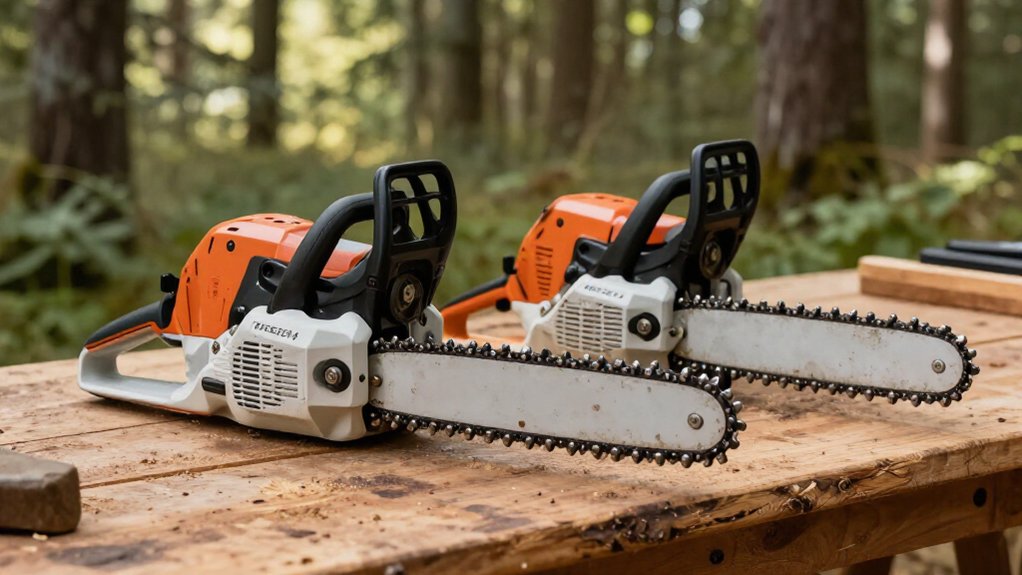
A self-sharpening chainsaw can restore a cutter edge quickly through an abrasive stone, reducing downtime on frequent or remote jobs.
You still need chain tension, compatible pitch, inspections, and maintenance; the lever can’t repair broken or severely damaged teeth. A regular saw costs less and can cut as cleanly when you sharpen cutters evenly.
For occasional use, the premium may not pay off. Compare parts and sharpening costs, too. The key trade-offs can guide your choice.
Self-Sharpening Mechanism Explained
A self-sharpening chainsaw uses a built-in abrasive element, usually a stone, to touch up the cutters. When you activate the system, the chain passes the element briefly, removing a small amount of metal. This offers quick in-use maintenance, but it may not correct damaged cutters. Results vary by model and chain condition, so inspect cutters and follow the manufacturer’s instructions. Frequent or prolonged use can shorten chain life or leave cutters uneven.
| Aspect | Self-sharpening | Manual/bench |
|---|---|---|
| Contact | Built-in stone touches cutters briefly | File contacts cutters under your control |
| Timing | Quick in-use touch-up | Requires a dedicated session |
| Metal removal | Small amount per activation | You control filing pressure and duration |
| Limitation | May not correct badly damaged cutters | Supports careful cutter correction |
You should inspect the chain regularly; neither approach removes the need for maintenance.
Self-Sharpening Lever Mechanism
When should you use the self-sharpening lever?
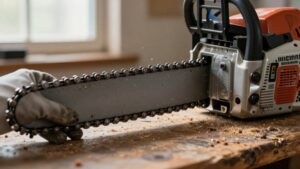
Use it for quick cutter touch-ups during work, not as a substitute for chain maintenance. On many self-sharpening models, you hold the lever for several seconds while briefly running the saw at the specified speed. The lever presses a built-in abrasive stone against the moving chain; a regular chainsaw requires a separate file or bench sharpener instead.
Sharpening frequency and material removal vary by model, chain condition, and lever duration, so follow the manufacturer’s instructions. Because the chain moves during the process, use the specified procedure and protective equipment, and keep your hands clear of chain and stone. If teeth are uneven, badly worn, or damaged, arrange precise bench sharpening rather than relying on the lever.
Cut Quality and Uniformity
While a self-sharpening mechanism can help maintain consistent cut quality as the chain dulls, it can’t correct uneven or damaged cutters.
You’ll get the best comparison by checking these indicators:
- A self-sharpening chain can restore cutting edges during use, helping preserve uniformity as they dull; correct operation and sound chain condition still matter.
- A conventional chain can cut just as cleanly when you sharpen every cutter evenly; unequal teeth may cause rough cuts or pull the saw sideways.
- Follow the maker’s specifications for tooth length and angle to limit inconsistent cutting.
- Wood chips generally indicate sharp cutters; fine sawdust suggests edge wear and declining cut quality. Neither design can compensate for broken or severely damaged teeth; replace the chain if damage prevents uniform cutting.
Lever-Activated Sharpening in the Field
In the field, a lever-activated system lets you touch up the chain using its built-in sharpener, often without removing it—a quicker option than taking a conventional chain off for sharpening. Follow the manufacturer’s instructions for how long to hold or cycle the lever; sharpening too long removes excess cutter material and shortens chain life. Keep the chain properly tensioned and the mechanism clean, because debris or misalignment can produce an uneven touch-up.
This method suits minor dulling during routine work, but it won’t repair damaged or badly worn teeth. Inspect the cutters after engaging the lever; use a conventional sharpener for more substantial correction, or replace the chain if wear is severe. Then make a short test cut. The chain should cut evenly and produce wood chips, not fine dust or a sideways pull. Compared with a regular saw, the system saves time between cuts, but it still requires checks and careful daily operation.
Chain Pitch Requirements
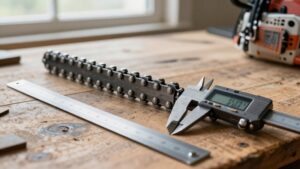
Before choosing a self-sharpening chainsaw, confirm its chain pitch: the pitch is the distance between three consecutive rivets divided by two, with common sizes including 1/4-inch, .325-inch, 3/8-inch, and .404-inch. Your self-sharpening system is engineered for a particular pitch; unlike a regular saw’s chain, it may not accept alternatives. Check these points before purchase:
- Check the manual and replacement-chain specifications for your model.
- Verify the chain matches the bar, drive sprocket, and gauge; all three must be compatible.
- Confirm specialty replacement chains and sharpening components are available and priced for your exact pitch.
- Never fit a chain with a different sprocket pitch: mismatch can impair operation and create a safety hazard.
That check can prevent a purchase and preserve reliable, compatible operation for both saw types.
Sharpening Stone Replacements
A self-sharpening chainsaw depends on a built-in abrasive stone that wears down and must be replaced to keep sharpening the cutters effectively. Check your manual for the correct stone, installation procedure, and service interval; sizes and fittings aren’t necessarily interchangeable. Inspect the stone for excessive wear, chips, cracks, or an uneven surface. Replace it when it can’t contact the cutters correctly.
Keep the mechanism clean, and use only the specified replacement. Debris or an incompatible stone can produce uneven sharpening or damage the system. Before buying a self-sharpening saw, compare stone prices and availability with the cost of maintaining a regular chain using files or an electric sharpener. The built-in system may simplify sharpening, but replacement requirements add an ongoing cost you should include in your comparison.
Kickback Safety Concerns
Does a self-sharpening chain reduce kickback risk? It can keep cutters sharp during use, but it doesn’t prevent kickback. A regular chain can also cut safely when maintained; either type may kick back if the guide-bar tip contacts an object or the chain gets pinched. Dull cutters may make you push harder, increasing fatigue and reducing control.
The self-sharpening feature may limit that pressure, but it doesn’t replace safe technique.
- Keep both hands on the saw and maintain a firm grip.
- Avoid cutting with the guide-bar tip.
- Check chain tension and verify that the chain brake and other safety features work.
- Follow operating and sharpening instructions; replace chains with broken or severely damaged cutters.
These checks apply equally across both chain types and designs.
Maintenance Cost Comparison
When you compare sharpening costs over time, a regular chain needs only a correctly sized file, while a self-sharpening saw may cost more upfront and require mechanism servicing. Both saws still need replacement chains when teeth break or suffer severe damage. Compare the saw’s price, sharpening supplies or repairs, and chain replacements to estimate your total ownership cost.
Sharpening Costs Over Time
Over a chain’s service life, compare the full cost of sharpening, not just the chain’s purchase price. With a regular chain, you pay for files or a sharpener, then replace worn files or grinding wheels. Manual files cost little upfront, but frequent sharpening adds consumable expense and your maintenance time.
- A file keeps equipment costs low, yet use makes replacements and labor more significant.
- A corded electric kit can speed sharpening and improve consistency; Sharp Pebble’s sale price is $46.99.
- Its cordless sharpener costs $64.99, and you may need a replacement battery; corded models avoid that expense.
- A self-sharpening chain costs more initially, so compare how much it cuts supplies, labor, and downtime across its service life. Track sharpening frequency to judge value.
Repair And Replacement Expenses
Routine repair costs differ: a regular chain usually needs only sharpening tools, occasional grinding-wheel replacement, and a new chain when it wears out or gets damaged, while a self-sharpening system may reduce sharpening work but add service or parts costs if its mechanism wears.
Before buying, check warranty coverage and replacement-part prices; saved sharpening time offsets added service exposure. If you use the saw frequently, compare its purchase premium with the cost and time of sharpening regular chains over the saw’s service life. Neither design avoids replacement costs when cutters break or suffer severe damage, so include replacement chains in your budget.
To control wear, sharpen regularly and remove only enough material to restore the cutting edge. Excessive sharpening shortens chain life and can bring replacement forward.
Emergency Field Sharpening Needs
Emergency Field Sharpening Needs
When your chain dulls in a remote area, a self-sharpening saw can restore its edge quickly without a separate tool. A regular saw requires a file or portable sharpener; cordless models work without an outlet, while corded models limit field use. For either type, check compatibility and instructions, practice safely, and carry a file or spare chain for damaged teeth or demanding jobs.
Rapid Field Touch-Ups
At remote job sites, a cordless sharpener lets you restore a chain’s cutting edge without an outlet or extension cord. Keep a compatible unit and charged battery in your truck or toolbox; then you can respond when cutting slows or sawdust replaces chips. Compared with a self-sharpening saw, this setup requires preparation and a brief stop, but works across compatible regular chainsaws.
- Confirm the chain maker’s specified file size and sharpening angle before touching teeth.
- Secure the saw and chain, wear safety glasses, and follow the sharpener’s instructions.
- Sharpen teeth evenly; uneven lengths or angles can increase vibration and produce crooked cuts.
- Remove only enough material to restore the edge; replace broken or severely damaged chains.
That makes routine touch-ups predictable, though not automatic.
Sharpening Without Power
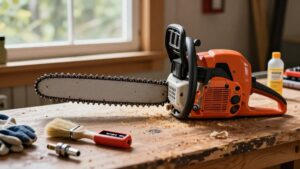
Without electricity, a hand file offers a dependable way to restore a dull chain, unlike a cordless sharpener, which needs a charged battery. Match the file diameter and sharpening angle to your chain maker’s specifications. Secure the saw, wear gloves and eye protection, then file each cutter evenly in the same direction to maintain balance.
Sharpen when the saw makes fine sawdust, not chips, cuts slowly, or pulls to one side. Remove enough material to restore a clean edge; excessive filing shortens cutter life. A file kit works without a battery or outlet, while a cordless electric sharpener can speed touch-ups when its battery’s charged. If cutters are broken or severely damaged, stop and replace the chain rather than relying on emergency sharpening.
Emergency Readiness in Remote Areas
For remote work, a self-sharpening chainsaw can restore cutting performance without a separate sharpener, provided its mechanism works and you use it as directed.
With a regular saw, you’ll need a correctly sized file or portable cordless sharpener; a corded unit depends on mains power. Use these checks:
- Watch for slow cuts, fine sawdust, or sideways pulling; each can indicate a dull chain.
- Match the file to the chain, follow the specified angle, and sharpen teeth evenly to limit vibration and material loss.
- A self-sharpening feature offers faster field recovery than carrying a separate sharpener, but only if it functions properly.
- It won’t fix broken or severely damaged teeth, so carry a spare chain and basic repair tools for emergencies in isolated work locations.
Best Choice for Occasional Users
If you cut only a few times a year, a regular chainsaw is usually the better value because its lower purchase cost can outweigh the time saved by a self-sharpening system. You can sharpen the chain when cutting slows, sawdust turns fine, or the saw pulls to one side. Use a file or electric sharpener, following the maker’s specified file size and angle.
Self-sharpening saves time between infrequent jobs, but its added cost may not pay off with limited annual use. Don’t force a dull saw through wood; dull cutters increase effort and fatigue. Replace chains with broken or severely damaged teeth, since self-sharpening can’t repair them. For occasional work, this maintenance is simpler to justify than paying more for an integrated sharpening mechanism.
Conclusion
If you sharpen only occasionally, a self-sharpening chainsaw can save time when you need to restore a dull chain in the field. You still need compatible chain pitch, safe operating habits, and routine maintenance, and the sharpening mechanism may add cost. A regular chainsaw costs less and gives you more control over sharpening, but requires separate tools and time. Choose the self-sharpening model if convenience justifies its premium; otherwise, a regular saw is the more economical choice.