7 Best Gas Chainsaws for Women in 2026
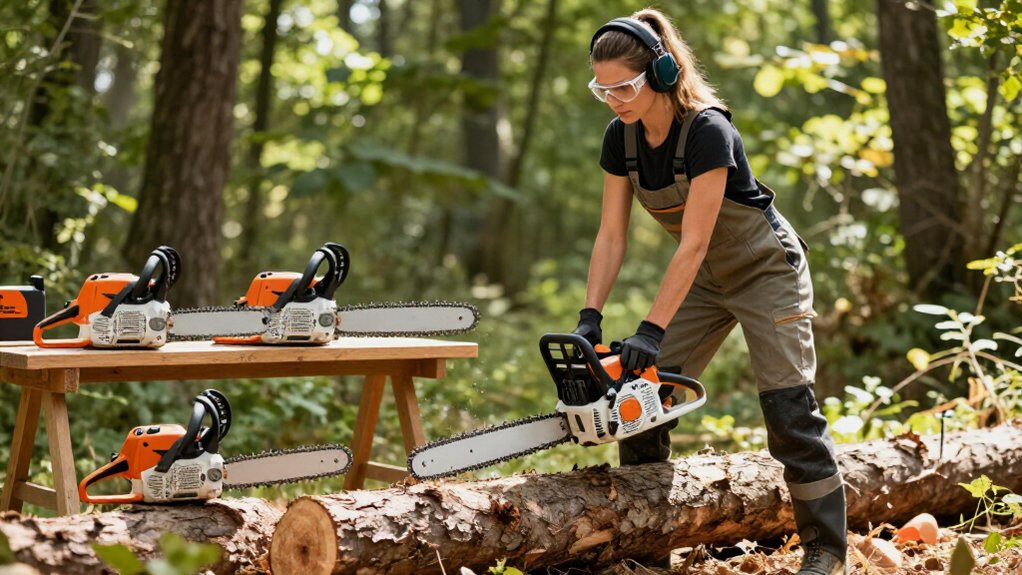
Looking for the best gas chainsaws for women in 2026? Match manageable weight and comfortable handling to your work. A 25cc saw with a 12-inch bar suits branches and small limbs, while 38cc Husqvarna models offer more capacity for homeowner firewood and larger cuts.
Compare ready-to-use weight, balance, vibration control, starting ease, and safety features before choosing. These seven options range from compact top-handle saws to longer-bar models; the details below can help you choose.


More Details on Our Top Picks
25CC 2-Stroke Gas Chainsaw with 12-Inch Bar
For lighter yardwork, this compact 25cc chainsaw suits women seeking manageable power for pruning and small cuts. Its 12-inch bar handles branches, saplings, small limbs, and garden trimming without the bulk of a saw. 25cc two-stroke engine delivers 1.2 horsepower and reaches 8,500 rpm, while its cushioned wraparound handle and slip-free grip help you guide cuts comfortably.
A kickback brake, hand guard, safety trigger, and safety switch add safeguards; follow the manual for setup and starting. The quick-start rope system eases starting, and gasoline operation may reduce fuel use by up to 25%. Keep chain oil for smooth sawing.
- Engine Size:25cc
- Bar Length:12 inches
- Engine Cycle:2-cycle
- Power:0.9 kW (1.2 hp)
- Starting Method:Quick-start rope-wheel system
- Safety Features:Kickback brake, hand guard, safety trigger and switch
- Additional Feature:Full-wrap cushioned handle
- Additional Feature:Up to 25% less fuel
- Additional Feature:3/8-inch chain pitch
Knwigoe 12-Inch Gas Chainsaw
With its compact top handle, the Knwigoe suits women pruning branches and handling routine yard work. Its 25.4 cc two-cycle engine delivers up to 900 watts of peak power, while chain speed reaches 9,000 RPM. You can use it for trimming, cross-cutting, and yard maintenance, with an 11.8-inch cutting diameter.
The saw weighs 11.02 pounds, so you’ll want to account for its weight before extended overhead work. A porous air-cooling system helps manage heat, and you can adjust chain tension with the included spark plug wrench. A protective guard, safety lock, and auto-reset switch add useful safety features. The starter typically takes two or three pulls.
- Engine Size:25.4cc
- Bar Length:12 inches
- Engine Cycle:2-cycle
- Power:900 W peak
- Starting Method:Starter cord
- Safety Features:Protective guard, safety lock and auto-reset switch
- Additional Feature:Porous air-cooling system
- Additional Feature:11.8-inch cutting diameter
- Additional Feature:11.02 lb gross weight
Husqvarna 120 Mark III 14-Inch Gas Chainsaw
The Husqvarna 120 Mark III is a practical homeowner pick for women pruning trees and cutting firewood around the yard. Its 14-inch bar suits routine woodcutting and pruning, while the 38-cc, two-cycle X-Torq engine delivers efficient combustion, power, and torque. The 3/8-inch pitch and .050-inch gauge specify its chain setup.
LowVib dampeners between the engine and chassis reduce vibration, so you’ll work more comfortably. An inertia-activated chain brake adds protection, and separate choke and stop-switch controls simplify starting. When you pull out the choke, the stop switch resets automatically, helping prevent accidental flooding. That thoughtful detail can make starts less frustrating.
- Engine Size:38cc
- Bar Length:14 inches
- Engine Cycle:2-cycle
- Starting Method:Choke and stop-switch controls
- Safety Features:Inertia-activated chain brake
- Additional Feature:LowVib dampeners
- Additional Feature:Separate choke and stop controls
- Additional Feature:Automatic choke reset
JAYGOVAN 12 Inch Top Handle Gas Chainsaw 25.4CC 2-Cycle Small Gas Chainsaw
The JAYGOVAN is a lightweight pick for women who want a compact saw for pruning and routine yard work. At 9.13 pounds, its top-handle design suits orchard care, shrub trimming, and property maintenance. The 25.4cc two-cycle engine delivers 900 watts, 1.22 horsepower, and speeds up to 9,000 rpm. Its 11.8-inch bar can handle cuts up to 11.8 inches across, including branches and small trunks.
You’ll start it with a manual pull, while a safety lock, automatic reset switch, and guard add protection. The 230-milliliter tank uses a 25:1 gas-to-oil mix; an included bottle helps you measure fuel. Because it’s a top-handle saw, choose it only if you’re trained to operate one; hold it securely and follow the manual.
- Engine Size:25.4cc
- Bar Length:11.8 inches
- Engine Cycle:2-cycle
- Power:900 W (1.22 hp)
- Starting Method:Manual pull start
- Safety Features:Safety lock, auto-reset switch and protective guard
- Additional Feature:230 ml fuel tank
- Additional Feature:25:1 fuel mix ratio
- Additional Feature:9.13 lb weight
Husqvarna 130 Gas Powered Chainsaw 16 Inch
Husqvarna’s 130 suits women who want strong cutting power in a manageable 16-inch chainsaw. Its 38-cc, 2-HP X-TORQUE engine delivers power at low RPMs, so you can handle pruning and cleanup. The 16-inch bar gives you reach, while compatibility with 14- to 16-inch bars lets you choose a shorter setup if you prefer. A fuel pump and combined choke/stop control help you start it easily and reduce flooding.
LowVib dampeners limit vibration and fatigue, and the inertia-activated chain brake helps reduce kickback injury risk. Air Injection clears larger dust and debris before they reach the filter, protecting engine life.
- Engine Size:38cc
- Bar Length:16 inches
- Power:2 hp
- Starting Method:Fuel pump and combined choke/stop control
- Safety Features:Inertia-activated chain brake
- Additional Feature:X-TORQUE technology
- Additional Feature:Centrifugal Air Injection
- Additional Feature:Recommended 14–16-inch bars
12-Inch 25.4CC Gas-Powered Chainsaw for Wood Cutting
For women seeking portable handling, this 8.2-pound Vetoper is the lightest pick for everyday woodcutting. Its 12-inch bar and 25.4 cc, two-stroke engine suit firewood, tree work, and other cutting tasks. You’ll get 0.9 kW (1.2 HP) of rated output and speeds up to 11,000 RPM.
The ergonomic top handle gives you a secure grip, while a spring-assisted pull cord and easy-turn starting knob help simplify starting. Its precision carburetor supports fuel-efficient operation. You can assemble the saw in a few minutes; follow the manual’s instructions. The chain has a 0.050-inch gauge, 3/8LP pitch, and 45 drive links. Contact Vetoper with product questions or quality concerns.
- Engine Size:25.4cc
- Bar Length:12 inches
- Engine Cycle:2-stroke
- Power:0.9 kW (1.2 hp)
- Starting Method:Spring-assisted pull cord
- Additional Feature:8.2 lb weight
- Additional Feature:Spring-assisted pull cord
- Additional Feature:Easy-turn starting knob
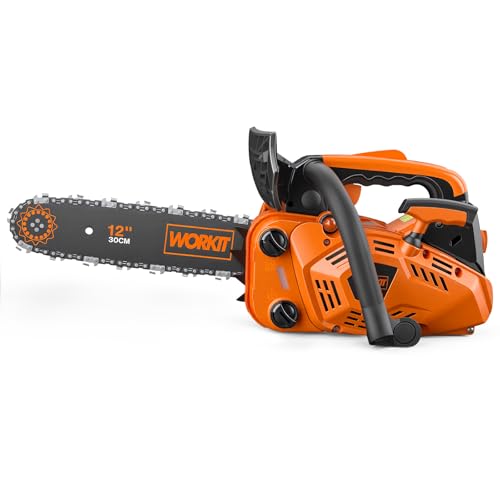
WORKIT 25.4cc Gas Chainsaw 12-Inch Top Handle
WORKIT’s lightweight top-handle design prioritizes comfort, making it a practical choice for women who need maneuverability in tight spaces. Its 25.4cc two-cycle engine pairs with a 12-inch bar and full-chisel chain to tackle hardwood and thick logs. At 8.2 pounds, it feels manageable for cuts in confined areas.
Shock absorption and a comfortable grip help limit fatigue during sessions. OptiSpark ignition supports cold or hot starts, while the automatic-reset stop switch helps prevent flooding. A chain brake, protective baffle, dual safety locks, and one-stop switch add safeguards. You get gloves, goggles, earplugs, tools, a spare spark plug, and bar cover.
- Engine Size:25.4cc
- Bar Length:12 inches
- Engine Cycle:2-cycle
- Starting Method:OptiSpark ignition
- Safety Features:Chain brake, protective baffle and dual safety locks
- Additional Feature:Full-chisel chain
- Additional Feature:Integrated shock absorption
- Additional Feature:Includes protective gear
Factors to Consider When Choosing Gas Chainsaws for Women
When choosing a gas chainsaw, consider its weight and balance to help you handle it comfortably. Match the engine power and bar length to the tasks you’ll tackle, and look for easy starting and effective vibration control. These features can make cutting more manageable and comfortable.
Weight And Balance
Although a lighter gas chainsaw may feel easier to maneuver for pruning or overhead cuts, weight alone doesn’t reveal how balanced it is. Check the ready-to-use weight, including the bar, chain, and fuel; a listed figure may leave out some of these parts. Then consider how the handles distribute the saw’s weight between your hands.
A well-balanced model can feel less tiring to guide and control, especially when you’re making repeated cuts. If you can, hold the saw with the engine off before choosing. Notice whether its weight feels manageable and whether you can maintain a comfortable grip without straining. A top-handle design may look compact and easy to maneuver, but it’s intended for trained users—not automatically easier or safer to operate. Choose a saw that feels steady in your hands.
Engine Power
Engine power determines how well a gas chainsaw handles different cutting jobs. Displacement, measured in cubic centimeters (cc), gives you a basic sense of engine size. A compact saw around 25 cc can suit pruning and light yard work, while a 38 cc engine may better handle heavier homeowner cutting. Match power to the wood’s thickness and hardness so you don’t struggle through demanding cuts or carry more capability than you need.
Check power ratings, too. Models in this category range from about 0.9 kW (1.2 hp) to 2 hp, offering a useful comparison of cutting capability. Engine speeds of 8,500 to 11,000 rpm can support faster chain operation, but speed alone won’t tell you how well a saw cuts. Consider power alongside weight: a stronger engine may make your saw harder to control and more tiring to handle.
Bar Length
Bar Length
Bar length affects both a chainsaw’s reach and how easily you can maneuver it. Choose a size that suits the wood you’ll cut and the tasks you expect to handle. A 12-inch bar works well for branches, saplings, and small pieces of wood.
For larger homeowner jobs, a 14- to 16-inch bar gives you more reach and cutting capacity.
Consider the largest diameter you’re likely to cut, then balance reach with what you can control given your strength and experience. Check the saw’s engine capacity and manufacturer recommendations, too. A bar that’s too long for the power can cut less effectively and become harder to manage. Bar length isn’t the same as maximum cutting diameter, so follow the manual and use safe cutting technique.
Starting Ease
Once you’ve chosen a manageable bar length, consider how easily you can start the saw. A dependable pull-start system matters because fewer pulls mean less effort before you begin cutting. Look for a primer bulb or fuel pump, which helps move fuel through the system and can make cold starts easier. A spring-assisted starter can also reduce the force you need to pull the cord, especially when the engine is cold.
Check whether the stop switch resets automatically. This feature can help prevent flooding when you restart the saw, saving time and frustration. Even a well-designed starting system works best when you use it correctly, so follow the manufacturer’s starting sequence and fuel-mixing instructions. Those steps support reliable starts in everyday use.
Vibration Control
Because a chainsaw’s vibration can make extended cutting uncomfortable, look for vibration-dampening mounts or shock absorption between the engine and handle. These features limit how much engine vibration reaches your hands, making longer pruning or cutting sessions more comfortable. Reduced vibration may also help lessen hand fatigue and numbness, though it can’t eliminate either risk.
Consider the handle, too. A cushioned, ergonomic design can feel more comfortable and support a steady grip, but it doesn’t replace effective vibration control. Compare a saw’s vibration-reduction features alongside its weight: a lightweight model may be easier to maneuver, yet still transmit substantial vibration.
Even with a well-designed saw, wear well-fitting protective gloves and take regular breaks. Vibration control can improve comfort, but it doesn’t remove the need for careful operating practices during extended use.
Safety Features
Comfort features such as vibration control matter, but safety features deserve equal attention when choosing a gas chainsaw.
Look for an inertia-activated chain brake; it can stop the chain quickly if kickback occurs. A hand guard or protective baffle helps shield your hands from the moving chain and flying wood chips. Choose a safety trigger or lock to reduce the chance that you engage the throttle accidentally. A clearly accessible stop switch lets you shut down the engine fast in an emergency. An automatic-reset switch may also help prevent flooding when you restart the saw.
Keep every safety feature intact and follow your manual’s instructions for assembly, starting, and operation. Inspect the brake, guard, trigger, and switch before you start, and replace damaged parts.
Handle Comfort
A cushioned, ergonomic grip can reduce pressure on your hands while you prune or cut. Look for a slip-resistant handle, too; it helps you keep a secure hold as you shift your hands to reach different angles or steady the saw.
Balance matters just as much as grip comfort. A well-balanced chainsaw feels easier to maneuver and control, especially when you’re making detailed trimming cuts around branches or shrubs. Vibration-dampening features can also limit hand fatigue during longer jobs, helping you stay comfortable and maintain control.
Consider the handle layout alongside the saw’s weight before choosing. A lighter model with balanced weight distribution is easier to guide comfortably. Test how the handle fits your hands, and choose a layout that lets you grip without straining.
Frequently Asked Questions
What Protective Gear Should I Wear When Operating a Gas Chainsaw?
Wear a hard hat with face shield and safety glasses, hearing protection, chainsaw chaps, cut-resistant gloves, and steel-toed boots. Choose fitted gear, inspect it before each use, and replace damaged items promptly to stay protected.
How Often Should I Sharpen a Chainsaw Chain?
Sharpen your chain when it won’t cut efficiently—often after hours of use, or sooner if you hit dirt or rocks. Check cutters; a sharp chain produces clean chips, while a dull one makes sawdust.
How Do I Store a Gas Chainsaw Safely Between Uses?
Store your chainsaw in a cool, dry, locked place, away from children and ignition sources. Let it cool, engage the chain brake, drain fuel, and cover the bar; don’t leave it exposed to harsh weather.
What Fuel Mixture Should I Use for a Two-Stroke Chainsaw?
Use the fuel ratio specified in your chainsaw’s manual; many two-stroke models require a 50:1 gasoline-to-oil mix, but some need 40:1. Measure accurately with two-stroke oil, and don’t use ordinary motor oil or straight gasoline.
When Should I Seek Professional Help for Chainsaw Repairs?
Seek professional help when you can’t identify a fault, repairs involve the chain brake, clutch, or engine, or your saw leaks fuel, won’t start after basic checks, or operates unpredictably. Stop using it until then.
Conclusion
Choose the gas chainsaw that fits your comfort, experience, and cutting needs—not just its size or label. A lightweight 12-inch model can feel manageable for pruning and small jobs, while a larger Husqvarna may suit heavier cutting. Before you buy, compare weight, handling, safety features, maintenance, and available support. Read the manual, wear proper protective gear, and use safe operating practices every time. The right saw should help you work confidently without asking you to compromise on control or safety.