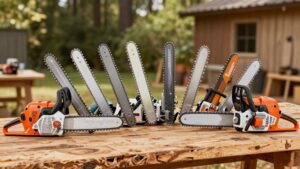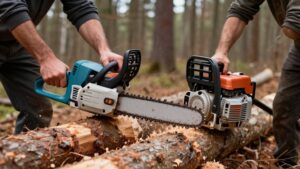
10 Best Budget Gas Chainsaws for 2026
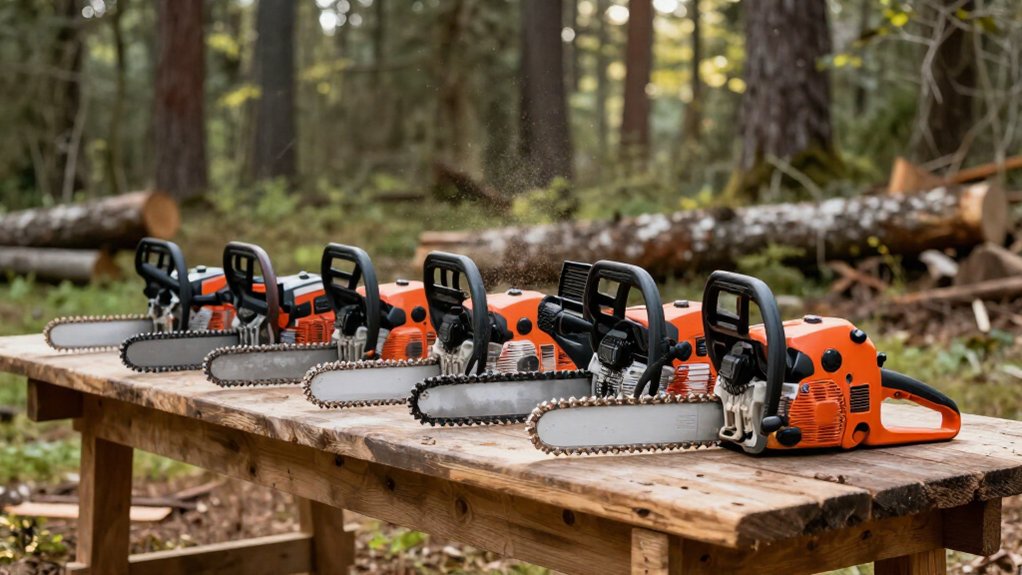
To find a budget gas chainsaw for 2026, match engine size and bar length to your work. Choose a compact 25cc model, such as the TECHMOO or Knwigoe, for pruning and branches; consider the Husqvarna 120 Mark III or 130 for yard jobs.
For firewood and larger cuts, compare the VEVOR 52cc and 62cc options, while the PROYAMA 68cc suits demanding work. Check safety features, handling, fuel requirements, and support before choosing; useful comparisons await.


More Details on Our Top Picks
VEVOR 52CC 18-Inch Gas Chainsaw for Cutting
For homeowners tackling yard work, the VEVOR offers a capable middle-ground choice with a 52CC engine and 18-inch bar. Its 2.55 HP (1.9 kW) engine reaches 8,500 RPM, while maximum speed hits 12,000 RPM. The steel bar and chain handle cuts up to 16.93 inches, making it useful for felling, trimming, branch cutting, and clearing.
A built-in shock absorber reduces vibration, helping you work more steadily. Its 0.58-quart fuel tank has a durable shell designed to resist leaks and rough conditions; the 0.27-quart chain oil tank supplies lubrication. If you need startup help, customer service is available when needed.
- Engine Size:52cc
- Bar Length:18 inches
- Fuel Type:Gasoline
- Engine Power:2.55 HP
- Cutting Uses:Tree cutting, trimming, felling, and wood cutting
- Safety or Handling:Built-in shock absorber
- Additional Feature:Built-in shock absorber
- Additional Feature:Leak-resistant fuel-tank shell
- Additional Feature:Startup assistance available
PROYAMA 68CC Gas Powered Chainsaw 24 Inch 20 Inch Top Handle Chain Saw
With a 68cc engine, this PROYAMA saw suits heavy-duty cutting for landowners tackling thick logs and storm cleanup. Its 2-cycle motor produces 4.5 horsepower for felling trees, preparing firewood, and handling farm or landscaping jobs. You get both 20- and 24-inch guide bars, so you can match the setup to the wood you’re cutting; the longer bar reaches larger trees and thicker logs.
A magnesium-alloy case and chain brake resist shocks, while high-hardness components help withstand wear. The efficient starting system reduces effort, and vibration reduction and ergonomic handles support comfort and control during longer sessions. Choose it when you need substantial cutting capacity and durable construction.
- Engine Size:68cc
- Bar Length:20- and 24-inch bars
- Fuel Type:Gasoline
- Engine Power:4.5 HP
- Cutting Uses:Tree felling, firewood, and outdoor work
- Safety or Handling:Vibration reduction and ergonomic handles
- Additional Feature:Magnesium-alloy case
- Additional Feature:Efficient starting system
- Additional Feature:Durable, reliable components
25CC 2-Stroke Gas Chainsaw with 12-Inch Bar
The TECHMOO 25cc saw handles pruning and garden trimming with a compact 12-inch bar. Its 25cc full-crank, two-stroke engine delivers 1.2 horsepower and reaches 8,500 rpm, giving you power for small limbs, branches, saplings, and wood. The lightweight body, cushioned wraparound handle, and slip-free grip help you guide cuts comfortably and stay in control.
Its kickback brake, hand guard, safety trigger, and switch add safeguards; follow the manual when installing and starting it. Chain oil helps maintain smooth sawing; follow the manual’s starting instructions, and use the kickback brake and hand guard whenever you cut or start the saw.
- Engine Size:25cc
- Bar Length:12 inches
- Fuel Type:Gasoline
- Engine Power:1.2 HP
- Cutting Uses:Pruning, branches, and garden trimming
- Safety or Handling:Kickback brake, hand guard, and ergonomic grip
- Additional Feature:Full-crank engine
- Additional Feature:Up to 25% fuel savings
- Additional Feature:Quick-start rope-wheel system
62CC Gas-Powered 20-Inch Chainsaw (6220G)
Budget-minded woodcutters who value built-in safeguards may like PINKWAY’s 62cc 6220G, with dual throttle switches and a brake baffle. Its 62cc two-stroke engine powers felling and lumber work. The 20-inch bar and wear-resistant chain cut quickly, while the handle suits longer sessions.
PINKWAY says average specific fuel consumption runs about 10% lower than the original engine. Automatic oiling lubricates the chain and bar to reduce wear, though oil may drip near the clutch, a condition the manufacturer calls common. You must press both throttle switches together; the brake baffle aids emergency braking. A 12-month warranty and support are available.
- Engine Size:62cc
- Bar Length:20 inches
- Fuel Type:Gasoline
- Cutting Uses:Tree felling, lumber, and wood cutting
- Safety or Handling:Dual throttle switches and brake baffle
- Additional Feature:Automatic chain lubrication
- Additional Feature:About 10% lower fuel consumption
- Additional Feature:12-month warranty
Husqvarna 120 Mark III 14-Inch Gas Chainsaw
For routine homeowner cutting, the Husqvarna 120 Mark III pairs a 38-cc X-Torq engine with a 14-inch bar. Its two-cycle design uses efficient combustion to deliver power and torque for pruning trees and cutting firewood. The 3/8-inch pitch and .050-inch gauge suit the compact setup, though you’ll want to match the chain carefully when replacing it. An inertia-activated chain brake adds protection if kickback occurs.
Separate choke and stop-switch controls simplify starting; the stop switch resets automatically when you pull out the choke, helping prevent flooding. LowVib dampeners between engine and chassis help reduce vibration for more comfortable operation.
- Engine Size:38cc
- Bar Length:14 inches
- Fuel Type:Gasoline
- Cutting Uses:Homeowner wood cutting and tree pruning
- Safety or Handling:Inertia-activated chain brake and LowVib dampeners
- Additional Feature:X-Torq engine
- Additional Feature:Separate choke and stop controls
- Additional Feature:Automatic stop-switch reset
JAYGOVAN 12 Inch Top Handle Gas Chainsaw 25.4CC 2-Cycle Small Gas Chainsaw
At 9.13 pounds, this lightweight pick suits homeowners and orchard workers who prune branches and handle daily yard tasks. The JAYGOVAN pairs a compact top-handle design with a 25.4CC two-cycle engine rated at 900W and 1.22 hp, reaching up to 9,000 rpm. Its 11.8-inch guide bar handles cuts up to the same diameter, so you’ll easily trim shrubs, cut wood, and manage small trunks around your property. A manual pull start gets it running, while a safety lock, automatic reset switch, and protective guard add safeguards. The 230-ml tank uses a 25:1 gas-to-oil mix; it includes a mixing bottle.
- Engine Size:25.4cc
- Bar Length:11.8 inches
- Fuel Type:Gasoline
- Engine Power:1.22 HP
- Cutting Uses:Pruning, branches, and yard work
- Safety or Handling:Safety lock and protective guard
- Additional Feature:25:1 fuel mix ratio
- Additional Feature:230 ml fuel tank
- Additional Feature:Mixing bottle included
71CC 28inch Gas Powered Chainsaw Gasoline Power Petrol Chain Saws
Among budget gas chainsaws, its 28-inch bar offers the longest cutting reach for tackling large logs and clearing land. You get a 71cc, air-cooled, two-stroke engine rated at 4 horsepower, with speeds up to 10,000 RPM. It’s designed for wood up to 28 inches across, while a reinforced blade and magnetic flywheel support steady cuts.
The inertia chain brake, dual safety switches, non-slip handles, and vibration damping help you maintain control. Automatic lubrication reduces oil use by 20%. Its tanks hold 18.6 ounces of fuel and 4.73 ounces of chain oil. Included: gloves, goggles, tools, and a bar cover.
- Engine Size:71cc
- Bar Length:28 inches
- Fuel Type:Gasoline
- Engine Power:4 HP
- Cutting Uses:Trimming, land clearing, firewood, and forestry
- Safety or Handling:Chain brake, safety switches, and vibration damping
- Additional Feature:Automatic chain lubrication
- Additional Feature:Translucent fuel tank
- Additional Feature:Safety gear included
Husqvarna 130 Gas Powered Chainsaw 16 Inch
The Husqvarna 130 is a budget-friendly pick for homeowners who want an easy-start saw. Its 38-cc, 2-HP X-TORQUE engine delivers power at low RPMs, while the 16-inch bar suits homeowner cutting tasks. A fuel pump and combined choke/stop control help you start it more easily and reduce flooding.
You’ll get an inertia-activated chain brake to help lower kickback injury risk, plus LowVib dampeners that reduce vibration and fatigue. Centrifugal Air Injection removes larger dust and debris before they reach the filter, helping protect engine life. You can use recommended 14- to 16-inch bars, giving you flexibility for yard work.
- Engine Size:38cc
- Bar Length:16 inches
- Fuel Type:Gasoline
- Engine Power:2 HP
- Cutting Uses:Wood cutting and tree pruning
- Safety or Handling:Inertia-activated chain brake and LowVib dampeners
- Additional Feature:Air Injection filtration
- Additional Feature:Fuel pump
- Additional Feature:Combined choke/stop control
Knwigoe 12-Inch Gas Chainsaw 25.4cc
Knwigoe’s 12-inch gas chainsaw suits routine yard work, helping homeowners prune trees, trim branches, and handle small crosscuts with its 25.4cc engine and portable top handle. With 900 watts of peak power and chain speeds up to 9,000 RPM, it can tackle an 11.8-inch cutting diameter; expect the starter cord to take about two or three pulls. Its porous air-cooling system helps manage heat, while you can adjust chain tension with the spark plug wrench.
A guard helps block wood chips, and the safety lock and auto-reset switch add protection. At 11.02 pounds, it’s portable; handle it carefully.
- Engine Size:25.4cc
- Bar Length:12 inches
- Fuel Type:Gasoline
- Engine Power:900 W peak power
- Cutting Uses:Pruning, trimming, and yard maintenance
- Safety or Handling:Safety lock and protective guard
- Additional Feature:Porous air-cooling system
- Additional Feature:Spark-plug wrench chain adjustment
- Additional Feature:Typically starts in 2–3 pulls
62cc 20 Inch Gas Chainsaw for Tree Cutting Firewood Logging (20in)
For budget-minded landowners cutting trees or preparing firewood, Baococo’s 62cc saw offers a practical, low-fuss setup. Its 20-inch bar suits larger cutting jobs, from felling trees to preparing firewood and handling logging tasks. The 62cc engine meets EPA Phase III and CARB requirements, while a winterized carburetor with pre-heating helps you work in cold conditions.
A forged magnesium crankcase provides sturdy construction, and tool-free chain tensioning makes adjustments simpler when you’re maintaining the saw. For added protection, its 3D anti-kickback chain brake system helps reduce risk during operation. Model YYJ2601RB1822 is a capable budget option, though you’ll still need proper protective gear and safe handling practices.
- Engine Size:62cc
- Bar Length:20 inches
- Fuel Type:Gasoline
- Cutting Uses:Tree cutting, firewood, and logging
- Safety or Handling:Anti-kickback chain brake
- Additional Feature:Tool-free chain tensioning
- Additional Feature:Forged magnesium crankcase
- Additional Feature:Winterized carburetor
Factors to Consider When Choosing Budget Gas Chainsaws
When choosing a budget gas chainsaw, match engine power and displacement, along with bar length, to the cutting jobs you’ll tackle. Check for essential safety features and consider how easily you can start and handle the saw. Low vibration and comfortable controls can make longer tasks easier.
Engine Power and Displacement
Engine displacement, measured in cubic centimeters (cc), indicates engine size, while rated output shows how much power the chainsaw delivers.
Budget gas chainsaws in these examples range from 25 cc to 71 cc, but displacement alone doesn’t tell you everything. A 25 cc model may produce 0.9 kW, or 1.2 hp, while examples near 68 cc reach 4.5 hp. Check both cc and rated output when comparing options, since engines with different displacements can deliver different power.
Match that output to your work: lower-displacement engines suit pruning and small branches, while models around 60 to 70 cc are designed for heavier cutting. Don’t confuse maximum engine speed with power; rpm measures how fast the engine turns, and listed models range from 8,500 to 12,000 rpm. Choosing enough power for your typical tasks helps you avoid paying for capacity you won’t use. Consider your routine before deciding.
Bar Length and Cutting Capacity
Bar length determines the size of wood a chainsaw can reach, but a longer bar can be harder to control. Choose a length that fits the wood you expect to cut. A 12-inch bar works for small limbs, branches, and pruning. For larger wood and general felling, consider an 18- to 20-inch bar. If you tackle thick logs, a 24- or 28-inch bar can provide more reach, but your saw needs enough power to manage the cutting load.
Don’t assume the bar’s length equals its cutting capacity. Check the manufacturer’s maximum cutting diameter to confirm what the saw can handle. If you work with different wood sizes, look for a model supplied with interchangeable bars; you can match the setup to each task.
Safety Features
Safety Features
Safety features can reduce the risk of injury, but they don’t replace careful operation. When comparing budget gas chainsaws, look for an inertia-activated chain brake or brake baffle that can help stop the chain during kickback or an emergency. A hand guard can shield your hand from debris and lower the chance of contact with the moving chain.
Dual throttle switches, or a safety trigger and lock, can help prevent accidental starting or unintended throttle engagement. A resettable stop switch may make restarting easier while helping you avoid accidental engine flooding. Check the manual’s assembly and starting instructions, and wear appropriate protective equipment to reduce injury risk. Choose controls you can identify and inspect before use.
Starting and Handling
When you’re comparing budget gas chainsaws, consider how easily they start and how comfortably you can handle them.
Look for a starting system that reduces effort, such as a quick-start mechanism or fuel pump. Separate choke and stop controls that reset automatically can help prevent flooding, saving you from repeated pulls and frustrating delays.
A lighter, compact saw is generally easier to maneuver, especially when you’re pruning branches or working overhead. Check the balance and grip before buying, since a manageable design helps you guide the bar more precisely and maintain control as you cut.
Choose a model with a clear, accessible starting procedure and controls you can operate without confusion. Even a budget saw should include practical safeguards, such as a chain brake, hand guard, and safety lock, to reduce risks during starting and operation during everyday use and startup alike.
Vibration and Comfort
Vibration-damping systems can reduce hand fatigue and make a chainsaw more comfortable to control during longer cuts. When comparing budget models, check how well each design limits vibration at the handles; less vibration can help you maintain a relaxed, secure grip. Look for cushioned, ergonomic handles that fit your hands and support steady control. A well-balanced saw may feel more stable, especially when you’re cutting at different angles, and can make maneuvering easier.
Don’t judge comfort by features alone: handle shape and overall weight should feel manageable for the jobs you expect to tackle. If you can, hold the saw before buying and assess its balance and grip. Test the fit in person before you commit to buying. Even a comfortable, low-vibration model won’t remove the need to take breaks during prolonged work, so pace your cutting and rest when needed.
Fuel Use and Maintenance
Comfort matters during long cuts, but fuel use and upkeep also affect a budget gas chainsaw’s value. Compare stated fuel-consumption figures when manufacturers provide them; one engine, for example, uses about 10% less fuel than its predecessor. Match tank capacity to your work session: listed models range from 230 ml to 550 ml, so a smaller tank may mean more interruptions.
Before buying, check the two-stroke gasoline-to-oil ratio and follow it precisely to protect engine lubrication. Automatic chain oiling feeds lubricant to the chain and guide bar as you cut, helping reduce wear.
You’ll still need to adjust chain tension routinely and keep the air filter clear. Proper tension supports effective cutting, while a clean intake helps the engine run reliably. Plan ahead.
Warranty and Support
A low purchase price matters less if you can’t get help when something goes wrong. Check that the warranty period is clearly stated. Find out which defects, parts, and labor the warranty covers, and read the exclusions. Wear items, improper fuel mixtures, and damage from incorrect assembly or operation may not qualify.
Also check how you’ll get help with technical questions, missing parts, or damaged components. A support team should explain the process and help you order replacement parts, which need to be available. Don’t assume every budget model offers the service.
Keep your receipt, model information, and maintenance records in a place. The manufacturer may require them when you file a claim. Clear terms and accessible support can save time and repair costs.
Frequently Asked Questions
How Should I Store a Gas Chainsaw During the Off-Season?
Before storing your chainsaw, drain its fuel tank or add stabilizer and run the engine. Clean the saw, sharpen and oil the chain, then cover the bar. You’ll store it in a dry, locked place.
What Protective Gear Should I Wear When Operating a Gas Chainsaw?
Wear chainsaw chaps or trousers, steel-toed boots, a helmet with face shield, safety glasses, hearing protection, and sturdy gloves. Choose snug gear that won’t snag, and inspect it before cutting to protect yourself from serious injury.
How Often Should I Sharpen a Chainsaw Chain?
Sharpen your chainsaw chain whenever it becomes dull, often after several hours of cutting. If it pulls sideways, makes fine sawdust, or needs extra pressure, sharpen it before continuing; inspect it often, too.
What Fuel-To-Oil Ratio Does a Two-Stroke Chainsaw Require?
A typical two-stroke chainsaw requires a 50:1 fuel-to-oil ratio, but you should check your model’s manual because some require 40:1. Use the specified two-stroke oil, and don’t substitute automotive motor oil; measure carefully, always.
Are Gas Chainsaws Allowed in Residential Areas With Noise Restrictions?
Sometimes, you can use a gas chainsaw in a residential area, but local noise ordinances may limit hours or decibel levels. Check your city’s rules and HOA restrictions; you’ll avoid fines by checking before operating.
Conclusion
Choose your chainsaw based on the wood you’ll cut, how often you’ll use it, and how comfortable you feel handling its power. A shorter bar may suit pruning and small projects, while larger logs call for more capacity. Before buying, compare weight, safety features, maintenance needs, and warranty—not just price. Whichever model you pick, wear protective gear, follow the manual, and keep the chain sharp.
With the right saw, you’ll work efficiently without stretching your budget.