Chainsaw Boots vs Steel Toe Boots: Why Cut Protection Matters
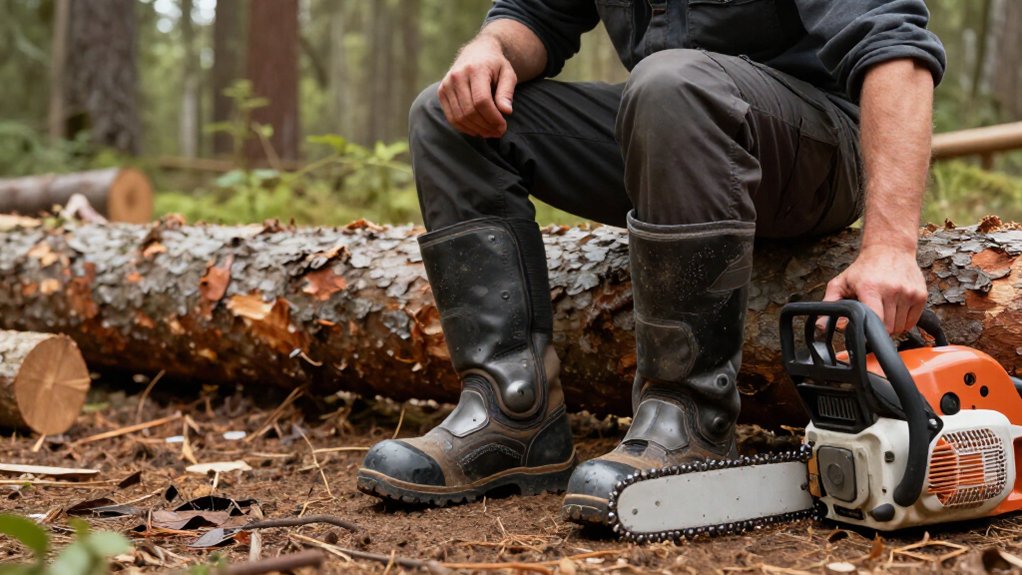
If you use a chainsaw, choose boots with certified cut resistance matched to your saw speed and jobsite rules. Class 1 covers up to 20 m/s, Class 2 up to 24 m/s, and Class 3 up to 28 m/s.
Steel toes protect against impact and compression, but they don’t stop a moving chain; ASTM F2413-24 doesn’t test cut resistance. Check markings, fit, and chap overlap before work. Details ahead can help you choose protection wisely.
Chainsaw Boot Cut-Resistance Classes
Chainsaw boots fall into three cut-resistance classes, rated for chain speeds up to 20 m/s (Class 1), 24 m/s (Class 2), or 28 m/s (Class 3).
| Class | Maximum chain speed |
|---|---|
| 1 | 20 m/s |
| 2 and 3 | 24 and 28 m/s |
Class 1 suits moderate chainsaw use and light arborist tasks. Choose Class 2 for frequent, rigorous cutting; Class 3 provides the highest protection for professional, heavy-duty work. Match the class to your chainsaw work and required protection level.
Check the boot’s certification and stated class, because features and protection can vary by model. Steel toes alone don’t establish chainsaw cut resistance; verify the specific rating before you buy. Select boots that meet the demands of your work and saw.
Chainsaw Versus Steel Toe Protection
A steel-toe cap protects your toes from impact and compression, but it won’t stop a moving chainsaw chain. These features address hazards, so don’t treat one as a substitute for the other. When you choose footwear for saw work, check both the cut-protection specification and the required safety-toe rating.
- Identify whether your task exposes your lower foot to a moving chain.
- Select chainsaw boots with cut-resistant materials designed to help stop or deflect that chain.
- Confirm the boot meets your workplace’s required impact and compression protection.
- Verify that its chainsaw-protection class suits the task and requirements.
Some chainsaw boots include steel or composite toe caps, but the cap protects against impact, not cuts. Match both protections to your hazards; steel toe alone isn’t chainsaw protection.
Impact and Cut-Test Outcomes
Although certified steel, composite, and carbon toe caps can meet the same ASTM F2413-24 impact and compression requirements, up to 75 pounds of impact force and 2,500 pounds of compression, those tests don’t measure chainsaw-cut resistance.
Treat these results as proof of toe protection against impacts and crushing, not chainsaw safety. A steel cap doesn’t establish a chainsaw rating. Chainsaw-rated boots undergo separate cut testing; protective layers help the chain slip off rather than penetrate. Check the class and match it to tested chain speed: Class 1 covers up to 20 m/s, Class 2 up to 24 m/s, and Class 3 up to 28 m/s. Don’t infer cut protection from toe-cap material or an impact rating; verify your boot’s chainsaw classification before work and choose accordingly.
Waterproofing and Weather Protection
In wet conditions, choose chainsaw boots with climate protection and water-resistant construction; fully waterproof boots offer better defense against rain and damp ground.
Keeping your feet dry helps you stay focused, while wet surfaces demand reliable traction. Check these features and care steps before each job:
- Select waterproof construction when rain or damp ground is expected; water resistance alone provides less defense.
- Confirm the outsole is slip-resistant to improve traction and support safer footing on wet surfaces.
- After use, let boots dry naturally; direct heat and sunlight can damage materials and weaken protection.
- When fully dry, apply a suitable waterproofer and boot balm to help maintain weather protection.
Inspect seams and soles regularly, and replace boots if damage compromises their water barrier or grip.
Ankle Support and Flexibility
Dry, secure footwear helps on wet ground, but chainsaw work also demands a supportive fit that lets your ankle move freely.
Choose boots that hold your foot securely without restricting the ankle motion you need for climbing, walking, or crossing uneven ground. A rigid fit can limit balance and increase strain; excessive movement can undermine stability. Try each model on with your usual work socks and flex your ankle through a comfortable range before buying.
Consider lightweight designs for long shifts, since lower weight may reduce foot and leg fatigue while preserving support. Fit and flexibility vary, so don’t assume one boot suits every task or foot shape. Keep cut protection central to your choice: ordinary steel-toe work boots don’t necessarily provide chainsaw-rated protection.
Lug Wear and Replacement
Inspect your chainsaw boots’ lugs regularly for worn tread, cracks, or missing pieces, since damaged lugs can reduce grip on wet or uneven ground.
Use this check to keep traction dependable:
- Clear packed dirt and debris from every lug channel; buildup can prevent tread from contacting the ground.
- Examine the sole across its full width, including heel and toe, for uneven wear, splits, or detached sections.
- Replace boots when worn lugs no longer provide reliable traction; don’t rely on a universal depth threshold or calendar interval.
- After cleaning, air-dry boots naturally, away from direct heat and sunlight, and follow the manufacturer’s care and replacement guidance.
Because lug designs vary, inspect them consistently and act promptly whenever grip becomes uncertain under your specific working conditions.
Certification and Fit Concerns
Sound lug wear helps maintain traction, but it doesn’t confirm that your boots protect against chainsaw cuts.
A steel toe resists impact and compression; it doesn’t certify cut protection. For chainsaw work, check the boot’s chainsaw-protection class against saw speed: Class 1, up to 20 m/s; Class 2, up to 24 m/s; and Class 3, up to 28 m/s. Verify safety certification, then confirm the required level with your jobsite rules or a safety professional.
Try each boot for a secure fit and toe-box room; pressure or heel movement can undermine comfort on long shifts. Consider conditions and weight. Lighter composite or carbon safety toes may reduce fatigue, while waterproofing and slip-resistant soles support wet work. Don’t assume work boots meet chainsaw requirements without checking their markings and documentation.
Upfront Cost Comparison
You’ll usually pay more upfront for chainsaw boots than for ordinary steel-toe work boots; HAIX models listed range from $399 to $474. Steel toes resist impact and crushing, but they don’t provide chainsaw cut protection. Compare price with the protection your work requires, since preventing a foot injury may deliver greater long-term value.
Initial Purchase Price
Standard steel-toe work boots usually cost less upfront than dedicated chainsaw boots, which the 2015 discussion described as expensive. When you compare prices, treat these figures as examples from one HAIX listing, not a universal market range. The listed models were:
- Airpower XR200: $399.
- Protector Prime Orange: $459.
- Protector Ultra: $474.
- Standard steel-toe boots: generally lower upfront.
Don’t let the lower sticker price alone determine your choice: ordinary steel toes protect against impact and compression, but they don’t provide the specialized cut-resistant layers found in chainsaw boots. If your work exposes your feet to a moving chain, compare the boot’s rated protection and fit with the hazard, then budget for appropriate equipment for your specific cutting hazards.
Long-Term Value
Although chainsaw boots cost more upfront than ordinary steel-toe boots, their added value comes from cut protection a steel toe doesn’t provide.
Compare your purchase price with the hazards and cutting tasks you face. A steel toe guards against impact and compression, but it doesn’t stop a saw chain. Dedicated chainsaw boots add purpose-built protective layers; boots designed for chain speeds up to 24 m/s offer a defined level of cut protection beyond impact protection.
For example, HAIX lists chainsaw boot models at $399, $459, and $474, so you should weigh that upfront cost against the protection your work requires. One chainsaw-user forum participant reported clipping their boots several times and expected them to pay for themselves over time. That experience isn’t a guarantee.
Sap and Sawdust Cleanup
Brush loose sawdust and debris from your chainsaw boots before removing the laces and insoles. Clean sap with boot cleaner or warm, soapy water; harsh chemicals can damage the leather. After air-drying the boots away from heat and sunlight, apply boot balm and waterproofer to maintain protection.
Remove Sap Safely
Before cleaning your chainsaw boots, remove loose sap and sawdust, then take out the laces and insoles to reach debris trapped in seams and crevices. Use this sequence to protect boot materials and preserve fit:
- Hand-wash laces and insoles separately, using a brush to loosen remaining dirt.
- Clean boot surfaces with boot cleaner or dish soap mixed with warm water.
- Avoid harsh chemicals; they can damage materials and undermine reliable protection.
- Rinse thoroughly, then air-dry naturally away from direct heat and sunlight.
Once fully dry, apply boot balm or waterproofer to restore surface conditioning and help repel moisture. Don’t wear damp boots: moisture can reduce comfort and affect fit, while rushed drying may stress leather, adhesives, and protective components; follow the manufacturer’s care instructions.
Brush Off Sawdust
Once your chainsaw boots are off, brush away loose sawdust and debris before removing the laces and insoles. Remove them so you can expose dirt and residue around seams and under the footbeds. Hand-wash laces and insoles separately, then brush remaining dirt from the boot exterior.
Check tread channels and welt edges, where packed sawdust can hide wear or obstruct traction. For stubborn sap or grime, use a boot cleaner or dish soap mixed with warm water. Avoid harsh chemicals; they can damage boot materials and compromise protective construction. Rinse the boots thoroughly to remove soap and loosened residue, then let them air-dry naturally in a ventilated area.
Condition Boots Properly
After cleaning off sawdust, use a boot brush to remove sap and remaining dirt, then wash the boots with a dedicated boot cleaner or dish soap mixed with warm water.
- Before washing, remove laces and insoles to reach trapped debris and let surfaces dry evenly.
- Skip harsh chemicals; they can damage boot materials or protective finishes.
- Rinse thoroughly, then air-dry naturally. Stuff each boot with newspaper to help retain shape.
- Keep boots away from direct heat and sunlight; apply boot balm and waterproofer only when fully dry.
Before putting your boots back into service, check that they’re completely dry inside and out. Damp boots can compromise comfort and contribute to skin problems during long shifts. Don’t rush drying with a heater or leave boots in direct sun, as heat can harm materials. Proper cleanup and conditioning help preserve fit, durability, and protective performance when you return to cutting work.
Check Boot-Chap Overlap
Check the overlap in your normal work positions: stand, bend, and kneel to confirm that your chainsaw trousers or chaps cover the boot tops without exposing the openings.
Keep the cuffs outside the boot shafts; never tuck them inside, where sawdust and debris can collect and interfere with the interface. As you move, verify that the overlap stays in place and doesn’t lift to expose the boot opening. The laces and tongue must remain covered by the cuffs because the boot’s cut-resistant material doesn’t protect exposed areas. Select boots and leg protection designed to fit together securely, then check the combination before work.
Follow each manufacturer’s instructions for fitting and use, since product designs and coverage requirements can differ. Correct any gap before operating.
Conclusion
Choose chainsaw boots with a cut-resistance class suited to your saw, task, and exposure; steel-toe boots alone don’t stop a moving chain. Verify current safety certification, secure fit, compatible chap overlap, and intact closures before work. Match waterproofing and ankle support to conditions, then clean sap and sawdust after each shift. Don’t trade tested protection for lower cost; replace damaged boots promptly, and inspect your full protective system every day before starting the saw.