3 Best Corded Chainsaws for Firewood in 2026
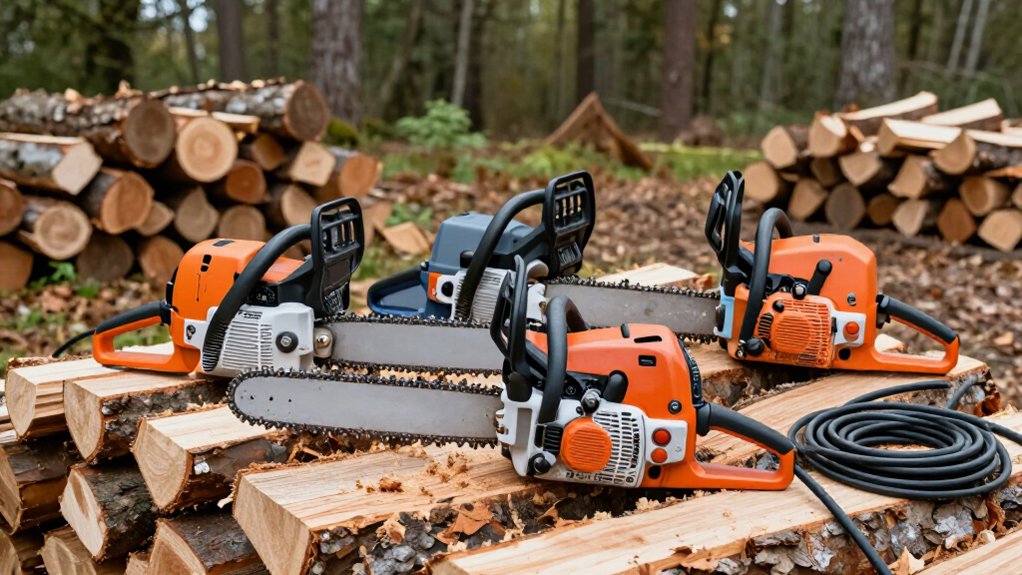
For firewood, choose among three corded chainsaws by matching bar length and motor power to your logs. The EWORK pairs a 15-amp motor with a 16-inch bar, while BLACK+DECKER offers 15 amps and an 18-inch bar. CRAFTSMAN gives you a 12-amp option with a 16-inch bar.
Check chain tension and oil, control the cord, and use safety features. Compare log capacity, handling, and maintenance to find your fit; the details below can help you choose.
| EWORK 15 Amp 16″ Electric Chainsaw with Tool-Less Chain Tensioner |  | Best Safety Features | Motor: 15 amp | Bar Length: 16 inches | Power Type: Corded electric | VIEW LATEST PRICE | Read Our Analysis |
| BLACK+DECKER 18-Inch 15-Amp Electric Chainsaw (CS1518) |  | Best Cutting Capacity | Motor: 15 amp | Bar Length: 18 inches | Power Type: Corded electric | VIEW LATEST PRICE | Read Our Analysis |
| CRAFTSMAN 16-Inch Electric Chainsaw (CMECS600) |  | Best Warranty | Motor: 12 amp | Bar Length: 16 inches | Power Type: Corded electric | VIEW LATEST PRICE | Read Our Analysis |
More Details on Our Top Picks
EWORK 15 Amp 16″ Electric Chainsaw with Tool-Less Chain Tensioner
For steady firewood cutting, the EWORK pairs a 15-amp motor with thoughtful safety features, including a low-kickback chain and trigger lock. You get corded power at speeds up to 50 ft/s, so you can cut logs up to 14 inches with its 16-inch bar. Its tool-free tensioner lets you adjust the chain, while automatic oiling and an oil window simplify upkeep.
You won’t mix gas or pull a starter, and you can work without battery fade. Use the front hand guard, trigger lock, overload and overheat protection, and scabbard to support safer handling; release the chain brake before use.
- Motor:15 amp
- Bar Length:16 inches
- Power Type:Corded electric
- Chain Tensioning:Tool-free
- Oiling:Automatic
- Low-Kickback Chain:Yes
- Additional Feature:Up to 50 ft/s chain speed
- Additional Feature:PCB overload/overheat protection
- Additional Feature:One-year warranty
BLACK+DECKER 18-Inch 15-Amp Electric Chainsaw (CS1518)
Homeowners preparing firewood from thick limbs will appreciate the CS1518’s 18-inch bar and 15-amp motor. You can use it to prune trees and cut branches up to 18 inches thick, while its lightweight design helps you manage longer sessions. A push-button start gets you going. The low-kickback bar and chain reduce kickback force and frequency, and the cord retainer helps keep the extension cord connected.
Tool-free tensioning lets you remove chain slack; the automatic oiler lubricates the chain, and a window helps you monitor oil. Store or transport the saw with the guide-bar scabbard. You’ll also get a two-year limited warranty.
- Motor:15 amp
- Bar Length:18 inches
- Power Type:Corded electric
- Chain Tensioning:Tool-free
- Oiling:Automatic
- Low-Kickback Chain:Yes
- Additional Feature:Push-button start
- Additional Feature:Extension-cord retainer
- Additional Feature:Two-year limited warranty
CRAFTSMAN 16-Inch Electric Chainsaw (CMECS600)
The CRAFTSMAN CMECS600 pairs a 12-amp motor with a three-year limited warranty for firewood cutters seeking reliable corded power. Its 16-inch low-kickback bar and chain give you reach for cutting logs and preparing firewood, while the motor supports tough cuts. Automatic oiling keeps the chain lubricated without priming, and a built-in oil window lets you check the level.
When the chain needs adjustment, you can use the tool-free tensioning system instead of searching for a wrench. As a corded model, it needs an outlet, but you won’t have to manage fuel or recharge batteries. CRAFTSMAN backs it with a three-year limited warranty.
- Motor:12 amp
- Bar Length:16 inches
- Power Type:Corded electric
- Chain Tensioning:Tool-free
- Oiling:Automatic
- Low-Kickback Chain:Yes
- Additional Feature:No oil priming required
- Additional Feature:12-amp motor supports tough cuts
- Additional Feature:Three-year limited warranty
Factors to Consider When Choosing a Corded Chainsaw for Firewood
When choosing a corded chainsaw for firewood, consider motor power and guide bar length for the wood you’ll cut. Check for easy chain tensioning and automatic oiling to keep maintenance simple. You’ll also want reliable safety features and a cord-control plan that keeps the cable clear of the chain.
Motor Power
For frequent firewood cutting, a 15-amp motor offers practical power, while a lower-amp model may handle occasional, lighter tasks.
Amperage reflects the electrical input the motor can draw; higher ratings generally give you more capacity for demanding cuts. Match that power to the wood you process: thick or dense logs put more strain on a saw than smaller, softer pieces. A suitable motor helps you work confidently, but it won’t guarantee fast cutting on its own.
A sharp chain, adequate chain speed, and regular maintenance also shape performance, so keep the chain clean, sharp, and properly tensioned. Because a corded motor delivers steady power through extended sessions without battery fade, you can keep working without pauses to recharge. Use an adequately rated extension cord, too; an undersized cord can limit performance. Choose power for your workload, not just the highest amp rating available.
Guide Bar Length
Choose a guide bar long enough to cut your typical firewood diameter in one pass, but short enough to keep the saw manageable. Use the size of the logs you usually split as your guide. The bar should extend beyond a log’s radius, giving the chain enough reach to cut through without forcing the saw.
A longer bar can handle bigger pieces, but it adds weight and may feel harder to control when you’re making repeated cuts. A shorter bar is easier to maneuver around smaller logs, though it may not span the full diameter. You might need to reposition the wood or cut from both sides, which takes extra time. Match the bar to both your log size and the saw’s power. Don’t assume a longer bar will cut faster or work better; if the motor can’t drive it effectively, added reach won’t improve your results.
Chain Tensioning
A tool-free tensioning system lets you tighten a slack chain quickly without carrying extra tools.
When choosing a saw for firewood, look for this feature so you can make adjustments. Check chain tension before cutting and periodically as you process logs. A loose chain can derail or damage the saw.
Before inspecting or adjusting the chain, unplug the saw to prevent accidental startup. Follow the manufacturer’s instructions: the chain should sit snugly against the guide bar, yet move freely by hand. Never test movement while the saw is plugged in.
If you fit a new chain, recheck its tension after initial use because it can stretch. Choose a model whose tensioner you can operate, and make these checks part of your firewood routine.
Automatic Oiling
Automatic Oiling
After checking chain tension, consider automatic oiling, which lubricates the guide bar and chain while you cut. This feature feeds oil as the saw runs, reducing friction and wear. With lubrication, the chain can travel smoothly through logs, while the oil helps limit heat buildup. Automatic oiling doesn’t eliminate your need to check the supply.
Before each session, inspect the reservoir and top it up as needed. Some models include an oil-level window, letting you monitor the supply. Don’t let the chain run dry; low oil can undermine the lubrication the system is meant to provide. Use the bar-and-chain oil your saw’s manufacturer recommends instead of assuming another oil will protect the bar and chain. A window and easy-to-fill reservoir can make checks simpler.
Safety And Cord Control
Safety features and cord control matter when you’re choosing a corded chainsaw for firewood. Look for a low-kickback bar and chain, designed to reduce kickback’s force and frequency. A front hand guard helps shield your hand from the chain and flying debris, while a trigger safety lock helps prevent accidental startup. Keep that lock engaged whenever the saw isn’t in use.
Check how the saw manages its extension cord, too. A built-in cord retainer can reduce the chance of disconnection as you work. Before cutting, confirm that the chain brake is disengaged for operation, then route the cord behind you, well away from the bar and cutting path. Keep checking its position, and stop before repositioning if the cord could enter the cutting area.
Frequently Asked Questions
Can a Corded Chainsaw Cut Freshly Fallen, Wet Wood Effectively?
Yes, you can cut freshly fallen, wet wood effectively with a corded chainsaw, but expect slower progress and resistance. Keep the chain sharp, match bar length to logs, and use a rated outdoor extension cord.
What Gauge Extension Cord Is Safest for a Corded Chainsaw?
Use a 12-gauge extension cord for most corded chainsaws; check your saw’s manual and match its amperage. For runs over 100 feet, choose 10-gauge to limit voltage drop. You’ll need a properly rated outdoor cord.
How Often Should I Sharpen a Chainsaw Chain When Cutting Firewood?
Sharpen your chain whenever it produces fine sawdust, needs extra pressure, or cuts unevenly—you’ll sharpen it every few hours of firewood cutting. If you hit dirt or rocks, stop and sharpen it right away.
What Protective Gear Should I Wear While Cutting Firewood?
Wear chainsaw-rated helmet with face shield and hearing protection, safety glasses, chainsaw chaps or pants, sturdy steel-toed, nonslip boots, and gloves. You’ll want snug-fitting gear, tie back long hair, and avoid loose clothing that snags.
How Should I Store a Corded Chainsaw Between Cutting Sessions?
Unplug your chainsaw and let it cool, then brush away sawdust and wipe it dry. Protect the bar with its cover, coil the cord loosely, and store it securely where children can’t reach.
Conclusion
Choose a corded chainsaw that matches the size and volume of firewood you cut. The EWORK offers convenient tool-less tensioning, while BLACK+DECKER gives you an 18-inch bar for larger logs. CRAFTSMAN is another 16-inch option to evaluate. Before buying, check each saw’s power, weight, safety features, and compatibility with your extension cord. Keep the chain sharp, wear protective gear, and secure your workpiece. With the right setup, you can cut firewood efficiently and safely.
Battery Chainsaw Runtime Estimator
Estimate battery chainsaw runtime from battery voltage, amp-hours, rated watts and duty cycle, with an optional corded-saw energy comparison.
Battery vs Gas Chainsaw Cost-of-Ownership Calculator
Compare the total cost of a gas and a battery chainsaw over the years with your own fuel, power and usage numbers, and find the break-even point.
Chainsaw Chaps Size Calculator
Enter your belt-to-boot length, waist and chap style to see the matching size in STIHL, Labonville and Husqvarna size tables.