Corded vs Cordless Chainsaw: Which Is Better for Yard Work?
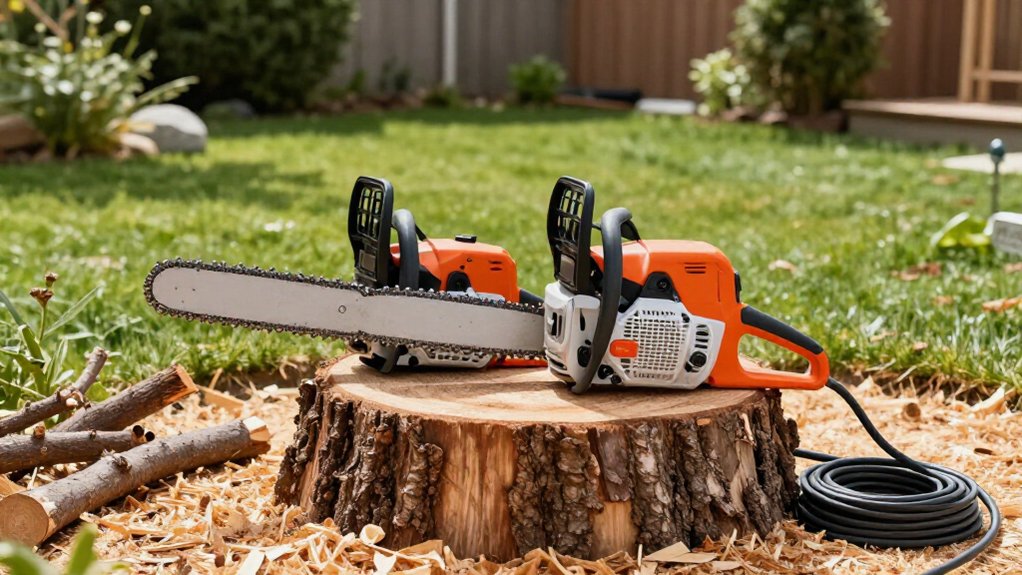
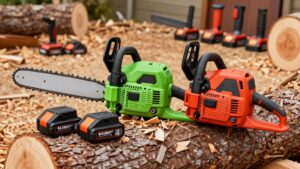
Choose a corded chainsaw if you need steady cutting near an outlet; it runs without recharge stops, but its cord limits reach and can snag. Choose cordless for mobility across large yards or storm debris, but plan for battery runtime and charging.
Match bar length and power to limb size, keep the chain sharp, and wear protective gear. Keep cords clear of cuts and avoid wet conditions.
The details ahead can help you choose safely and confidently.
Battery Runtime and Cord Length
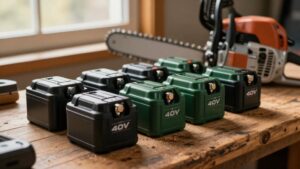
Runtime depends on your power source: cordless chainsaws can lose charge quickly during heavy or prolonged cutting, while corded models run continuously as long as they’re plugged in. Track your cutting time and watch for slowing chain speed or reduced performance; these signal a depleted battery. Recharge after use, and bring a spare battery to keep working while another charges.
Plan corded work within cord reach and outlet access; limited reach may interrupt your route. Keep the cord behind and away from the cutting path; never let it snag or contact the chain.
| Runtime factor | What you’ll notice | Practical response |
|---|---|---|
| Battery capacity | Longer intervals between charges | Match battery to workload |
| Cord reach | Outlet distance limits area | Reposition safely |
For either type, plan pauses before fatigue affects your control.
Corded vs. Cordless Power Sources
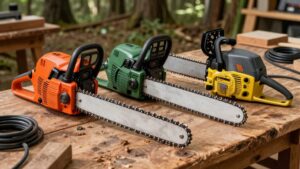
Choose a corded chainsaw for steady power on fixed jobs near an outlet; choose a cordless model when you need to move freely or work farther from power. A corded saw draws continuous outlet power, so you won’t recharge, but you need an accessible outlet. Keep its cord behind the cutting path and use a properly rated outdoor extension cord; never let it enter the chain’s reach.
A cordless saw uses a rechargeable lithium-ion battery, letting you work away from outlets. It often costs more upfront because you’ll need a battery and charger; corded models generally cost less. Both are quieter than gas saws, produce no exhaust, and need cleaning and chain-tension checks. Choose according to your work area, and follow the manufacturer’s instructions.
Limb-Size Cut Quality
For limb-size cuts, match the saw’s bar length and power to the wood, and keep the chain sharp and properly tensioned. A 1.4 kW corded STIHL MSE 141 C-Q suits small and medium yard cuts, including branch trimming, near an outlet.
For thicker limbs, compare bar length with wood diameter; don’t force a short bar through oversized wood. The battery MSA 70 C-B has a 30 cm (12-inch) bar, while the MSA 300 C-O carries a 40 cm (16-inch) bar. Battery saws with 14–16-inch bars can handle professional arborist work, though larger jobs may still warrant a gas saw. Near power, Oregon CS1500’s 18-inch bar reportedly cut quickly through a 14-inch madrone log. Both types need routine chain checks for clean, controlled cuts; work safely.
Tool-Free Chain Tensioning
Clean limb cuts depend on a sharp, correctly tensioned chain, so check tension regularly on both corded and cordless saws.
Tool-free adjustment can make this basic routine quicker, but don’t assume either power type includes it. Features vary by model, and product information may not explain the adjustment mechanism. Before you buy, check the specifications to confirm you can set chain tension without tools; treat convenience as separate from cutting power.
Whatever system you use, switch off and unplug a corded saw, or remove the battery from a cordless saw, before inspecting or adjusting the chain. Follow the manufacturer’s instructions, and don’t run the saw if the chain feels loose. Correct tension supports controlled cutting and helps you work safely outdoors.
Garage Storage Requirements
Store either saw clean and dry, with the chain brake engaged and the guide-bar cover fitted to protect the chain and nearby items.
For either model, choose a secure garage location out of children’s reach and away from fuels or other flammable materials. Keep the saw stable so it can’t fall or expose its cutting edge. If you own a corded saw, allow room for its power cord; coil it loosely rather than wrapping it tightly or leaving kinks that could damage insulation.
With a cordless saw, remove the battery before storage and reserve separate space for the battery and charger. Store both in a cool, dry place away from moisture and extreme heat. Keep charging equipment where water or heat can’t reach it.
Replacement Battery Pricing
Replacement Battery Pricing
How much does a replacement battery add to a cordless saw’s long-term cost? Cordless chainsaws carry an upfront price because the package includes a battery and charger, but that initial expense doesn’t cover replacements. Battery prices vary by brand, capacity, and battery platform, so check the cost of a compatible replacement before choosing your saw.
Compare that figure with the saw’s purchase price to judge whether the long-term cost fits your budget. If you already own tools in the same system, a battery may deliver better value across several devices. Still, factor in battery life and how often you’ll need a replacement when weighing cordless convenience against a corded model. Follow the manufacturer’s charging and storage instructions to help preserve battery performance.
Wet-Weather Electrical Hazards
Neither corded nor cordless chainsaws should be used in rain or around standing water; a cordless model eliminates the trailing power cord, but its battery and electrical components can still get wet. Check your manufacturer’s instructions for wet-weather limits.
With a corded saw, keep the plug and connections dry, use a properly protected outdoor outlet, and plan cuts so the extension cord can’t lie in water. Although cordless operation removes that trailing cord, don’t assume the tool is waterproof or safe when damp. If the saw, battery, plug, or extension cord gets wet, stop using it. Don’t handle or restart the equipment until you’ve followed the manufacturer’s guidance for your specific model.
Vibration and User Fatigue
Vibration can affect your comfort, but comparable measurements aren’t available for these models; the MSE 141 C-Q is described as low-vibration. The MSA 70 C-B weighs less than the MSE 141 C-Q before you add its battery, so consider total weight when judging fatigue. Either saw can tire you during long cuts, so keep a balanced grip, take breaks, and try the saw if possible.
Vibration Levels
Compared with petrol models, corded and battery-powered chainsaws generally produce less vibration, which may make occasional garden work more comfortable.
For a yard choice, that doesn’t mean one electric type necessarily vibrates less than the other. The STIHL MSE 141 C-Q is specifically noted for low vibration, making it a potentially comfortable option for occasional tasks. It doesn’t replace safe technique or regular checks.
To use vibration claims practically:
- Compare product specifications when available, but don’t infer a winner without measured data.
- Keep both hands on the saw and follow its manual’s operating guidance.
- Stop for unusual vibration; inspect the chain and saw before continuing work.
User Fatigue Factors
How long you can work comfortably depends on weight, vibration, and the demands of the cut. A lighter saw can reduce the load you hold: the STIHL MSA 70 C-B weighs 2.9 kg without its battery, while the corded MSE 141 C-Q weighs 4.2 kg and has low vibration, which may help during occasional garden jobs. The MSA 300 C-O weighs 4.5 kg before its battery, trading easier handling for task capacity.
Even low-vibration, quiet electric saws can tire you during prolonged or demanding cuts. Plan pauses, keep a two-handed grip, and stop if your control declines. Battery runtime, recharging breaks, and cord limits can interrupt your pace, so plan work around them. Wear protective gear; operation without exhaust doesn’t remove cutting hazards.
Clearing Storm-Damaged Branches
Assess each branch’s diameter before choosing a saw; a 12-inch-bar battery model suits light cuts, while larger limbs need more power. You’ll gain mobility with a cordless saw across the yard, but plan for battery changes during extended cleanup; a corded model offers continuous power near an outlet, though its cord can limit movement.
Before cutting, wear suitable protective gear and inspect the saw and chain, keeping any power cord clear of the cutting area.
Assessing Branch Size
When clearing storm-damaged branches, match the saw to both the wood’s thickness and the amount of cutting ahead.
Assess each limb: small-to-medium branches near an outlet suit a corded saw such as the STIHL MSE 141 C-Q, with its 1.4-kW motor. For scattered debris, cordless saws let you reach branches beyond a cord’s span. For thicker limbs, battery models with 14-16-inch bars handle demanding cuts; larger jobs may call for a gas saw.
Use these checks to plan:
- Measure limb diameter and select a bar suited to it.
- Account for the cutting workload; prolonged sessions can require battery recharging, while a corded saw supplies continuous power near an outlet.
- Wear proper safety gear and confirm the chain brake works before you cut storm-damaged wood.
Choosing Power And Portability
Choose between corded power and cordless mobility based on where storm debris lies and how much cutting you’ll do. If fallen limbs sit near an outlet, a corded saw gives you continuous power, so you can keep cutting without stopping to recharge. But its cord restricts your range, making scattered branches and a large, uneven yard harder to navigate.
A cordless model lets you move from limb to limb far from outlets, though its usable runtime depends on battery capacity. Heavy cutting can drain the pack quickly, but battery saws aren’t automatically limited to light cleanup: testing has recorded over 100 cuts through 10-inch oak beams on one charge. Match cutting near power with a cord; choose cordless for easier movement across the yard.
Working Safely After Storms
After a storm, use a cordless chainsaw to reach damaged branches far from an outlet without dragging a cord through debris.
A corded saw supplies continuous power near your house or another accessible outlet, but its cord can snag on fallen limbs and restrict movement. Cordless models suit trimming and smaller branches; heavy or prolonged cleanup can drain batteries quickly. Check battery capacity and arrange a recharge or spare before you start.
- Wear eye and hearing protection, gloves, sturdy footwear, and chainsaw chaps; inspect the saw and chain brake.
- Keep bystanders clear, stand on stable ground, and avoid cutting overhead or branches under tension.
- Stop if limbs bind the bar, shift unpredictably, or require climbing; call a professional.
Bar Length Selection
Bar length should match the diameter of the wood you expect to cut and the saw’s intended workload. For light pruning and trimming, a shorter bar, such as the 12-inch bar on the homeowner-focused STIHL MSA 70 C-B, gives you a manageable setup. For larger logs, a longer bar can reach through bigger cuts; the corded Oregon CS1500 has an 18-inch bar.
Battery models with 14- to 16-inch bars have also handled professional arborist work. Match the tool to your routine: the 16-inch MSA 300 C-O is built for high-demand tasks, while the MSA 70 C-B targets homeowners. These examples aren’t a universal sizing rule. Check the wood’s diameter and choose a compatible saw and bar. Don’t force a bar through a cut, and follow the manufacturer’s limits and safe cutting practices. Keep both hands on the saw; wear proper protective equipment.
Conclusion
Choose a corded chainsaw if you have power and make planned cuts near an outlet; its steady supply suits routine yard work. Choose cordless if you’ll move among branches or clear storm debris without dragging a cord. Match bar length to limb size, and don’t expect either saw to handle oversized wood.
Keep batteries charged, check chain tension, and wear proper protective gear. Never use corded saws in wet conditions; choose the saw that lets you work safely.