How Often to Replace a Chainsaw Fuel Filter? Signs It’s Clogged
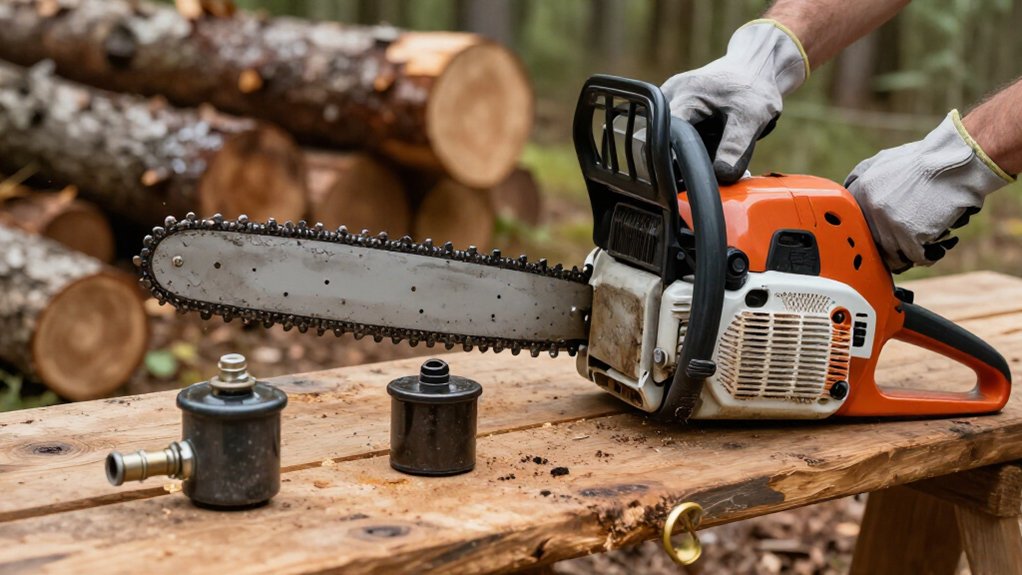
Check your chainsaw’s fuel filter every 10 operating hours, or at the interval in your owner’s manual. Replace it if it’s clogged, damaged, or contaminated, and use only the specified part.
Hard starting, rough idling, sputtering, hesitation, power loss, or repeated stalling can signal restricted fuel flow, though other faults may cause them. Work with the saw cool, outdoors, and away from ignition sources.
Track runtime and follow the steps below for safer, reliable service.
Chainsaw Filter Replacement Frequency
How often should you replace your chainsaw’s fuel filter? Follow your model-specific owner’s manual for the replacement interval; schedules vary by manufacturer and model. Don’t assume one interval fits every saw.
Replace the filter sooner if it’s visibly dark or contaminated, or if fuel flow seems restricted. Reduced flow can cause poor running, so stop the saw and inspect it before use. Dusty or dirty work conditions, along with old or contaminated fuel, can load the filter faster. Check it often when you’re working in these conditions.
Before extended storage, drain fuel or add fuel stabilizer to limit deterioration and varnish buildup. If the filter sits inside a housing and you can’t inspect it, disconnect it and check for obstructed airflow through the inlet.
Chainsaw Filter Replacement Tools
Gather a few basic tools before replacing the filter: clean long-nose pliers or a hooked fuel-line tool, a small blunt pick if the filter has sunk, a replacement filter, and a clean container to catch fuel. You’ll also need fuel-resistant gloves; work outdoors or in another well-ventilated area, well away from flames and sparks. Check your owner’s manual for model-specific tools and steps before disconnecting the fuel line.
- Use clean pliers or a hooked fuel-line tool to lift the filter gently without damaging its line.
- If it’s sunk, use a blunt pick or hook; never use sharp tools that could puncture the line.
- Place the replacement filter and fuel-catching container nearby during removal.
- Keep tools clean and control spills to limit fuel contamination.
10-Hour Filter Inspection
After replacing the filter, inspect it every 10 operating hours—or at the interval in your owner’s manual. Switch off the saw, let the engine cool, and work in a well-ventilated area away from flames and sparks. Check for dark sludge, rust, debris, or other contamination that may restrict fuel flow.
| Check | What you see | Response |
|---|---|---|
| Filter surface | Dark sludge | Suspect clogging |
| Filter body | Rust or debris | Check for restriction |
| Filter housing | Filter isn’t visible | Follow your model’s manual |
| Saw performance | Stalling or hesitation | Check fuel flow |
If the filter’s housed or hidden, follow your model’s manual for safe inspection; don’t rely on appearance alone. Replace a clogged or damaged filter with the correct part.
Restricted flow can cause hard starting, stalling, or hesitation. Keep this check routine.
Filter Removal and Installation
Switch off the saw, let it cool, and work in a ventilated area away from flames or sparks; check your manual for the correct procedure and filter. Open the fuel cap carefully, then use a clean hook to draw out the fuel line and filter without damaging the line, and install a compatible replacement securely. Return the filter to the tank without kinking the line, close the cap, then prime the saw and check for leaks.
Safety Before Removal
Before opening the fuel system, turn off the chainsaw, let the engine cool completely, and move the saw away from flames, sparks, and other ignition sources. Work outdoors or in a well-ventilated area, and wear fuel-resistant gloves and eye protection to limit gasoline contact and prevent splash injuries. Clean dirt from around the fuel cap before opening it, so debris can’t enter the tank.
Open the cap slowly to release pressure; keep the saw stable, and drain fuel into an approved container if needed. Follow your model-specific service manual for the procedure. Use a clean tool when removing the filter; work carefully to avoid damaging the fuel line or contaminating the tank. Keep the container closed and clean up spills before you resume work.
Locate the Fuel Filter
With the saw off and cool, consult its owner’s manual for the filter’s location and removal procedure, since designs vary. The filter usually sits inside the fuel tank, attached to the end of the fuel line. Shine a flashlight through the filler opening to spot it. Work outdoors or in a well-ventilated area, and keep flames and sparks away from the tank.
Follow the manual’s instructions for access; use a clean hook or tool to raise the line and filter through the opening. Handle the line so you don’t damage it or let it slip into the tank. After fitting the replacement filter to the line, guide it into the tank. Check that the line isn’t kinked, then close the fuel cap.
Remove the Old Filter
Once the saw is off and the engine has cooled, open the fuel cap slowly in a well-ventilated area away from flames and sparks. Consult your model-specific service manual first; access and filter connections vary by saw. Keep the area clear of ignition sources, and wear eye protection and fuel-resistant gloves.
Use a clean hook or long-nose pliers to lift the fuel line and filter from the tank. Work gently; don’t pull hard, kink the line, or pinch it with the tool. Hold the line securely as you disconnect the old filter, taking care not to stretch or tear the tubing. Keep fuel off your skin and wipe up spills promptly. Set the removed filter aside for proper disposal according to local rules.
Install the Replacement Filter
After draining the tank and checking your owner’s manual for the correct filter and model-specific steps, work in a well-ventilated area away from flames or sparks. Use a clean hook or suitable tool to lift the fuel line and filter from the tank. Pull gently; don’t kink, stretch, or puncture the line. Remove the old filter, then push the specified direct-fit replacement onto the line until it seats securely.
Install any seals the manual calls for, and confirm the connection feels snug without forcing it. Lower the filter and line into the tank, ensuring the line isn’t twisted, trapped, or pressed against a sharp edge. Refit the fuel cap and any components you removed, following the manual’s sequence.
Prime and Test the Saw
Before starting the saw, confirm the filter sits securely in the tank and the fuel line isn’t kinked or pinched. Refill the tank with fresh fuel mixed to the ratio specified for your model. Follow your manual to operate the primer bulb until fuel moves through the system.
Set the choke and start the saw as the manufacturer directs, holding it firmly with the chain clear of people and objects. Let it idle, then squeeze the throttle to check for smooth acceleration. Check for hesitation, sputtering, or stalling. If you notice a fuel leak, the saw won’t start, or it runs poorly, shut it off. Recheck the filter and fuel-line connections, and consult model-specific service instructions before trying again. Don’t operate a leaking saw.
Fuel Mix and Storage Habits
Use the gasoline-and-oil ratio specified in your chainsaw’s manual, and mix only what you’ll use soon. Store fuel in a clean, sealed container; for extended storage, drain it or add an appropriate stabilizer. If the saw has sat with old fuel, replace it with fresh mix before diagnosing a possible clogged filter.
Use Fresh Fuel Mix
Fresh Fuel Mix
Fresh fuel mix helps keep your chainsaw’s fuel filter clear and fuel flowing properly.
Prepare only the amount of fuel you expect to use soon. Gasoline begins to deteriorate over time, and degraded fuel can leave sticky varnish that builds up in the filter and restricts flow. Keep your mix fresh rather than topping the saw with an old supply.
Store fuel in a clean, sealed container approved for fuel. Place it away from heat and direct sunlight, and keep it secured from children and ignition sources. For longer storage, follow the fuel and chainsaw manufacturers’ instructions; an approved stabilizer may help slow deterioration.
Before refueling, inspect the fuel for dirt, separation, or contamination. Don’t pour old or contaminated mix into your saw: particles and degraded fuel can clog the filter, reduce fuel delivery, and cause poor operation.
Follow Mixing Ratios
Along with keeping fuel fresh, mix gasoline and two-stroke oil at the ratio specified in your chainsaw’s owner’s manual; the correct ratio varies by model.
Measure both liquids accurately before mixing. An incorrect proportion can reduce engine performance and stress fuel-system components, including the filter. Use a clean measuring container and follow the manual’s instructions rather than estimating by eye.
Prepare only the amount you’ll use soon; gasoline can deteriorate over time, leaving sticky varnish that may contribute to filter clogs. If you’ll leave fuel unused for an extended period, drain it from the saw or use an appropriate fuel stabilizer as directed. Don’t mix more than you can use promptly, and keep the mix consistent with the saw’s requirements to protect reliable operation.
Store Fuel Properly
To help prevent fuel-related filter clogs, mix fresh gasoline with the oil ratio specified in your chainsaw’s owner’s manual, and prepare only as much as you expect to use soon.
An incorrect mix can damage the engine, while old gasoline may deteriorate and leave sticky varnish that contributes to deposits on the filter. For extended storage, follow your manual’s instructions to drain unused fuel, or add a fuel stabilizer to slow deterioration. Keep fuel in a clean, tightly sealed, approved container so dirt, moisture, and debris can’t contaminate it.
Store the container in a cool, well-ventilated area, away from heat, sparks, and open flames. Don’t leave mixed fuel exposed or use questionable fuel; dispose of it according to local rules. Check local disposal rules.
Steady Full-Throttle Response
When you squeeze the throttle, a clean fuel filter helps the chainsaw deliver fuel steadily for a smooth response. Under load, the engine needs consistent fuel flow to maintain power as you cut. If response becomes inconsistent, inspect the filter and the rest of the fuel system before replacing parts; poor fuel quality, debris in the tank, or another fault can produce similar performance changes.
Follow your chainsaw manufacturer’s service guidance for filter replacement, and check the filter sooner if full-throttle operation no longer feels consistent. Before inspecting or servicing the saw, shut it off, let the engine cool, and keep it away from ignition sources. After service, verify operation in a clear area, keeping the bar and chain away from people and objects.
Clogged-Filter Symptoms
How can you tell if a chainsaw fuel filter is clogged? You may notice hard starting or long cranking because restricted fuel flow starves the engine. Once it’s running, listen and watch for rough idling, sputtering, or hesitation when you squeeze the throttle. The saw may lose power.
Repeated stalling is another warning, particularly as engine speed rises or when you’re cutting under load. Fuel starvation can prevent the engine from meeting demand. You might also hear an unusual whining noise if the restriction makes the fuel pump work harder.
Don’t assume the filter is the cause: ignition faults, stale fuel, or fuel-system problems can produce similar symptoms. Stop the saw, let it cool, then inspect the fuel system before replacing the filter.
Filter Orientation Errors
If symptoms persist after replacing the filter, check its orientation and fuel-line connections. Follow the manual; some filters clearly mark flow direction. A reversed directional filter can restrict delivery, causing hard starts, sputtering, or stalling. Before opening the tank, shut off the saw and let it cool. Disconnect the spark-plug lead to prevent accidental starting.
- Align the filter’s marked flow direction as specified by the manual.
- Connect its outlet to the line leading to the carburetor, not the return to the tank.
- Make sure the filter hangs freely; it shouldn’t press against the tank wall or get pinched by the fuel line.
- Secure the line after installation, then start the saw and confirm smooth running. If fuel flow remains poor, consult a qualified technician.
Track Seasonal Runtime Changes
Track chainsaw hours by season, since storm cleanup or firewood cutting can add runtime far faster than occasional pruning.
Record engine hours or estimate them after each use so seasonal totals can guide fuel-filter inspections and replacement. Compare those totals with the interval in your chainsaw’s owner’s manual; replace the filter sooner if unusually heavy use or contamination warrants it.
During a high-use season, note any increase in hard starting, stalling, or hesitation. These symptoms may signal restricted fuel flow, but don’t diagnose by symptoms alone. Shut off the saw and let it cool before checking the fuel system; follow the manual’s service steps.
Before off-season storage, record the saw’s runtime and follow the manual’s fuel-storage and filter-maintenance guidance. Use the seasonal log to plan inspection before the next heavy work period, and replace the filter only with the specified type and fit.
Conclusion
Replace your chainsaw’s fuel filter when its manual specifies, and inspect it at each 10-hour service interval or sooner if fuel flow falters. A clogged filter can cause hard starts, stalling, or weak full-throttle response.
Use the correct filter and orientation, keep fuel fresh, and wear gloves while working. Don’t run the saw with leaks or uncertain assembly; verify steady operation outdoors before cutting. Track seasonal hours so you don’t overlook service needs between jobs.