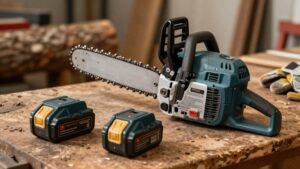
Battery Vs Gas Chainsaw: Which Should You Buy in 2026?
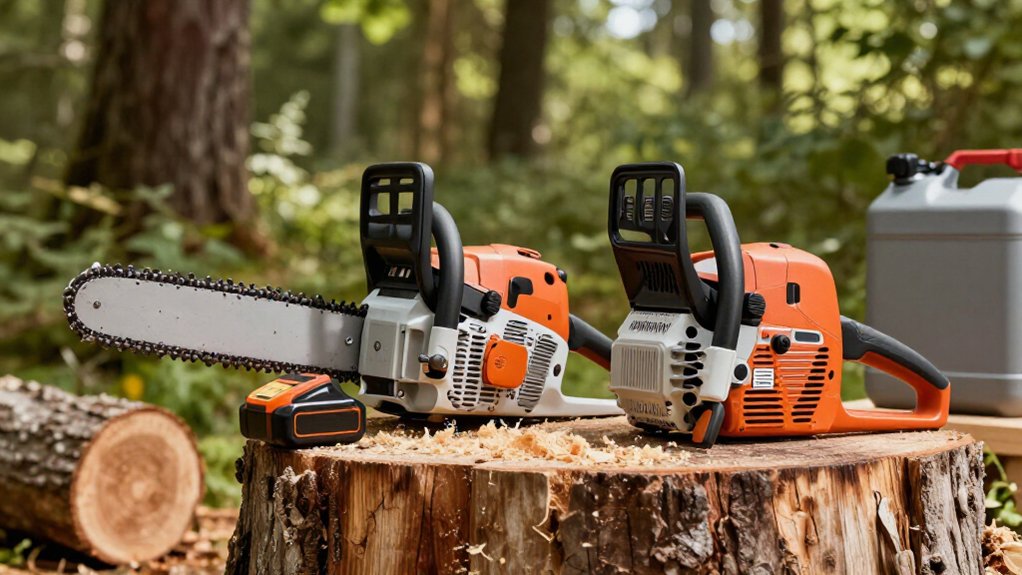
Choose a battery chainsaw if you handle pruning, storm debris, or routine firewood near power: it starts instantly, runs quieter, and needs less maintenance.
Gas suits you better for remote sessions, dense hardwood, or logs over 16 inches, because you can refuel in under a minute and sustain heavy cuts.
Plan for 20 to 50 minutes of intermittent battery cutting, with fewer cuts in cold weather. Compare cutting capacity, not volts or engine size alone; the guide explains.
How Long Batteries Last
How long a battery chainsaw runs depends on the load: expect about 20 to 50 minutes of intermittent cutting per charge, though some routine-use estimates reach 30 to 60 minutes. Heavy, continuous cuts can push you toward the low end; cold weather may trim runtime by 20 to 30%. Use cut count as a second measure:
| Conditions | Runtime | Output |
|---|---|---|
| Intermittent | 20 to 50 minutes | 30 to 80 cuts |
| Heavy | Near low end | Fewer cuts |
| Cold | 20 to 30% less | Reduced output |
| 4.0 Ah | Weekend session | Typical firewood |
Hardwood and larger logs draw more power, so yours will vary. A 4.0 Ah pack often covers a weekend firewood session; for longer jobs, plan on three or four batteries. Keep a spare charged to avoid downtime: rapid chargers can refill two packs in about 50 minutes.
Combustion Versus Electric Motors
Runtime tells you how long a saw works; its motor determines how it handles the cut. Gas chainsaws use combustion engines rated in cubic centimeters; battery models use electric motors powered by packs rated in volts and amp-hours. Compare models by workload, not numbers alone.
An electric motor starts instantly and delivers low-vibration power, helping you stop and start for pruning or cleanup. It produces no direct exhaust during use. A gas engine needs a fuel-and-oil mixture and emits exhaust, but generally sustains torque better under heavy load. That matters when you work for long periods or handle large logs.
High-voltage battery models can match gas in some tests. Choose electric for quick starts; choose gas when sustained load matters most.
Cutting Speed in Hardwood
In hardwood, chain speed and sustained torque matter more than voltage alone. For 8-inch seasoned logs, a strong battery saw can rival a 40cc gas model, but gas usually gains ground once you tackle 16-inch rounds or larger. Compare tested cuts, not labels:
- Echo’s DCS-5000 cut 8-inch hardwood in under 4 seconds, matching the Husqvarna Power Axe 350i.
- EGO’s 56V CS2005 finished that thickness in under 4 seconds, fastest among electric saws.
- Stihl’s 36V MSA 300 C-O pairs 30 m/s chain speed with torque; sustained RPMs help stay effective.
- Milwaukee’s dual-battery M18 Fuel 2827 cut oak aggressively with high torque despite its lower 14.3 m/s chain speed.
- For your workload, judge cut time under load and bar size; chain speed alone won’t predict pace.
Starting and Refueling Habits
Cutting pace matters, but startup and refueling routines also shape a chainsaw’s practicality. With a battery saw, you press a button and start cutting, which suits quick, stop-start jobs. You won’t mix fuel or refill a tank; instead, keep spare batteries nearby when you need more runtime.
A gas saw can keep a long session moving because you can refill it in under a minute, rather than wait for a battery to recharge. But starting usually takes more steps: pull the starter cord, set the choke, and sometimes use the primer. After storage, stale fuel, a dirty carburetor, or a fouled spark plug can make startup difficult. Choose battery power for simpler starts and fewer consumables; choose gas when rapid refueling matters more than upkeep.
Cold-Weather Battery Performance
When temperatures drop, a battery chainsaw may deliver roughly 20 to 30% less runtime, so a pack that handles mild-weather jobs could run short during sustained cutting. Unlike a gas saw, fuel doesn’t lose capacity in the same way, so your electric saw needs a cold-weather plan. Keep a charged spare pack nearby; swap it in when runtime falls, rather than pushing a depleted battery through long cuts. For seasonal firewood, a 40V 16-inch-bar saw with two batteries can cover routine work, though gas may suit longer sessions.
- Store batteries in a cool, dry place.
- Check temperature limits before charging or use.
- Warm packs only as manufacturer guidance allows.
- Bring a charged spare for cold cuts.
- Expect shorter run time; plan pauses accordingly.
Plan conservatively.
Battery Replacement Break-Even Point
Battery replacement changes the ownership-cost comparison as your workload grows. If you cut wood about 12 times a year, a battery saw usually costs less over five years, even after you account for pack replacement. With weekly heavy use, replacement costs can narrow the gap, but gas fuel and engine-maintenance expenses accumulate too.
A 4.0Ah battery suits a weekend firewood run. For longer sessions, you need three or four packs, increasing replacement exposure. A spare lets one pack charge while you work with the other, but you must include its upfront price in ownership costs. Calculate break-even using annual use, packs needed, and gas fuel and maintenance costs.
Exhaust and Noise Restrictions
Exhaust and noise rules can make a battery saw the more practical choice near homes or in restricted areas. Battery models produce no direct exhaust while running; gas saws release fumes, odors, and air pollution. Under load, battery saws typically measure 85 to 95 dB, versus 100 to 110 dB for gas models. That difference matters when you work near neighbors, family, or pets, but you should still wear hearing protection.
- Check local rules before choosing a gas saw.
- Some areas restrict or tax small two-stroke engines.
- Lower noise can reduce disturbance around your property.
- Gas saws require hearing protection because they’re loud.
- Battery operation avoids direct exhaust at the cutting site.
If local rules limit two-stroke engines, choose battery power to avoid restrictions and reduce disturbance.
Tool-Free Chain Tensioning
A tool-free tensioner lets you adjust chain slack with a knob or dial, while other models require a scrench. You’ll need to check tension often, especially as a new chain stretches during break-in. Compare each saw’s system, and check bar lubrication if the chain suddenly feels too tight.
Quick Chain Adjustments
When chain slack needs correction, a tool-free tensioner lets you loosen the bar, adjust the chain, and secure it with a knob or dial, no scrench required. That can make routine checks faster than reaching for a scrench, but it doesn’t remove the need to monitor tension.
New chains stretch quickly, so check yours often during break-in; you may need several adjustments.
- During break-in, inspect slack frequently; fresh chains can lengthen rapidly.
- If chain suddenly tightens, verify bar oil reaches the chain first.
- At day’s end, loosen chain, especially before cold overnight storage.
- Cooling can tighten a chain enough to strain or damage components.
- EGO CS1611 and Skil CS1800C-15 have tool-free tensioners; others need tools.
Check oil and tension before resuming work after each adjustment.
Tensioning System Trade-Offs
Tool-free tensioners let you loosen the bar, set chain slack, and secure the bar with a knob or dial, so you don’t need a separate scrench. That setup speeds field adjustments, while a manual system requires a scrench and typically clamps the bar with two mounting studs. The largest, strongest saws may use dual studs, giving you a robust mount.
New chains stretch quickly, so check tension nearly every use and expect several adjustments during break-in. If the chain tightens suddenly, check bar oiling before loosening it; poor lubrication may explain the change. At day’s end, loosen the chain: cooling in cold weather can tighten it and damage parts. Follow this practice on battery or gas saws.
Remote Firewood Cutting
For remote firewood cutting, choose a gas saw when you’ll work far from charging access or cut heavily for long periods; refueling takes under a minute. A 40V battery saw with a 16-inch bar and two packs can handle routine cabin work, but cold weather can cut its 20 to 50-minute intermittent runtime by 20 to 30%. For large logs or sustained cutting, bring a 50 to 60cc gas saw or arrange spare batteries and charging access.
Power in Remote Areas
If your remote firewood site has no charging access, a gas saw is the safer choice: refueling takes under a minute, while a depleted battery can leave the job unfinished.
A battery setup can still work at a seasonal cabin if you bring a 40V saw with a 16-inch bar and two batteries, using one while the other charges.
- Expect 20 to 50 minutes of intermittent cutting; heavy continuous work pushes runtime toward the low end.
- Cold can cut runtime by 20 to 30%; plan conservatively.
- For 20-inch logs, keep a gas saw available or rent one; homeowner battery saws approach their limits at 16 to 18-inch logs.
- Choose a 50 to 60cc gas saw for frequent heavy cutting or long remote sessions.
- Battery saws suit routine cuts and smaller logs best.
Fuel and Battery Logistics
When you’re cutting firewood away from power, gas simplifies long sessions: you can refuel in under a minute, while a depleted battery can stop the job.
For a battery saw, plan before you leave: carry a compatible spare and protect packs from cold. A 4.0 Ah pack suits a weekend firewood run; longer outings may call for three or four batteries, adding weight and cost. At a cabin, a 40V saw with a 16-inch bar and two packs can cover seasonal cutting, while gas remains useful for occasional logs around 20 inches. For remote work, a mid-range battery saw plus one spare is a practical setup. If larger timber is rare, rent or borrow a gas saw rather than hauling fuel and equipment on each trip.
Runtime Between Charges
Battery runtime typically spans 20 to 50 minutes of intermittent cutting per charge, with sustained heavy cuts pushing it toward the low end. Your actual yield may reach 30 to 80 homeowner cuts, or 40 to 100 logs measuring 6 to 10 inches, depending on saw, pack, and wood. For a typical weekend, a 4.0 Ah battery may suffice; longer remote sessions can demand three or four packs. Cold conditions cut runtime roughly 20 to 30%, so scale your workload down. Gas suits prolonged work: refueling takes under a minute; a spare battery also keeps you cutting while another charges.
- Track cuts, not minutes, against your wood size.
- Carry charged packs in an insulated case.
- Swap packs before output fades.
- Keep batteries warm until you start cutting.
- Choose gas when charging access is impractical.
Best Choice for Storm Cleanup
For routine storm cleanup, which saw makes the job easier? If you’re pruning branches, clearing smaller debris, or cutting wood under about 10 inches, a 12 to 16-inch battery chainsaw is usually the practical choice. It starts instantly, runs more quietly, and handles stop-start work without fuel mixing or engine maintenance.
Plan for battery limits: expect roughly 20 to 50 minutes of intermittent cutting per charge, and keep a charged spare nearby if cleanup may run longer. For large trunks, dense hardwood, or extended heavy cutting, choose gas. You can refuel quickly, and gas models suit logs over 16 inches better.
Whichever saw you use, wear chainsaw protective gear and inspect the machine before starting. Check chain tension and lubrication, too; storm debris can make cutting unpredictable and increase wear.
Conclusion
Choose a battery saw if you value quiet starts, low upkeep, and no exhaust, and your work fits the runtime and cold-weather limits. For hardwood, long cuts, or remote firewood, a gas saw’s sustained power and quick refueling may matter more. Factor in noise rules, chain tensioning, and battery availability before you buy. For storm cleanup, choose the tool you can safely start, run, and maintain where you work, and keep it ready through outages.
Matterhorn Chainsaw Boots Size Chart
Find your Pfanner Matterhorn chainsaw boot size (EU 39–48) from foot length or a US, UK or EU shoe size, using Pfanner's published charts.