How Loud Is a Chainsaw? Decibel Levels and Safe Exposure Times
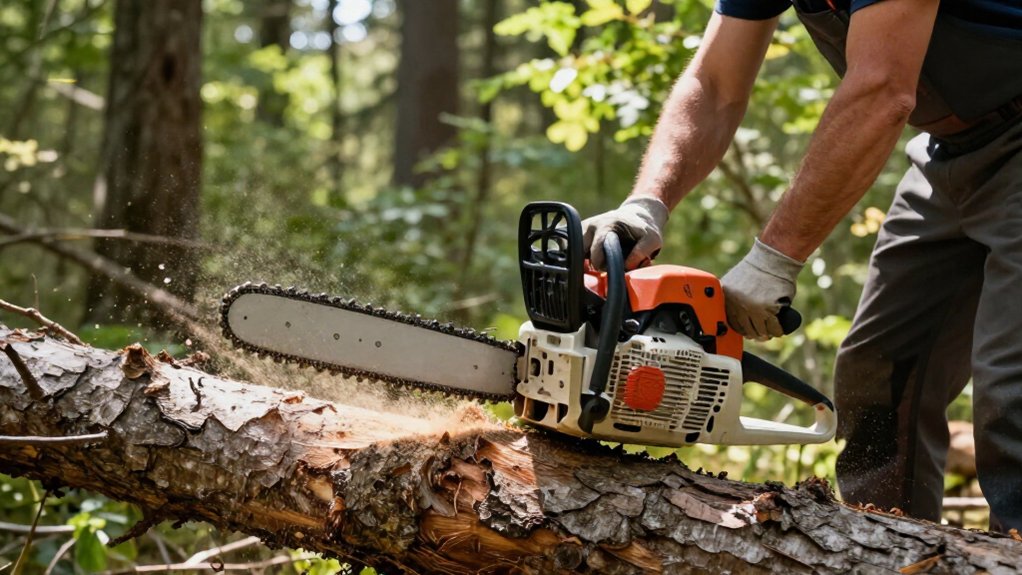
A chainsaw typically produces about 100–120 dB, with 110 dB near your ears during cutting. At 110 dB, NIOSH guidance limits unprotected exposure to about one minute per day; at 100 dBA, keep under 15 minutes.
NIOSH recommends no more than eight hours at 85 dBA, and allowable time halves with each 3-dB increase.
Wear properly fitted hearing protection, since even quieter electric saws can exceed safe levels. Other factors can refine your safety decisions.
Chainsaw Noise: 110 dB
A chainsaw produces about 110 decibels (dB), though the level varies with distance and surroundings. At that level, its sound can resemble shouting into your ear, a sonic boom, or noise in a loud nightclub. These comparisons show why you shouldn’t judge risk by whether the saw sounds familiar or whether you feel comfortable.
Normal conversation measures about 60 dB, making a chainsaw roughly 50 dB louder. Because the decibel scale is logarithmic, that difference represents an increase in sound intensity, not a modest rise in loudness. When you operate a chainsaw or work close to one, wear suitable hearing protection and make sure it fits. Don’t rely on distance alone: nearby surfaces and work conditions can affect the sound reaching your ears.
NIOSH Safe Time Limits
NIOSH recommends limiting noise exposure to 85 dBA for eight hours per day, with the allowable time cut in half for every 3 dB increase. At 100 dBA, NIOSH recommends less than 15 minutes of exposure per day. At about 110 dB, a chainsaw’s level corresponds to roughly one minute per day under this guidance.
Treat these figures as limits on your accumulated daily noise dose, not just chainsaw run time. Time around other loud equipment, power tools, or noisy activities also counts toward that total. If your work or circumstances require you to exceed the recommended exposure time, wear hearing protection; don’t treat it as permission to extend exposure indefinitely. Plan breaks and limit the duration of each noisy task whenever safely possible.
Noise at the Operator’s Ear
Noise at the Operator’s Ear
Your ear sits close to the running saw, where noise can reach about 110 dB, depending on the saw, workload, and surroundings. That figure doesn’t guarantee your actual exposure: distance, cutting intensity, and nearby surfaces can change the sound level at your position. A quieter reading taken farther away may thus understate what reaches your ears.
At 110 dB, NIOSH recommends limiting unprotected exposure to about one minute per day, so even brief operation can threaten hearing. To assess risk, measure near your ear with a sound-level meter or wear a noise dosimeter during representative work. Use properly fitted hearing protection whenever you run the saw; don’t rely on distance or short task duration to make exposure safe. Check fit before each work period.
Electric Chainsaws vs. Gas Models
Chainsaws can produce about 110 dB, but noise varies by model, distance, and surroundings. Compare manufacturer ratings or measurements taken under similar conditions to choose a quieter saw. At 110 dB, NIOSH recommends limiting exposure to about one minute per day, so wear hearing protection with either type.
Typical Noise Levels
Most chainsaws produce about 100 to 120 dB, with 110 dB commonly cited; gas models are typically louder than electric ones, though readings vary by model, workload, distance, surroundings, and measurement position.
Treat these figures as ranges, not fixed outputs. Your saw’s sound-pressure level depends on operating conditions, and readings taken at different distances or positions aren’t directly comparable. Check the manufacturer’s rating and compare measurements made under similar conditions. Electric models often run quieter, but neither power source guarantees safe exposure.
| Measure | What to note |
|---|---|
| Typical range | 100 to 120 dB |
| Common figure | About 110 dB |
| Gas versus electric | Gas usually louder |
| Exposure at 110 dB | About 1 minute daily, unprotected |
NIOSH allows about 1 unprotected minute daily at 110 dB; wear fitted hearing protection consistently during operation.
Noise by Model Type
Sound levels vary by power source: gas chainsaws commonly produce about 100 to 120 dBA near the operator, while electric models often produce about 85 to 105 dBA. Battery-powered electric saws typically run quieter because they lack a combustion engine. However, cutting under load can still create hazardous noise, and either type can approach 110 dB. You shouldn’t assume an electric saw is safe for prolonged unprotected use.
Readings vary by model, workload, distance, and surroundings. For fairness, measure both at equal distance under similar cutting conditions. Check the manufacturer’s noise rating, but treat it as a guide to exposure risk, not a substitute for protection.
Wear hearing protection whenever you operate a chainsaw. Your risk depends on sound level and operating time; follow safe exposure limits.
Choosing a Quieter Saw
When choosing a quieter saw, compare electric and gas models using noise ratings in dBA measured under similar conditions and at the same distance.
Electric chainsaws are often quieter than gas models because they lack a combustion engine. But cutting noise can still reach hazardous levels: chainsaws produce 100 to 120 dB, depending on the saw, operating conditions, and your distance from it. Choose a lower-noise model when practical, but don’t treat quieter as safe.
Wear hearing protection when you operate a saw. Even quieter models can exceed 85 dBA, linked to hearing risk from prolonged exposure. Keep exposure as short as possible. NIOSH guidance allows about one minute per day at 110 dBA; permissible time halves for every 3 dB increase above 85 dBA.
Wood Type and Cutting Conditions
Wood hardness and density, moisture, and green wood can change how much load your chain experiences. Cutting conditions and technique may also affect noise, but you can’t assign exact decibel levels by wood type from the available data. Measure your saw during the specific task, and use hearing protection while keeping exposure as short as practical.
Wood Hardness and Density
Denser, harder wood can load a chainsaw’s engine more than softer wood, but the wood type alone doesn’t determine noise. Your saw’s workload also depends on log diameter, chain sharpness, and cutting technique. A large log or dull chain can increase resistance, while forcing the bar through a cut may raise engine effort and sound levels.
Keep the chain sharpened and let the saw feed at its own pace; don’t use excessive pressure. These steps can reduce load, but they won’t make cutting quiet or eliminate hearing risk. Even in softer wood, a chainsaw can reach about 110 dB. Don’t treat a cut as safe without hearing protection. Readings vary with distance and surroundings, so a measurement may not describe every cut or wood type.
Moisture and Green Wood
Wet or green wood can make a chainsaw work harder and take longer to cut, which may change the saw’s sound but doesn’t predictably make it louder or quieter.
Moisture changes how fibers compress and separate, so your saw may bog down or need more time to pass through a piece. That added time can increase your exposure to hazardous noise, even when the sound level changes little.
A chainsaw may produce around 110 dB, but you can’t infer its level from wood moisture alone. Hardness, branch diameter, chain sharpness, and your technique also affect strain and sound. Keep your chain sharp and avoid forcing an overloaded saw; this won’t guarantee quieter operation. Use hearing protection whenever you run a chainsaw, and don’t rely on green wood or a particular cut to protect your hearing.
Cutting Conditions and Noise
A chainsaw can produce around 110 dB, but its measured noise varies with the wood, cutting conditions, distance, and surroundings. Don’t assume a quieter cut based on wood alone. Measure noise while you work, using a sound-level meter at your position and under the actual cutting conditions; distance and nearby surfaces can affect readings.
Treat readings near 85 dBA or higher as a hearing-risk concern, especially when you cut for long periods. At 110 dB, NIOSH recommends limiting exposure to about one minute per day. If your exposure may exceed that time, wear suitable hearing protection, and follow its fit and use instructions. Recheck levels when conditions change. Keep the meter microphone near ear level, without obstructing safe equipment operation.
Two-Person Chainsaw Communication
Because chainsaws produce about 110 dB, you may need to shout to communicate with someone nearby, but shouting at arm’s length signals that noise may be at least 85 dBA.
Treat that cue as a warning. NIOSH recommends limiting unprotected exposure near 110 dB to about one minute per day. Hearing protection reduces risk, but it can make speech harder. Agree on hand signals before starting, and stop the saw before approaching or giving instructions.
| Situation | Action | Reason |
|---|---|---|
| Before cutting | Agree on signals | Protection masks speech |
| Noise cue | Increase distance safely | Doubling distance cuts level about 6 dB |
Move farther apart only when safe and practical. Stop the saw to exchange instructions.
Barotrauma and Inner-Ear Injury
Although barotrauma and noise-induced hearing loss affect different parts of the ear, both can impair hearing. When pressure across your eardrum differs, it can displace the membrane, causing pain and reducing sound transmission to your inner ear. Your eustachian tube opens when you swallow, equalizing pressure between your middle ear and nasal air passages. The malleus, incus, and stapes carry eardrum vibrations toward the cochlea, which converts motion into neural signals.
Chainsaw noise poses a threat: excessive sound can injure or kill cochlear hair cells, causing permanent hearing loss that surgery or medicine can’t repair. Don’t rely on the aural reflex; it reduces sound energy reaching your inner ear, but reacts too slowly to protect against impulse noise and can’t guard against prolonged exposure.
Earplug Fit and Seal
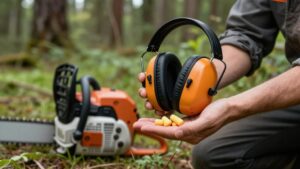
To protect your hearing around a chainsaw, fit foam earplugs so they form a secure seal in each ear canal. Gaps let hazardous sound reach your eardrum.
- Roll each foam earplug into a narrow, crease-free cylinder.
- Reach over your head with the opposite hand and pull your ear upward and back.
- Insert the plug into your ear canal to create a seal.
- Hold it in place for 20 to 30 seconds while the foam expands.
- With both ears plugged, your voice should sound muffled or different; the fit should feel snug. If it slips, feels uncomfortable, or doesn’t noticeably reduce sound, refit it or try another size or type.
Gaps reduce attenuation; recheck fit before saw use; follow manufacturer guidance.
Check Your Hearing Afterward
Check Your Hearing Afterward
A snug earplug fit reduces exposure, but it can’t eliminate the risk of hearing damage. After you finish cutting, check for ringing or humming in your ears and for muffled hearing. These symptoms can signal noise-related injury, even when they fade. Temporary hearing loss after work is a warning sign; don’t treat recovery as proof that your ears are safe.
A chainsaw can produce about 110 dB. At that level, NIOSH recommends limiting unprotected exposure to roughly one minute per day, so use properly fitted hearing protection and reduce exposure time. If ringing, humming, or muffled hearing persists or recurs, contact a hearing-care professional for evaluation. Your hearing check can’t diagnose damage, but it can help you recognize a warning and take action promptly.
Conclusion
Treat every chainsaw as a serious noise hazard: at roughly 110 dB, it’ll exceed safe exposure limits quickly. Wear properly fitted hearing protection, and follow NIOSH time limits rather than relying on discomfort as a warning. Choose quieter equipment when practical, keep others clear, and use agreed signals to communicate. Afterward, check your hearing; if ringing, muffling, or pain persists, seek prompt medical care. Your hearing deserves protection before, during, and after every cut.