Chainsaw Chaps vs Chainsaw Pants: Comfort, Protection and Cost
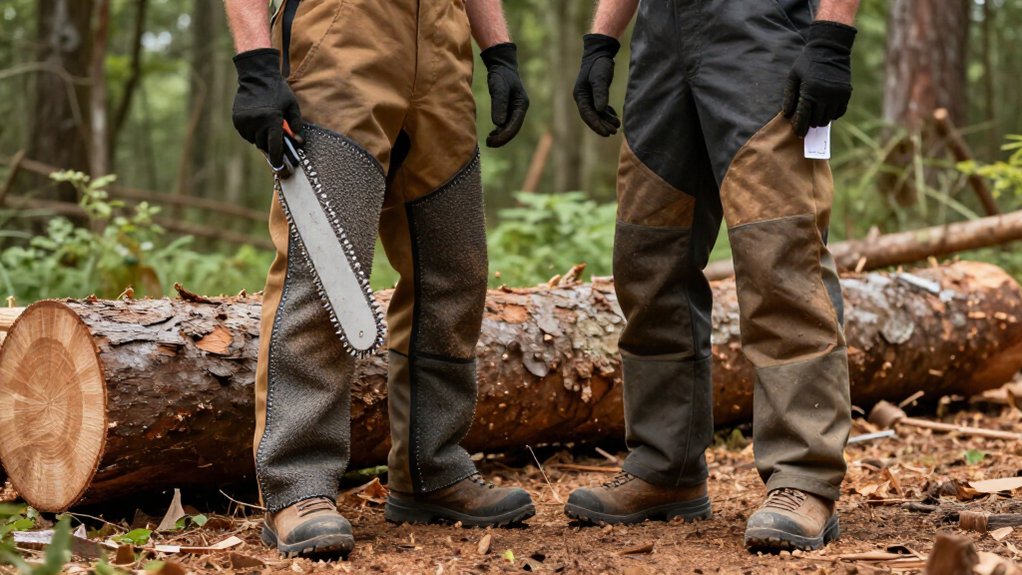
Choose chainsaw chaps for short ground tasks or hot weather: their open backs improve airflow, and you can remove them quickly.
Chainsaw pants cost more but keep protective material around your legs, making them a practical choice for longer shifts and climbing, where you should never wear chaps.
Neither garment guarantees injury prevention; use certified, properly fitted protection suited to your saw and work.
Compare coverage, fit, care, and lifetime cost before choosing the option that matches your tasks.
Apron Coverage Versus Full-Leg Protection
Apron-style chaps protect the fronts of your legs, while full-wrap chaps extend around them and chainsaw pants cover the full leg; some models add 360-degree calf protection. Full-leg coverage can help reduce your exposure to cuts from rotational slips and kickbacks arriving from different directions. Choose equipment suited to your task and risk assessment.
Use this comparison:
| Coverage type | Practical use |
|---|---|
| Type A | Protects front legs |
| Type C | Protects entire leg; may suit arborists facing kickback from multiple directions |
Your choice should match the work position, exposure, and garment classification. For ground tasks, front coverage may meet assessed needs; for climbing or dynamic work, full-leg pants generally offer coverage. Check fit and certification, and keep coverage when you change tasks or move between work zones.
Chain-Snagging Protection Mechanisms
When a chainsaw contacts protective clothing, the material can make the chain slip, clog the drive sprocket with pulled-out fibres, or brake the chain. You’ll encounter three mechanisms:
- Loose protective fibres can snag in the sprocket, slowing or stopping the chain.
- Cut-resistant fibres may brake the chain; some fabrics, including Clogger Arrestex HP, are designed for this.
- Slipping material can deflect contact, but no mechanism guarantees that every saw will stop.
Electric saws deserve caution: Echo warns that their constant high torque may keep protective fibres from stopping the sprocket. Secure straps with minimal gaps, fastening to the bottom of your leg so a strike can’t pull layers aside. If a chain catches the fibres, retire the garment; saw contact ends its protective use.
Heat and Ventilation in Use
If you’re working in hot weather, chaps’ open backs let air circulate and make them practical for short tasks, especially when you can remove them afterward.
For longer shifts, chainsaw pants cover more of your legs, but lightweight fabrics and mesh or fixed and zippered vents can improve airflow. Notch Armorflex pants use rear cooling vents on each leg; Clogger Zero Gen2 pants use breathable fabric to increase airflow.
Breathable, four-way-stretch outer fabrics can reduce effort as you move, while Nilit Breeze fabric has been shown to lower body temperature by almost one degree. Don’t treat ventilation as a substitute for protection: heat-related illness can cause dizziness, faintness, and fatigue. Take breaks, hydrate, and monitor how you feel, but don’t skip leg protection when conditions are hot.
Donning Over Work Boots
Chaps pull on over work boots, so you can don and remove them quickly for short chainsaw tasks; their open backs also make them easier to fit and cooler in hot weather.
Before cutting, fasten every strap securely down the leg; the protective coverage ends at the bottom strap, so a strap stopping above the hem can leave your lower leg exposed.
- Check the maker’s sizing and fitting guidance; boot compatibility can vary by chap model.
- Inspect buckles and straps before each use, and replace damaged parts.
- Confirm the chaps stay positioned over your boots as you move; loose fastening can let them rotate or shift aside if contacted by a chain.
Don’t start cutting until coverage and fastening remain secure through normal movement.
Waist and Inseam Fit
Because chainsaw pants are commonly sized by waist and inseam, you can choose a more individualized fit than with shared or adjustable chaps. Check the size chart and try them on with your boots. The waistband should stay secure without restricting movement, and the legs should cover your legs through bending, stepping, and climbing.
Poor fit can compromise safety and practicality. Pants that are too long may drag or snag; pants that are too short can leave coverage inadequate. A small amount of extra hem can be taken up by a sewing business, but excessive length may mean replacing the pants. With chaps, confirm the straps hold the garment in place and reach the bottom of your leg: protection ends at the lowest strap. Look for waist and length options that suit your build; women-specific fits may also be available, though you’ll need to check with manufacturers.
Replacement Zippers and Buckles
Replace damaged chap buckles before use; a broken or loose buckle can let the material rotate and expose your leg. Check every strap before each job, and fasten it firmly so the chap stays aligned during movement. Your lowest strap should reach the bottom of your leg to maintain coverage. More buckles may take longer to secure and release, but sound attachment helps keep a chain from catching and pulling the chap aside.
- Inspect buckles and straps for breaks, looseness, or failed closures.
- Replace damaged components before wearing the chaps; don’t rely on a knot or improvised fastener.
- If your model has a replaceable adjustable strap system, fit the correct replacement and verify secure fastening.
Saw Protection Certification Limits
Although certification shows that protective gear passed a defined test, it doesn’t guarantee protection with every saw setup. Standards vary by market: European approval doesn’t replace North American certification, even if its protection level looks higher.
Test methods use different saw power, drop heights, chain sizes, and specimen clamping, so you can’t compare ratings. North American F1897 uses one test method and doesn’t separate requirements for battery and gasoline saws.
A label may not cover your saw, chain, or bar combination. Check the garment maker’s guidance for the equipment you operate. Treat electric-saw claims cautiously: some manufacturers warn that protective fibres may not stop high-torque electric saws, and studies comparing battery- and gas-powered protection remain lacking. Certification helps you select tested gear, but use compatible equipment and safe cutting practices.
Cleaning and Drying Requirements
Wash your chainsaw pants or chaps regularly as directed to remove oil, sweat, and sawdust that can impair protective fibres. Air-dry them flat or on a line, away from direct sunlight, and avoid machine drying and fabric softener. If a chain contacts the protective fibres, retire the garment; it can’t be relied on for protection.
Cleaning Procedures
Clean chainsaw pants regularly, following the care instructions, to remove oil, sweat, and residue that can mat protective fibres and interfere with their function. Before each wash, check the garment label for water temperature, cycle, and approved detergents; modern protective fabrics are designed for regular laundering, but product-specific limits still matter.
- Use the stated wash settings and a suitable detergent; don’t guess when the guide is unclear.
- Skip fabric softener, which can leave residues on protective layers.
- Wash contaminated pants promptly, and inspect seams and fabric afterward for damage or persistent buildup.
Keep pants separate from ordinary laundry if oil or debris could transfer, and don’t use unapproved cleaning agents. If contamination remains, consult the manufacturer as directed before wearing them for saw work.
Proper Drying
After washing chainsaw pants or chaps, follow the care guide and lay them flat or line-dry them. Your garment can withstand regular washing when you follow its instructions, but incorrect drying may compromise materials. Keep it out of direct sunlight while it dries to limit UV damage to the outer fabric.
Don’t use a machine or tumble dryer; heat and tumbling aren’t appropriate substitutes for flat or line drying. Before drying, avoid fabric softener and remove oil, fuel, sawdust, and sweat through proper cleaning. These residues can mat protective fibres together, reducing the garment’s intended performance when you need it. Check that the garment is fully dry before storage or use, and inspect it for damage. If unsure, consult the care guide before drying.
Climbing Work Protection
When you climb, choose chainsaw pants that fit securely and use lightweight stretch fabric and vents to support mobility. Don’t wear chaps aloft; their straps and loose fabric can snag, and they can shift out of place. For contact risks from multiple directions, consider certified Type C pants, which cover your full leg.
Climbing Mobility
Because chaps can snag on climbing gear or branches, never wear them while climbing; choose close-fitting chainsaw pants instead.
You need unrestricted movement for foot placement and controlled movements in the canopy. Modern climbing pants pair lightweight, breathable, four-way-stretch fabric with fixed or zipped vents, helping you move and manage heat during strenuous work. Fit matters: excess length can catch or impede your stride, while poorly fitted PPE may increase injury risk. Check mobility in your climbing harness and inspect closures before each ascent.
- Choose pants designed for climbing, such as Clogger’s four-layer Solidur Climb option.
- Consider Clogger models with 360-degree calf protection if your work calls for it.
- Confirm the waist, rise, and leg length stay secure without restricting reach or flexion.
Full-Leg Coverage
For climbing work, chainsaw pants can provide 360-degree leg protection, while apron-style chaps mainly cover the front and may leave your sides and backs exposed. That difference matters when you work aloft and a saw can kick back from more than one direction. Pants keep protective material around your legs without loose apron panels that can shift.
Chaps shouldn’t be worn while climbing because straps or fabric can snag on branches, gear, or rope.
Before a job, check fit and certification for your work and region; poor fit can leave gaps or limit movement. If you use chaps on the ground, secure straps to prevent rotation. For climbing, choose pants and inspect seams and closures before use. Follow care and replacement guidance, and use cutting practices.
Type C Protection
Type C chainsaw trousers protect the entire leg, unlike Type A trousers, which cover only the front. For climbing work, this coverage matters because kickback can approach from multiple directions. Unlike chaps, pants stay close to your body, reducing snagging hazards; you shouldn’t wear chaps while climbing.
- Choose a properly fitted garment designed for climbing and certified for your work region and intended use.
- Check that the fit allows movement without excess fabric that could compromise protection.
- Look for lightweight, breathable stretch fabrics and vents to support mobility and airflow during strenuous work.
Type C protection doesn’t replace safe cutting practices or training. Before each climb, inspect the garment for damage and follow its care instructions; damaged protective layers may not perform as intended.
Upfront and Lifetime Cost
Chaps usually cost less upfront, with listed options ranging from $81.51 for 32-inch Ahlborn apron chaps to $144.99 for Husqvarna Technical chaps, while chainsaw pants range from $106.25 for Solidur Authentic pants to $289 for Clogger Zero Gen2 arborist pants.
Compare full workwear costs: work pants plus chaps may approach dedicated chainsaw pants. Repeated donning and removal can add lost time, raising your lifetime cost. Shared chaps may suit a crew, but rough handling and frequent replacement can increase annual expense.
Some employers instead contribute about $70 toward an employee’s pants. Treat service life as variable: reported pants use reaches roughly a year and a half, but your conditions, materials, and care matter. Retire any garment contacted by a chain; damage may compromise protection.
Conclusion
Choose chaps when you need quick apron coverage and easier cooling, but check that they overlap your boots and stay secured. Choose chainsaw pants for continuous leg coverage, climbing, or work that can shift your gear. Neither option makes a saw safe: match its certified protection to your tasks, fit, and saw. Compare ventilation, cleaning, drying, and replacement costs before you buy. Wear the gear correctly, inspect it often, and replace damaged protection as needed.