
Firewood Stacking Methods: Rows, Holz Hausen and Round Stacks Compared
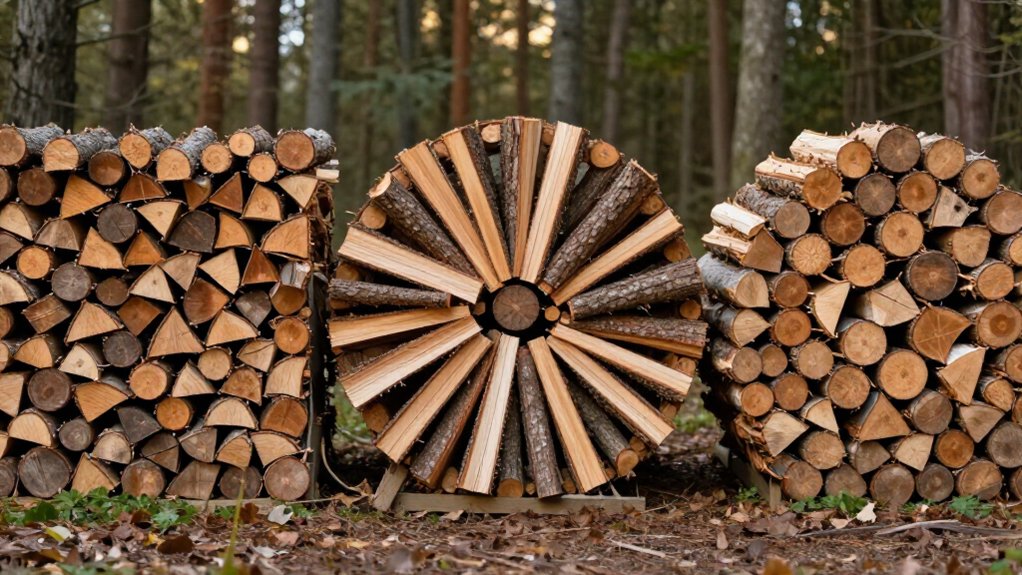
Choose rows for straightforward stacking and airflow; cover only the top and leave the sides open.
A Holz Hausen fits more wood into less ground space and sheds rain with its sloped cap, but it takes careful building and won’t necessarily season wood faster.
Round stacks offer an alternative with a loose, ventilated center.
Keep stacks raised, stable, and away from buildings, and check split wood with a moisture meter before burning.
More detail follows here.
Rows Versus Round Stacks
If you’re choosing between a row and a round stack, consider the space and stacking effort. A traditional two-cord row pile measures about 4 feet deep by 16 feet long and 4 feet high, using roughly 64 square feet. An 8-foot-diameter Holz Hausen can hold about two cords in roughly 50 square feet, so it takes less ground space.
Rows are simple to build and provide airflow when you place logs consistently. A round stack demands careful placement around its perimeter, while you can put less orderly wood in the center. Its sloped sides can shed the rain, and the stack can remain stable. But drying results vary: one user reported that wood stayed drier during wet weather without drying faster.
Choose a row when straightforward access and familiar construction matter most; choose a Holz Hausen when a compact footprint suits your site.
Round Stack Center Vent
To improve airflow through a round stack, leave a hollow core or place a capped wire-mesh tube in the center as a vent. Make sure air can enter near the base and exit above the pile; without both openings, the vent may not create a useful chimney effect. You can also loose-stack smaller pieces in the core, adding bulk and stability while preserving airflow. Some builders fill it loosely or stand split wood vertically to encourage rising air. Avoid packing unsplit rounds into the center: limited circulation can leave them poorly dried.
| Core choice | Practical effect |
|---|---|
| Hollow space | Direct air path |
| Mesh tube | Holds vent open |
| Loose splits | Airflow plus stability |
Keep openings clear so air can rise through the stack as wood dries.
Holz Hausen Kindling Storage
You can store kindling scraps in a Holz Hausen’s loose-filled center, keeping them handy with your firewood through winter. Leave space for airflow, avoid packing in rounds, and use bark-side-up split wood as a thatched top layer to shed rain. Bring indoors only enough kindling for one or two fires to deter pests, or store it in five-gallon buckets with drainage holes.
Kindling Storage Benefits
A Holz Hausen’s hollow center offers a convenient place to keep kindling scraps alongside your firewood.
You can gather small offcuts as you split and stack logs, then reach them easily when winter weather makes frequent trips inconvenient. In a stack about eight feet across, its loosely filled interior can hold kindling without requiring you to arrange every piece neatly. If you prefer a separate container, use a five-gallon bucket and drill holes in its bottom to promote ventilation.
Whichever method you choose, bring indoors only enough kindling or firewood for one or two fires at a time. This limits the amount of wood kept safely inside and discourages pests from settling in. Keep the rest outdoors, dry, and ready for your next fire.
Central Storage Cavity
Beyond storing kindling scraps, the Holz Hausen’s central cavity reduces the amount of wood you need to stack carefully.
In an eight-foot-diameter stack about 4.5 feet high, its interior cylinder can span roughly five feet and hold about 88 cubic feet of loosely placed wood. That cavity represents about 34% of a two-cord stack, so you individually stack less volume. Place kindling scraps and firewood loosely in the center, using space that doesn’t require careful alignment. Keep the fill loose to preserve airflow; avoid packing the cavity with unsplit rounds, so pieces remain accessible.
When you dismantle the stack for winter, you can retrieve the stored kindling along with the firewood. This central storage space makes a Holz Hausen more efficient to build and use.
Keep Kindling Dry
To keep kindling dry, store it off the ground with room for airflow, such as in five-gallon buckets with drainage holes drilled in the bottoms. Holes admit air and drain excess moisture. In a Holz Hausen, you can also place kindling scraps loosely in the central storage cavity and retrieve them with firewood during winter.
Don’t pack the cavity tightly; open spaces help air move through the material. If you keep an outdoor stack, cover its top to shed rain, but leave the sides open for ventilation. Bring indoors only the amount you’ll use for one or two fires. This keeps indoor storage manageable and discourages pests from settling among your supplies. Return the remaining kindling to its ventilated, sheltered storage after use.
Choose Suitable Kindling
Choose dry, small kindling scraps and store them loosely in the center of your Holz Hausen, where you can retrieve them with firewood in winter. Keep the stack raised on a pallet or another sturdy base so kindling stays off damp ground and faces less moisture. If you’d rather separate a modest supply, use a five-gallon bucket and drill several holes in its bottom; the openings let moisture drain and air circulate.
Don’t fill the bucket with more kindling than you can use soon, and keep it in a sheltered spot. When you bring firewood indoors, carry in only enough for one or two fires at a time. That limits the chance of bringing insects or other pests into your home along with the wood throughout the colder months.
Prevent Airflow Blockage
As you store kindling, keep the Holz Hausen’s center loose so air can move through the stack.
Keep the core loosely filled rather than tightly packing it; airflow through the structure supports drying. Don’t place rounds in the core, where they can dry poorly and block circulation. If you want to keep kindling scraps, put them in a ventilated container instead of stuffing them into air channels.
A five-gallon bucket with holes drilled in its bottom works well and lets air pass around the scraps.
You can also store kindling inside the hollow core, but keep it loose and clear of the central air path. For a defined passage, use a capped wire-mesh tube in the center. Add air inlets so air can flow.
Protect Against Pests
Keep your Holz Hausen dry and raised to discourage pests: set it on pallets or cinder blocks in a well-ventilated spot, and keep the stack at least 20 to 30 feet from your home and other structures.
Elevation limits contact with damp soil, while airflow helps wood dry and makes conditions less inviting to insects. Inspect the base and surrounding logs regularly for moisture, bugs, or sagging, especially after wet weather; a drooping base can signal instability as well as dampness. If moisture reaches the wood, address the dampness and spray for bugs. Store kindling in five-gallon buckets with holes drilled in the bottoms so air can circulate.
Bring indoors only the amount you need for one or two fires, and avoid keeping a large supply inside.
Refill the Center
When the outer ring rises, refill the Holz Hausen’s center with loose split blocks, scraps, and kindling, leaving gaps for airflow instead of packing the wood tightly. In an eight-foot-diameter, 4.5-foot-high design, this core holds roughly 88 cubic feet, about 34% of a two-cord stack. You can toss or dump pieces into the center; scraps and kindling fit well.
Keep unsplit rounds out of the core because they may dry poorly. Use smaller split pieces, or stand some wood upright, to preserve air channels. As you build, heap the center into a mound. Cap it with split blocks set bark-side up, then add successively inset tiers. This overlapping roof sheds rain while letting the center hold useful fuel without compromising the Holz Hausen’s airflow.
Access Kindling Safely
The loosely filled Holz Hausen center can double as a handy kindling store, with scraps ready to grab alongside firewood in winter. Keep the center loose enough for air to move through it; packed kindling can trap moisture and slow drying. You can also use a five-gallon bucket with holes drilled in the bottom to hold scraps and keep them contained.
When you retrieve kindling or firewood from the stack, take wood from the top or a corner; removing logs from the middle or lower courses can undermine its stability. Bring only enough wood indoors for one or two fires, so pests won’t find a long-term shelter near your home. Keep the kindling dry and within easy reach, but don’t overfill the center or disturb the stack.
Wood Moisture Terminology
When you assess firewood, moisture content tells you how much water remains inside the wood. Green wood is freshly cut and wet, while seasoned, air-dried wood has lost enough moisture to burn more effectively. Don’t judge by the surface alone; check a freshly split piece with a moisture meter before burning.
Moisture Content Basics
As green firewood dries, moisture content describes how much water remains in the wood. You can think of it as water held within the pieces, not just dampness on their surfaces. Rain may wet the outside, but that surface water is minor beside the moisture inside freshly cut wood.
As moisture leaves, the wood can burn more effectively; excess water otherwise limits heat and increases smoke. Your stacking method affects how that water escapes. Leave air pathways around the stack so moving air can reach pieces, and check the center as well as the edges. A pile may sit outdoors for two years yet retain a damp, stagnant core if ventilation is poor. Don’t judge moisture by appearance or elapsed time alone.
Green Versus Seasoned
Use those terms to judge whether a stack is ready for your stove; appearance alone won’t tell you how dry its interior logs are. A holz hausen can hold fresh wood, but don’t assume every part will season at the same rate. Some users report slow drying, mold, or rot in moist climates. One account found logs in an unsplit core still unseasoned after two years.
If you’ll burn wood within months, you may not need a long-term stacking method. If you store logs for two years, check center pieces before use.
Air-Dry Terminology
Air-dry firewood has dried outdoors in the sun and moving air, but the term doesn’t specify a moisture percentage or guarantee that every log is ready to burn. Treat “air-dry” as a description of exposure, not proof of readiness. Leave open spaces between pieces and keep the center loose so air can circulate; a tightly packed or stagnant core may stay damp while surfaces feel dry.
Drying time isn’t fixed: one Holz Hausen’s lower, unsplit center remained unseasoned after two years, while wood elsewhere became crack-dry within weeks or months. If your firewood is already dry and you’ll use it soon, round-stack storage may add little. “Seasoned” means dry enough to burn effectively; unseasoned wood can create excess smoke and little heat.
Measuring Wood Moisture
How can you tell whether firewood is ready to burn? Wood moisture means water held in the wood, but a drying schedule alone can’t confirm readiness. Green wood may need weeks or months to dry; some stacks season for two years, yet time doesn’t guarantee results. During stack maintenance, check moisture rather than assuming the pile has dried.
A poorly ventilated core can leave lower pieces unseasoned after two years, even when outer wood seems dry. Burn properly seasoned wood: unseasoned pieces can produce heavy smoke and little heat. Check representative pieces from different stack locations, especially lower and inner areas, before relying on the stack alone.
Seasonal Drying Times
Because drying time depends on weather, wood size, and airflow, plan ahead rather than relying on a fixed schedule.
You may need more than one season; Mike leaves firewood for two years and keeps 8 to 12 cords drying. Sun and wind help, as does an elevated, well-ventilated base. Cover the top to shed rain, but leave sides open for airflow. A Holz Hausen can encourage upward airflow and keep wood drier in wet weather, yet won’t necessarily season wood faster than rows or round stacks.
Check the core: loose center fill or vertically arranged splits can breathe, while tightly packed or unsplit wood may stay wet. Reports range from green wood becoming crack-dry in weeks or months to lower-core wood remaining unseasoned after two years.
Firewood Stack Stability Limits
A stable firewood stack starts with a firm, level base and bracing that keeps the rows from spreading. For a straight row, set vertical anchor pieces at both ends. Cross-stack three or four logs at each end, alternating their direction with each layer. This brace resists pressure as the pile grows.
For a Holz Hausen, angle the outer courses inward and wedge smaller pieces into V-shaped gaps. Add cross-poles at about three feet, then again between five and six feet. Continue stacking at least two feet above the poles, shaping the pile like a gumdrop; straight sides can push outward. Check the foundation for sagging under the load, and repair it promptly. Pallets or cinder blocks can give you a raised, supportive base.
Bark-Side Orientation
Once the stack is braced, orient the top pieces to help manage rain. In a Holz Hausen, place the cap’s half-split blocks bark-side up; the bark helps shed summer rain. Build concentric tiers, setting each new tier 8 to 12 inches inward to form a sloped, thatched roof. For other round stacks, bark-side-up top rows can also shed rain, even without a separate roof.
- Check the cap’s slope as you add each tier; keep the inward setback consistent.
- Turn half-splits bark-side up, but don’t assume this is a rule for every stack.
- On conventional rows, orientation isn’t a universal prescription. You can cover the top and leave the sides open for airflow.
This approach directs water away from exposed wood while preserving ventilation where it matters.
Conclusion
Choose a stack that fits your space and drying needs. Straight rows are easy to build and inspect; round stacks save space, while a center vent improves airflow. Use a holz hausen for seasoned splits, but store kindling separately under cover. Judge readiness by moisture content, not appearance, and allow enough drying time for your climate and wood species. Keep stacks stable, protect them from ground moisture, and orient bark consistently. You’ll get safer, hotter fires with properly seasoned firewood.