Cant Hook vs Peavey: Which Log Rolling Tool Do You Need?
Cant Hook vs Peavey: Which Log Rolling Tool Do You Need?
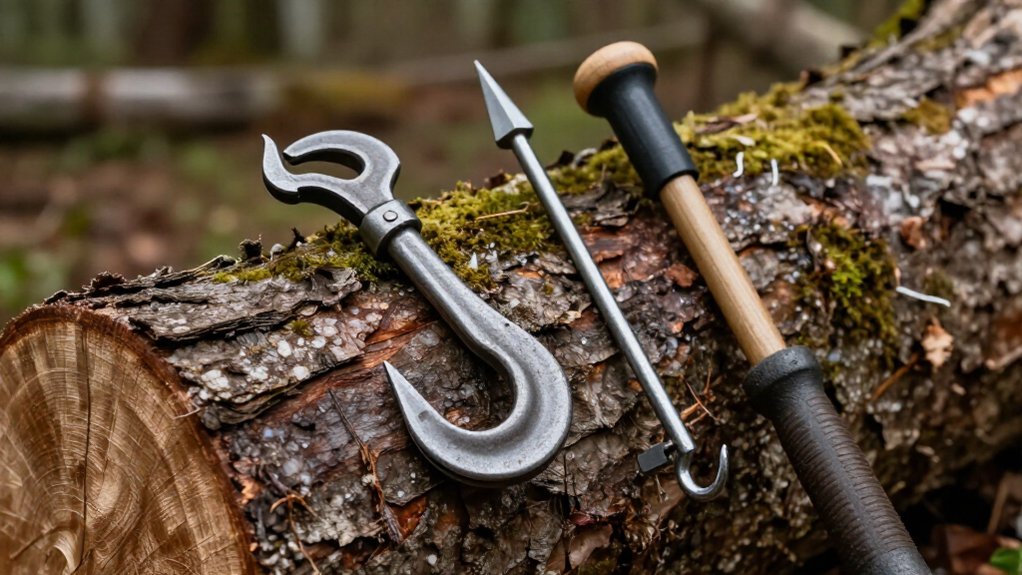
Choose a cant hook for rolling logs on flat ground or mill decks. Its hook and blunt toe grip at two points without piercing wood.
Choose a peavey when its spike can separate packed logs or brace timber on uneven ground.
Match handle length to log size and working height: 48 inches suits many tasks; 60 inches adds leverage for heavy logs.
Consider terrain and surface care; you’ll find practical guidance below for your choice.
Handle Length Options
When choosing between a cant hook and a peavey, match handle length to your logs and work.
A 28 to 36-inch handle fits 6 to 12-inch logs and keeps firewood or portable-sawmill tasks manageable. A 48-inch model offers versatile reach for rolling logs and unloading rounds. Choose 60 inches when you need extra leverage on 12 to 24-inch or larger logs and heavy-duty jobs.
Longer handles help you move heavier timber, but shorter tools can feel easier when logs sit elevated on a sawmill or splitter. Your build and preferences matter; some users favor 36 inches over 48.
| Handle length | Best fit |
|---|---|
| 28 to 36 inches | 6 to 12-inch logs; firewood, portable-sawmill work |
| 48 inches | Rolling logs, unloading rounds |
| 60 inches | Large logs, heavy-duty work |
Check your typical log size and working height before deciding. If you handle mixed loads, choose the length that feels controllable across your regular tasks and fits your build.
Hook-And-Toe Engagement
A cant hook grips a log with its pivoting hook and blunt, lipped toe, giving you two points of contact for controlled rolling. Its toe tucks beneath the log, and the biting edge helps keep the wood seated as you turn it. That two-point engagement suits flat ground and a sawmill deck, where the toe can stay under the log rather than puncturing its surface.
A peavey pairs its hook with a pointed spike. You can bite the spike into a log or use it to separate tightly packed logs. On uneven terrain, you can drive the point into the ground to steady a log, though it may mark the wood or obstruct your work. Choose the tool whose second contact suits your work.
Log-Rolling Force and Control
Log-Rolling Force and Control
Beyond their contact points, both tools rely on a long handle and pivoting hook to turn logs; a longer handle gives you more leverage on heavier wood. A cant hook’s toe hook adds a second biting edge, which helps you maintain grip and control as you roll logs across flat ground or a sawmill deck. A peavey’s pointed spike can bite into a log to start a roll or separate tightly packed logs, though it may mark the wood.
On uneven terrain, you can drive the point into the ground to help keep a log from rolling. Match handle length to the logs you handle and your reach: 48 inches suits many jobs, while 60 inches gives you added leverage for large, heavy logs. Choose the cant hook when steady engagement matters on a flat surface; choose the peavey when its point’s bite or anchoring ability fits the task you face.
Grip Comfort and Fatigue
During repeated log rolling, a comfortable handle helps you maintain control and reduce fatigue. Rubber grips, such as those on some Wood-Mizer tools, help keep your hands from slipping and give you a more secure hold. Handle length also changes leverage and effort: a longer handle can make heavy logs easier to move, while a shorter one may feel handier when you’re handling smaller or elevated logs.
Choose a length that suits both the logs you move and your build. Users report personal preferences of 36, 48, and 60 inches, but no single size fits everyone. If you’re deciding between aluminum and wood handles, try both in person when possible. Your comfort and handling preference can vary, so test each tool before you commit.
Bark and Surface Conditions
On flat ground, a cant hook’s biting toe grips bark and helps you control the log without piercing its surface.
When you’re handling live-edge slabs or finished stock, that restraint matters: a peavey’s pointed spike can bite into the wood and leave a mark. Use the cant hook when preserving the surface takes priority, and keep its toe engaged with bark as you roll.
On rough or uneven ground, you may prefer a peavey. You can drive its point into the soil to help keep a log from rolling. But the point can catch or get in your way; if you’re biting into a stubborn log, you might need a sledge to drive it in. Both work; choose by terrain and surface priorities.
Replacement Hook Availability
If a cant hook or timberjack hook fails, you can often find a replacement from another manufacturer. Check dimensions and handle fit before buying; an incompatible hook won’t seat.
Availability matters most with budget tools, whose original parts may be difficult to source. One user replaced a low-cost hook after its tip broke at the weld while rolling a couple dozen logs. The replacement used a design without a weld at that failure point, reducing the chance of the same type of break. Its revised shape also gripped logs better than the original. When choosing a cant hook or timberjack, check that the replacement matches your tool and suits the logs you handle. A compatible aftermarket hook can restore service and may improve performance.
Pinch-Point Injury Hazards
As a log shifts under leverage, it can trap or crush hands and feet beneath it or at the cant hook’s pivoting hook. Keep your hands and feet clear of the log’s underside and both tools’ moving hooks. Stand outside the log’s downhill path, especially on uneven ground, where it may roll without warning.
Before you apply leverage, confirm the cant hook or peavey spike is firmly engaged; a slipping tool can release suddenly and pinch you. Use controlled pressure, and don’t put your body in the tool’s path. Move or reset the tool only after the log has settled and stopped moving.
For heavy logs handled alone, keep a stable stance; don’t reach between logs, where gaps can close as they shift quickly.
Price and Long-Term Value
Compare both tools in person at a Logrite dealer; the aluminum model costs about $30 more than the wood-handled version. Weigh that upfront premium against service life: owners report handle lifespans ranging from a few breaks to more than 50 years. You can extend a wooden handle’s life with linseed oil and indoor storage, while a broken handle or weld can add replacement costs and downtime.
Upfront Cost
Although wood-handled models usually cost less upfront, an aluminum-handled version may offer better value if it lasts longer and avoids repairs.
Aluminum’s higher purchase price can make a wood-handled cant hook or peavey the easier choice when you’re equipping a crew on a tight budget. Compare prices across models; a cheaper model may use a lighter tip or weaker weld. One low-cost cant hook broke at the tip’s weld after rolling a couple dozen logs, so don’t judge the tool by its sticker price alone.
A buyer viewed an approximately $30 aluminum-handle premium as modest, while replacement wooden handles have been reported to cost $39. Your price will vary by model and supplier. Check what’s included, such as a replacement handle or warranty, before choosing.
Long-Term Value
A tool’s long-term value depends on how long it lasts and whether it interrupts your work.
- Compare price with expected service life. One user considered a $30 Logrite premium worthwhile for a 20-plus-year lifespan.
- Count downtime and replacement costs. A wooden handle may cost less initially, but a break can halt work; one replacement handle cost $39.
- Treat durability as variable, not guaranteed. One user reported over 50 years without a break, while another said a friend had broken three handles.
- Check construction before buying. A budget cant hook’s tip snapped at the weld after two dozen logs, forcing its owner to replace it.
Use riven wood, linseed oil, and indoor storage to extend a wooden handle’s life.
Firewood Rounds vs. Sawlogs
For firewood rounds, use a cant hook to roll logs on flat ground or pull them from a truck onto a splitter; choose a 28 to 36-inch handle for typical 6 to 12-inch logs, or 48 inches for more leverage. On a mill deck, a cant hook’s toe can turn sawlogs into position, and rolling a log after cutting about 80% through helps keep your chainsaw bar from pinching or entering the dirt. For larger sawlogs or uneven terrain, a 48- or 60-inch peavey gives you leverage, while its point can separate logs or brace one against rolling.
Firewood Round Handling
When you’re handling firewood rounds rather than long sawlogs, a cant hook can roll them across flat ground or pull them from a truck bed onto a splitter. A 48-inch handle suits routine unloading and rolling; users report it handles most logs.
- Choose a 48-inch handle for versatile control around the splitter.
- Pick a 60-inch handle when larger, heavier rounds need extra leverage.
- Use a shorter handle if easier management matters more than reach.
- Use a peavey’s point to separate packed rounds or brace one on uneven ground, but expect possible wood marks.
Match tool length to round size and your working space; choose the cant hook for rolling, and keep the peavey in reach when rounds stick together or need bracing.
Rolling Sawlogs Safely
Although both tools can move wood, a cant hook is usually the safer choice for rolling sawlogs on flat ground or a sawmill deck: its toe hook grips the log without a spike getting in the way.
For firewood rounds, a cant hook can pull rounds off a truck bed and onto a splitter; a peavey’s point can help separate tightly packed logs.
On uneven ground, you can drive a peavey’s spike into the soil to help keep a log from rolling, but watch its point: it can snag or get in your way.
When bucking a sawlog, make partial cuts about 80% through, roll it with the cant hook, then finish cutting; this reduces bar pinching and contact with dirt as you work.
Matching Tools to Logs**
Matching Tools to Logs**
Match the handle length to the log’s size and weight: a 28–36-inch cant hook or peavey usually gives you enough leverage for 6 to 12-inch firewood rounds, while a 48-inch tool suits rounds and sawlogs about 8 to 18 inches across.
Use these checks before you roll:
- For heavier sawlogs around 12 to 24 inches or more, choose a 60-inch handle; the added leverage helps you move timber.
- On flat ground, such as a sawmill deck, use a cant hook to roll one log at a time; its toe grips the timber.
- Choose a peavey when you need its point to separate logs or brace a log on uneven terrain.
- Match the tool to both weight and setting, and don’t use a short handle when the timber needs more leverage.
Choosing for Frozen Logs
For frozen logs, choose a tool that gets a secure bite: a cant hook grips with both its toe and hook, while a peavey’s point can wedge apart tightly packed logs but may mark the wood. On flat, icy ground, choose a cant hook for its two biting edges and controlled rolling grip. On uneven terrain, you can drive a peavey’s point into the ground to help stop a log from rolling.
For heavy frozen logs, use a longer handle to gain leverage: 48 inches works as a versatile all-around length, while 60 inches suits larger, heavier logs. Frozen wood can resist movement, so apply leverage gradually and keep your body clear of the log’s path. If it shifts suddenly, you’ll have room to step away.
Check that the tool holds securely before increasing force, and reposition rather than forcing a slipping bite. Maintain stable footing and test the bite with light pressure before committing your weight to the handle fully.
Conclusion
Choose the tool that matches your logs and footing. A cant hook gives you a broad bite for controlled rolling, while a peavey’s pointed tip can penetrate bark and help you pry or turn stubborn rounds.
Select handle length for reach without sacrificing leverage, and check grip comfort, surface conditions, and pinch-point clearance. For frequent work or frozen sawlogs, prioritize secure engagement and control over price alone. Match the tool to your load and test it.