How to Carry a Chainsaw on an ATV: Mounts, Scabbards and Safety
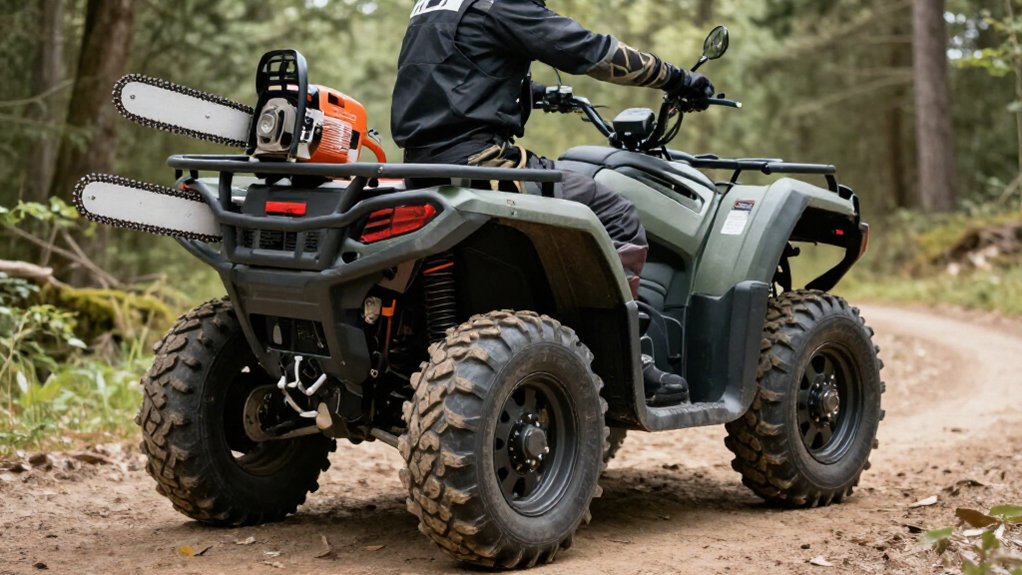
Choose a scabbard that matches your ATV rack tubing and saw-bar length; never force a longer bar inside.
Inspect the rack and confirm clearance, then mount the carrier where it won’t obstruct controls or position.
Engage the chain brake, cover every chain tooth, and tighten the clamp or straps so the saw can’t shift.
Keep the bar clear of tires through suspension travel, and secure fuel separately.
Test retention over mild bumps. More follows.
Choosing a Compatible Scabbard
Choose a scabbard that matches both your ATV’s rack tubing and your saw’s bar length. The Hornet Outdoors R-3012-R is designed for round tubing ¾ to 1¼ inches in diameter and accepts most gas and battery saws with bars up to 20 inches. A scabbard’s impact-resistant body should shield the bar and chain from contact and help protect you and your ATV during transport.
Never force a longer bar into a model beyond its stated capacity; the exposed cutting assembly can create a serious hazard. If your saw exceeds the limit, choose a longer scabbard. Enduro Engineering offers a model for a 16-inch bar, with a 20-inch version available to order. You can add a bar-and-chain sleeve; the R-3012-R’s orange sleeve is listed at $15.00.
Inspecting ATV Rack Compatibility
After selecting a compatible scabbard, check that your ATV rack can support its mount. Inspect the rack before installation; a secure fit depends on tubing, clearance, placement, and load support.
- Measure rack tubing; the Hornet Outdoors R-3012-R clamp fits round tubing from ¾ to 1¼ inches.
- Choose a front or rear mounting point where the saw won’t obstruct ATV operation.
- Check clearance around components; some carriers fit beneath a front-end-loader mount or behind its post.
- Confirm scabbard length and rack strength; the R-3012-R suits most battery saws with bars up to 20 inches.
For custom or adapted hardware, verify that the rack or crossbar bears the carrier, then fasten the saw so it can’t shift. Reject a fit that flexes or blocks controls.
Step 1: Engage the Chain Brake
Before mounting the chainsaw on the ATV, engage its chain brake to help prevent the chain from moving during transport.
The brake is an added safeguard, not a substitute for protecting the cutting chain. Before you load the saw, activate the brake according to the instructions, then place the saw in its carrier without releasing it. Once the saw is seated, confirm that the brake remains engaged; loading can shift the saw or disturb the control.
If it’s disengaged, reset it before you secure the saw. Keep the brake engaged throughout the ride, and use a fitted bar cover or scabbard to shield the chain from contact and debris. Secure the saw as directed, then verify brake and chain protection before moving the ATV.
Step 2: Check Handle Clearance
With the saw in its vertical drop-in position and the clamp tightened, check that its handles clear the ATV’s rack, bodywork, and nearby equipment. Inspect the handle area; don’t assume a fit guarantees access. Settle the saw in the mount, then verify the handles don’t catch on straps, tools, cargo, or other gear. Confirm you can mount and dismount without contacting the saw, and neither handle blocks steering, controls, or your operating position.
Tightening can shift the saw, so recheck clearance with the clamp secured. If anything interferes, reposition the mount or remove equipment, then repeat the check before travel. Don’t force a handle past an obstruction. Secure the saw only after you’ve confirmed unobstructed access and control.
Step 3: Keep the Bar Clear of Tires
Keep the bar and scabbard clear of every tire, even when the suspension moves or the rack flexes. Position the saw so no part of its bar assembly can reach a tire through the range of movement. With the saw mounted, check clearance at rest, then turn the wheels fully left and right to detect interference.
Secure the saw in a purpose-built carrier or use strong fasteners that prevent it from shifting toward a tire during travel. A fitted bar cover or scabbard can also limit damage if the saw moves. After loading cargo or repositioning the saw, repeat the clearance check and inspect every mounting point for looseness. Don’t assume a static gap will remain safe on uneven ground; verify clearance before riding.
Step 4: Cover Exposed Chain Teeth
Cover the bar and exposed chain teeth with a properly fitted scabbard or bar cover before transporting the saw. The cover creates a barrier between sharp cutters and you, the ATV. It also helps prevent the chain from striking cargo or other equipment, reducing the risk of damaged teeth and unsafe handling when you unload the machine.
After fitting the cover, verify that it stays seated over the bar; don’t carry the saw with any teeth exposed. If you’re traveling a long distance, consider removing the chain and storing it separately to limit wear and potential damage. For the Hornet Outdoors R-3012-R scabbard, you can add an optional orange bar-and-chain protection sleeve. Choose a cover designed for your saw’s bar length and chain configuration.
Step 5: Tighten the Scabbard Straps
Tighten the scabbard’s clamp or straps until the chainsaw can’t shift or bounce during ATV travel. After securing it, push the saw gently to confirm it stays in place, then inspect the scabbard for movement on the rack. If the rack flexes or the carrier rocks, correct the mounting before you ride; a tight saw in an unstable scabbard still presents a hazard.
Use a purpose-designed carrier or strong fasteners, not bungee cords alone, if they let either component move. Secure an added bar-protection sleeve as well, and make sure it can’t slip off or flap in the wind. After rough terrain or a short initial ride, stop and recheck every fastening. Tighten anything that’s loosened before continuing, and verify the saw remains restrained.
Step 6: Stow Fuel Separately
Store fuel in a separate, tightly closed fuel container, then secure it firmly to the ATV so it can’t shift or spill during travel.
Keep fuel apart from the chainsaw, chain oil, tools, and other cargo; place each in its own secure container. Use a fuel-rated container, close it fully, and fasten it to a stable ATV point. After refueling, tighten the chainsaw’s fuel cap; if you can’t confirm it’s secure, empty the tank before transport.
This separation limits spill exposure and keeps fuel isolated from chain oil and gear during loading and unloading. Never carry loose fuel cans.
Test Retention Over Bumps
Once the saw is mounted, push and pull it firmly to confirm the clamp and restraints prevent it from shifting or lifting out.
Take a test ride over mild bumps, then stop and inspect the saw, scabbard, and fasteners. Confirm nothing has moved and no fastener has loosened. If the mount needs adjustment, retighten it and repeat the test before you ride rougher terrain. Don’t treat a successful hand check as proof that the mount will hold under vibration.
During your trip, recheck the mount after sections because vibration can loosen fasteners. Stop the ATV before inspecting or tightening anything. Engage the chain brake and fit the bar cover for transport; they add protection but don’t replace a secure mount.
Preventing Scabbard Corrosion
Wet or muddy rides can leave moisture and abrasive debris trapped in the scabbard, accelerating corrosion on exposed metal.
After a wet or muddy trip, remove the saw and let both components dry before storage. Clear dirt, sawdust, and moisture from the scabbard so damp debris doesn’t stay against metal parts. Inspect the scabbard for cracks or damage that could expose metal. Choose a model built for outdoor use; don’t assume a coating prevents corrosion.
| Check | Action |
|---|---|
| After rides | Dry saw and scabbard |
| Between trips | Store both in a dry place |
A case or duffle can keep dust off, but make sure it doesn’t trap moisture. Follow the manufacturer’s care guidance before applying oils or cleaners, because care guidance may not specify treatments.
Lubricate Scabbard Mount Hinges
After drying the scabbard and saw, check the mount’s moving hinges or pivots for stiffness, corrosion, or looseness. Lubricate each moving joint only as the mount maker directs. Choose a small amount of lubricant compatible with the hinge’s material; wipe away excess so it won’t collect dust or grit.
Keep lubricant off the chainsaw’s bar and chain, and out of the scabbard’s interior. Residue there can attract debris, which may interfere with clean storage or safe handling. If a hinge remains stiff, corroded, or loose, tighten or service it according to the maker’s guidance; don’t force a damaged pivot. Check hinged parts periodically, especially after wet or dusty trips. The Hornet R-3012-R is a clamp-on scabbard without a hinge, so this step may not apply to that model.
Conclusion
Before riding, confirm your scabbard fits the saw and ATV rack, and that its mounts hold firm. Engage the chain brake, check handle clearance, and keep the bar clear of tires and moving parts. Stow fuel separately, then test retention over bumps at low speed.
Inspect for corrosion and lubricate hinges regularly. Don’t ride with a loose or damaged mount; secure the saw before travel. These checks reduce injury risk and help protect your equipment on rough terrain.